
Safe Air Conditioning Servicing at Elevated Locations: Essential Safety Practices for Professional HVAC Technicians
Safe air conditioning servicing at elevated locations is an important aspect of professional HVAC maintenance, installation, and repair activities, especially when technicians are required to work on rooftops, high-rise buildings, commercial facilities, industrial sites, and other elevated areas. Modern air conditioning systems are often installed in locations that require technicians to access difficult and elevated workspaces for inspection, cleaning, troubleshooting, component replacement, and preventive maintenance. Without proper safety knowledge and procedures, working at elevated locations can expose HVAC technicians to serious hazards such as falls, electrical risks, unstable surfaces, dropped objects, and unsafe environmental conditions. Understanding safe air conditioning servicing at elevated locations helps technicians perform their duties efficiently while maintaining workplace safety standards. At Eakon Academy (eakonacadem.edu.my), we provide professional HVAC training that combines technical expertise with comprehensive safety practices to prepare technicians for safe and reliable air conditioning servicing operations.
Air conditioning servicing at elevated locations requires careful planning, professional skills, and proper safety preparation. HVAC technicians may need to service outdoor condenser units, rooftop air conditioning systems, commercial split units, VRF and VRV systems, ducted air conditioning equipment, and industrial cooling systems positioned above ground level. These servicing tasks often involve climbing ladders, using elevated work platforms, accessing rooftops, and handling tools or equipment in restricted areas. Safe work practices are essential to ensure technicians can complete maintenance tasks without creating unnecessary risks to themselves, their colleagues, or building occupants.
The first step in safe air conditioning servicing at elevated locations is conducting a detailed workplace assessment before starting any work. Technicians should inspect the servicing area, identify potential hazards, evaluate access conditions, and determine suitable safety measures. Common risks include slippery rooftop surfaces, unstable ladders, limited working space, exposed electrical components, poor lighting, strong winds, and nearby obstacles. A proper risk assessment allows technicians to understand the working environment and develop a safe servicing plan before performing any maintenance activities.
Selecting the correct access equipment is a critical part of elevated air conditioning servicing safety. Depending on the location and height of the equipment, technicians may use ladders, scaffolding, mobile elevated work platforms (MEWPs), aerial lifts, or permanent access systems. All access equipment should be inspected before use to ensure stability, safety, and suitability for the task. Technicians should understand proper ladder positioning, safe climbing techniques, scaffold requirements, and elevated platform operation procedures. Using the correct equipment reduces fall risks and allows technicians to perform servicing work more effectively.
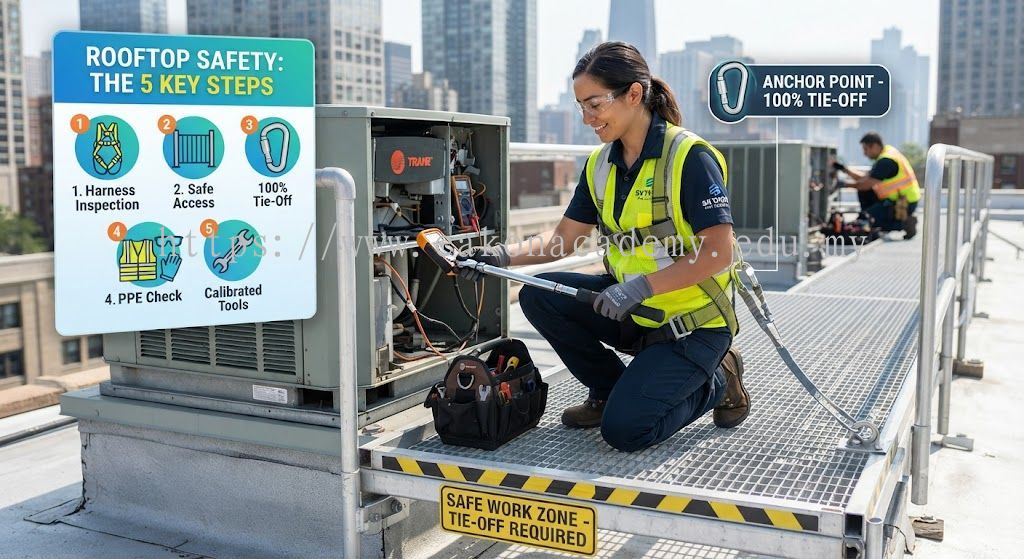
Personal protective equipment (PPE) plays a major role in ensuring safe air conditioning servicing at elevated locations. HVAC technicians should use appropriate safety equipment such as safety helmets, full-body harnesses, fall protection systems, safety footwear, gloves, and eye protection based on the work environment. Before beginning servicing work, all PPE should be inspected to ensure it is in good condition and suitable for use. Proper PPE practices provide additional protection against unexpected hazards and support a professional safety culture.
Fall prevention is one of the most important considerations when servicing air conditioning systems at height. Technicians should understand the correct use of safety harnesses, anchor points, fall arrest devices, and secure working positions. Proper training ensures technicians know how to inspect safety equipment, connect protection systems correctly, and maintain safe movement while performing servicing activities. Effective fall prevention methods reduce workplace accidents and provide technicians with greater confidence when working in elevated areas.
Electrical safety is also essential during elevated air conditioning servicing. Many servicing tasks involve electrical inspection, wiring checks, component testing, and system troubleshooting. Technicians must follow safe electrical procedures, including isolating power supplies when required, using insulated tools, identifying electrical hazards, and maintaining safe distances from live components. Combining electrical safety with height safety procedures ensures technicians are protected from multiple workplace risks.
Safe handling of servicing tools and equipment is another important factor when working at elevated locations. HVAC technicians commonly use refrigerant gauges, vacuum pumps, leak detectors, electrical testing instruments, cleaning equipment, and replacement components during maintenance activities. Tools should be properly secured and organised to prevent dropped objects and workplace injuries. Maintaining good housekeeping practices helps technicians move safely while improving servicing efficiency.
Environmental conditions must also be considered during elevated air conditioning servicing. Weather conditions such as rain, strong winds, lightning, and excessive heat can increase workplace risks. Professional technicians should evaluate site conditions before starting work and delay servicing activities if safety cannot be maintained. Proper communication between team members, emergency response planning, and continuous monitoring help ensure safer servicing operations.
At eakonacadem.edu.my, our HVAC training programmes are designed to develop skilled technicians with both technical knowledge and strong safety awareness. Students receive hands-on training in air conditioning installation, servicing, troubleshooting, preventive maintenance, refrigeration systems, refrigerant handling, electrical diagnostics, and system commissioning. Safety training includes working at height procedures, fall prevention methods, PPE management, hazard identification, risk assessment, ladder safety, scaffold awareness, and safe equipment handling. This practical training prepares technicians to perform professional HVAC servicing in residential, commercial, and industrial environments.
For HVAC companies and employers, implementing safe air conditioning servicing at elevated locations practices provides many benefits, including reduced workplace accidents, improved technician confidence, better productivity, stronger compliance, and enhanced customer trust. A safety-focused workforce demonstrates professionalism and reliability while helping companies deliver higher-quality HVAC services. Customers and businesses increasingly prefer HVAC contractors who prioritise safe working practices and professional service standards.
As Malaysia’s HVAC industry continues to grow, technicians must develop advanced technical abilities combined with strong workplace safety knowledge. Understanding safe air conditioning servicing at elevated locations enables professionals to perform maintenance and repair activities effectively while protecting themselves and others. Eakon Academy is committed to providing industry-relevant HVAC education that combines practical technical training with occupational safety excellence. Visit eakonacadem.edu.my to explore our professional HVAC courses, air conditioning servicing training, maintenance programmes, and safety-focused workshops designed to prepare technicians for successful careers in the heating, ventilation, air conditioning, and refrigeration industry.
更多 EAKON ACADEMY SDN BHD 相关资料 Malaysia
