
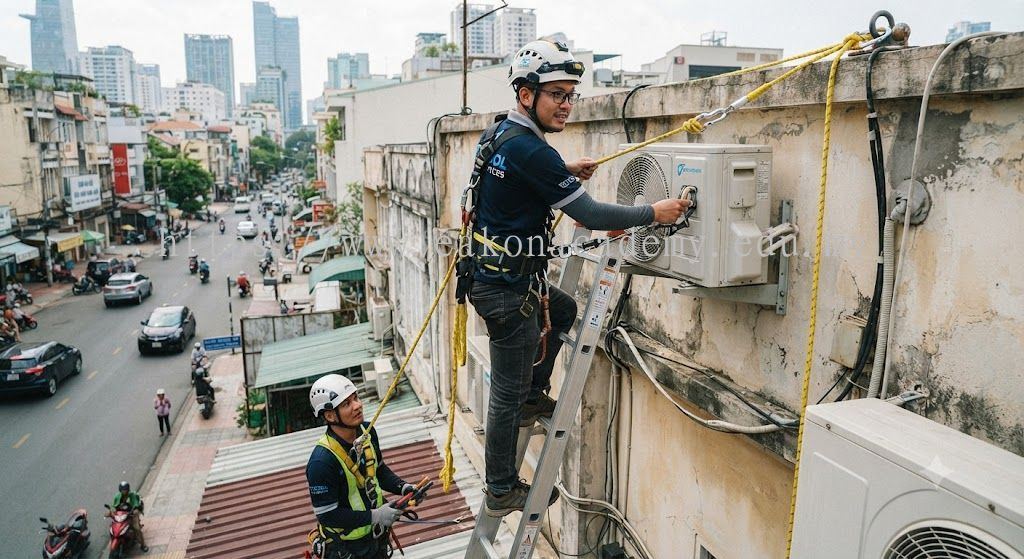
Air Conditioning Installation Height Safety Procedures – Professional Safety Guide for HVAC Technicians
The air conditioning installation height safety procedures are essential guidelines designed to help HVAC technicians perform air conditioning installation work safely when operating at elevated locations. Many air conditioning installation projects require technicians to work at height, including installing wall-mounted indoor units, outdoor condenser units, rooftop systems, and commercial HVAC equipment. Proper height safety procedures help reduce workplace hazards, protect technicians from injuries, and ensure installation activities are completed according to professional industry standards. At Eakon Academy, we focus on developing skilled HVAC technicians who understand the importance of combining technical installation skills with effective safety practices.
Air conditioning installation involves various tasks that may require technicians to access elevated areas while handling equipment, tools, refrigerant piping, and electrical components. Without proper preparation, technicians may face risks such as falls, unstable ladders, dropped tools, electrical hazards, and incorrect equipment handling. Understanding air conditioning installation height safety procedures allows HVAC professionals to identify potential hazards and apply suitable control measures before starting installation work.
The first step in maintaining height safety during air conditioning installation is conducting a proper workplace assessment. Before beginning any installation activity, technicians should inspect the working area, evaluate access conditions, identify possible risks, and prepare appropriate safety equipment. Important factors such as installation height, surface stability, ladder positioning, working space, weather conditions, and nearby electrical sources should be considered carefully. Proper planning helps technicians complete installation tasks safely while maintaining efficiency and workmanship quality.
Safe access equipment is an important part of air conditioning installation height safety procedures. HVAC technicians may use ladders, scaffolding, elevated work platforms, or other access systems depending on the installation requirements. These tools must be selected correctly, inspected before use, and positioned safely to prevent accidents. Professional training helps technicians understand the correct use of access equipment and how to maintain stability while performing installation activities at height.
Personal protective equipment (PPE) is also a critical component of height safety. HVAC technicians should use suitable safety equipment such as helmets, protective footwear, gloves, safety harnesses, and fall protection systems when required. Proper inspection and maintenance of PPE ensure reliable protection during installation work. Following correct safety procedures allows technicians to perform tasks with greater confidence while reducing workplace risks.
Height safety is especially important during residential and commercial air conditioning installation projects. Installing split air conditioners, VRF and VRV systems, rooftop units, and large commercial HVAC equipment often requires technicians to work in challenging environments. Activities such as mounting indoor units, installing outdoor brackets, connecting refrigerant piping, and completing electrical testing require careful movement and proper safety awareness. Applying safe working at height for HVAC technicians principles helps workers maintain control and complete installation tasks professionally.
At Eakon Academy, our HVAC training programs provide practical learning experiences that combine technical knowledge with workplace safety awareness. Through hands-on training, participants develop skills in air conditioning installation, servicing techniques, troubleshooting methods, equipment handling, and professional safety procedures. Learning air conditioning installation height safety procedures helps trainees build responsible working habits and prepares them for real HVAC industry requirements.
For HVAC contractors and service companies, implementing proper height safety procedures improves workplace protection, reduces accident risks, and enhances overall service quality. A trained technician who understands safety requirements can complete installation projects more effectively while protecting themselves, customers, and other workers. Strong safety practices also demonstrate professionalism and commitment to delivering reliable HVAC solutions.
Developing knowledge of air conditioning installation height safety procedures is an important step for anyone pursuing a career in the air conditioning and refrigeration industry. Combining technical installation expertise with proper safety practices allows HVAC technicians to work safely, efficiently, and professionally. Eakon Academy provides professional HVAC training programs designed to strengthen technical competency, improve safety awareness, and prepare future HVAC professionals for successful careers in the modern HVAC industry.
更多 EAKON ACADEMY SDN BHD 相关资料 Malaysia
