
Air Conditioning Technician Hazard Control at Height: Essential Safety Practices for HVAC Professionals
Air conditioning technician hazard control at height is an important safety practice that helps HVAC professionals identify, evaluate, and manage workplace risks when performing installation, maintenance, and repair activities in elevated locations. In the air conditioning industry, technicians often work at height while installing outdoor condenser units, servicing rooftop systems, maintaining ceiling-mounted air conditioners, and accessing commercial HVAC equipment. These activities involve various hazards such as falls, unstable working areas, electrical risks, falling objects, and improper equipment usage. Eakon Academy provides professional HVAC training programs that help technicians develop strong safety awareness, technical competency, and effective hazard control skills for modern HVAC operations.
Effective hazard control begins with proper planning and risk assessment before any height-related HVAC work starts. Air conditioning technician hazard control at height involves identifying possible dangers, evaluating workplace conditions, and implementing suitable safety measures to reduce risks. Technicians should inspect the working area, assess access routes, check equipment conditions, and consider environmental factors such as weather, surface stability, and surrounding hazards. A complete hazard assessment allows HVAC professionals to make informed decisions and apply preventive actions before accidents occur.
One of the key methods of controlling hazards at height is selecting the correct access equipment for each HVAC task. Technicians may use ladders, scaffolding, mobile elevated work platforms (MEWP), or other approved access systems depending on the work requirements. All equipment must be inspected before use to ensure safety, stability, and suitability. Proper equipment selection, correct setup procedures, and safe operating methods help reduce the possibility of falls and improve overall workplace protection.
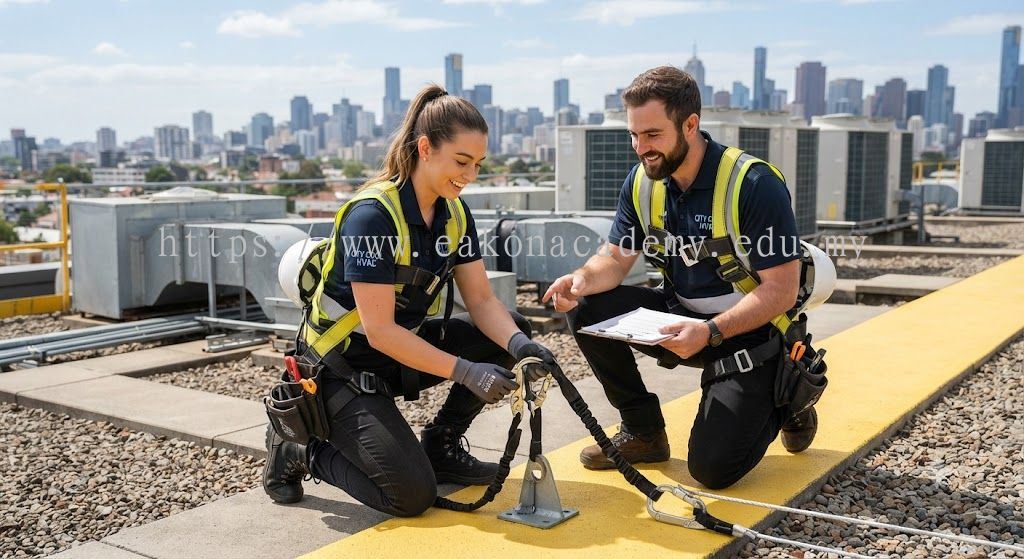
Personal protective equipment (PPE) is another important component of air conditioning technician hazard control at height. Safety helmets, protective footwear, gloves, safety harnesses, lanyards, and fall protection systems provide additional protection when working in elevated areas. Technicians should inspect PPE regularly and ensure all equipment is used correctly according to safety procedures. Proper PPE management helps minimize injury risks and supports a safer working environment during HVAC installation and maintenance activities.
Safe handling of tools, materials, and HVAC components is also essential for effective hazard control. Air conditioning technicians often carry tools, refrigerant equipment, copper piping, electrical instruments, and installation components while working at height. Poor tool management can create hazards caused by falling objects or unstable working conditions. Technicians should secure tools properly, use suitable carrying methods, maintain organized work areas, and communicate clearly with team members to prevent unnecessary risks.
Air conditioning technician hazard control at height is especially important for complex HVAC projects involving rooftops, high-rise buildings, commercial systems, and industrial cooling equipment. Technicians working on VRV/VRF systems, central air conditioning systems, and large outdoor units require advanced safety knowledge and proper risk management methods. Understanding emergency procedures, fall prevention techniques, safe lifting practices, and teamwork helps technicians manage challenging working environments effectively.
Implementing proper hazard control procedures provides many benefits for HVAC companies and professionals. Effective safety management helps reduce workplace accidents, improve technician confidence, increase productivity, and maintain professional service standards. A strong safety culture allows HVAC companies to protect employees while delivering reliable and high-quality air conditioning services to customers.
Eakon Academy is committed to supporting the development of skilled HVAC professionals through practical and industry-focused training. Learning air conditioning technician hazard control at height enables participants to gain valuable knowledge in hazard identification, risk assessment, safety planning, equipment inspection, and safe working procedures. These skills help technicians meet industry expectations and improve their professional capabilities.
By applying proper air conditioning technician hazard control at height methods, HVAC professionals can protect themselves, reduce workplace hazards, and complete HVAC tasks more safely and efficiently. Height safety and hazard control training are essential investments for every air conditioning technician who wants to enhance technical skills, improve workplace safety, and build a successful career in the HVAC industry.
更多 EAKON ACADEMY SDN BHD 相关资料 Malaysia
