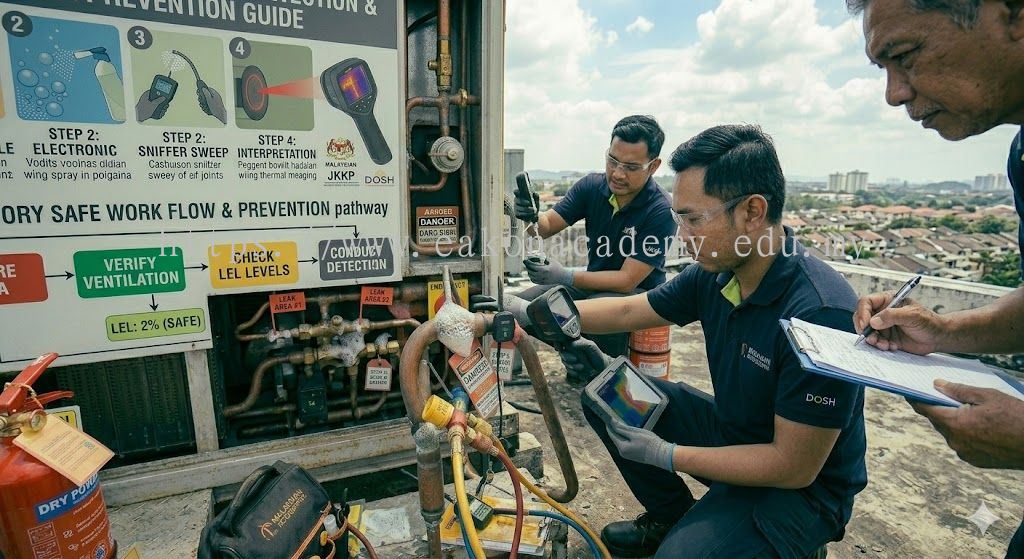
R290 LEAK DETECTION MAINTENANCE FOR SAFE, EFFICIENT, AND COMPLIANT HVAC-R SYSTEM PERFORMANCE
R290 leak detection maintenance is a crucial aspect of modern HVAC-R system management, especially in refrigeration and air conditioning systems that utilize propane (R290) as a natural refrigerant. As the industry continues to shift toward environmentally friendly refrigerants with low global warming potential (GWP), R290 has become a widely adopted solution due to its excellent energy efficiency and sustainability benefits. However, because R290 is highly flammable, maintaining reliable leak detection systems is essential to ensure safety, prevent accidents, and maintain regulatory compliance. At eakonacadem.edu.my, we focus on delivering professional HVAC education and technical training that supports proper maintenance practices for R290 leak detection systems and equipment.
R290 leak detection maintenance involves the regular inspection, testing, calibration, and servicing of all leak detection devices used in HVAC-R systems. These devices may include portable electronic detectors, fixed gas monitoring systems, infrared sensors, and ultrasonic detection equipment. Proper maintenance ensures that all equipment operates at peak accuracy and reliability, allowing technicians to detect even the smallest refrigerant leaks before they become hazardous. Without regular maintenance, detection systems may lose sensitivity, resulting in false readings or undetected leaks that can compromise system safety.
One of the most important components of R290 leak detection maintenance is routine calibration. Electronic and infrared gas detectors must be calibrated at scheduled intervals using certified calibration gases to ensure accurate measurement of propane concentrations. This process ensures that sensors remain responsive and reliable under varying environmental conditions. Calibration is a critical step in maintaining compliance with safety standards and industry regulations.
Cleaning and physical inspection are also essential parts of R290 leak detection maintenance. Dust, moisture, and contaminants can affect the performance of sensors and reduce detection accuracy. Technicians must regularly clean detector housings, check sensor integrity, and ensure that all components are free from damage or obstruction. For fixed detection systems, wiring connections and alarm interfaces must also be inspected to ensure proper communication with building management systems (BMS) or control panels.
Battery checks and power supply verification are equally important in portable R290 leak detection equipment. Ensuring that devices are fully charged or properly powered guarantees uninterrupted operation during inspections and emergency response situations. Faulty batteries or unstable power sources can lead to equipment failure, increasing the risk of undetected leaks in critical HVAC-R environments.
Another key aspect of R290 leak detection maintenance is system functionality testing. Technicians simulate leak conditions to verify that alarms, sensors, and control systems respond correctly. This includes checking visual and audible alarms, ventilation activation, and emergency shutdown functions where applicable. Regular testing ensures that the entire detection system operates as intended during real leak events.
Documentation and maintenance records are also an essential part of R290 leak detection maintenance procedures. All calibration results, inspection reports, repairs, and system tests must be properly recorded. These records are important for compliance audits, safety inspections, and long-term system performance tracking. Proper documentation also helps identify recurring issues and supports predictive maintenance strategies.
At eakonacadem.edu.my, we emphasize the importance of training HVAC professionals in proper R290 leak detection maintenance practices. Skilled technicians must understand how to service detection equipment, interpret sensor data, and follow standardized maintenance procedures. This ensures that HVAC systems remain safe, efficient, and compliant with environmental regulations.
Furthermore, regular R290 leak detection maintenance contributes to environmental sustainability by reducing refrigerant emissions and improving energy efficiency. Well-maintained detection systems help identify leaks early, preventing gas loss and reducing the environmental impact of HVAC operations. This supports global efforts to transition toward greener and more responsible refrigeration technologies.
In conclusion, R290 leak detection maintenance is a vital part of ensuring safe and reliable HVAC-R system operation. Through regular calibration, cleaning, testing, and documentation, leak detection systems can maintain high accuracy and performance. Proper maintenance not only enhances safety and regulatory compliance but also improves system efficiency and environmental responsibility, making it an essential focus area for HVAC education and training platforms like eakonacadem.edu.my.
More detail about EAKON ACADEMY SDN BHD Malaysia