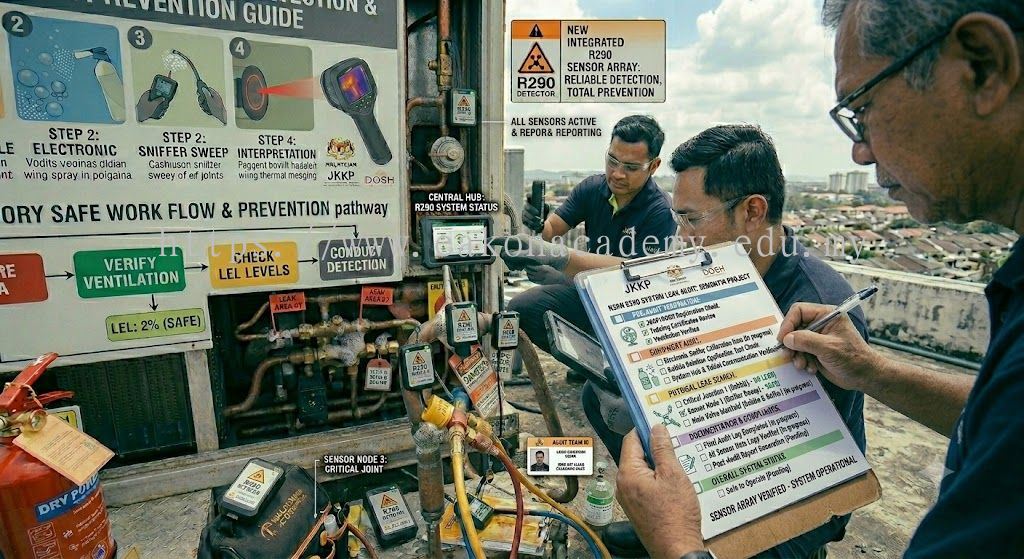
R290 INDUSTRIAL LEAK DETECTION METHODS FOR SAFE, EFFICIENT, AND COMPLIANT HVAC-R OPERATIONS
R290 industrial leak detection methods are a critical component of modern HVAC-R safety systems, particularly in large-scale refrigeration and cooling applications that use propane (R290) as a natural refrigerant. As industries transition toward environmentally friendly and low-global warming potential (GWP) refrigerants, R290 has become a popular choice due to its high energy efficiency and minimal environmental impact. However, its flammable nature requires strict safety controls and advanced leak detection strategies, especially in industrial environments where large refrigerant charges and complex systems are involved. At eakonacadem.edu.my, we focus on delivering professional HVAC education and technical knowledge to support safe handling, monitoring, and maintenance of flammable refrigerants through industry-approved leak detection methods.
One of the primary R290 industrial leak detection methods is the use of fixed electronic gas detection systems. These systems are permanently installed in critical areas such as compressor rooms, cold storage facilities, and industrial refrigeration plants. Equipped with highly sensitive sensors, they continuously monitor air quality for traces of propane gas. When a leak is detected, the system immediately triggers alarms and can be integrated with building management systems (BMS) to activate ventilation or emergency shutdown procedures. This real-time monitoring capability is essential for preventing hazardous gas accumulation in large industrial settings.
Portable electronic leak detectors are another widely used method in industrial applications. These handheld devices allow HVAC technicians to perform targeted inspections on specific system components such as valves, pipe joints, compressors, and heat exchangers. They are highly sensitive to hydrocarbon gases and provide fast, accurate readings, enabling technicians to quickly identify and locate leaks during maintenance or repair operations. This flexibility makes portable detectors an essential tool for routine inspections and emergency response situations.
Ultrasonic leak detection is also an important technique used in R290 industrial leak detection methods. This technology identifies the high-frequency sound generated by escaping gas under pressure. Ultrasonic detectors are particularly effective in noisy industrial environments where traditional gas sensors may be less reliable due to background noise. By capturing sound patterns rather than gas concentration, this method provides an additional layer of detection accuracy in complex HVAC systems.
Soap bubble testing remains a fundamental yet effective method in industrial leak detection procedures. This technique involves applying a soap solution to suspected leak points, where escaping gas forms visible bubbles. Although simple, it is highly reliable for confirming leak locations identified by electronic or ultrasonic devices. It is commonly used during system commissioning, maintenance, and repair activities to ensure complete leak verification.
Another important aspect of R290 industrial leak detection methods is system design and preventive engineering controls. Proper system layout, including correct pipe sizing, secure fittings, and adequate ventilation, plays a crucial role in minimizing leak risks. Industrial HVAC systems are often designed with safety redundancies such as pressure relief valves and automatic shutdown mechanisms to reduce the impact of potential refrigerant leaks.
Regular inspection schedules and preventive maintenance programs are also essential in industrial environments. Technicians must conduct routine checks using calibrated detection equipment and follow standardized inspection procedures to ensure system integrity. Early identification of wear, corrosion, or mechanical stress helps prevent leaks before they occur, improving both safety and system reliability.
At eakonacadem.edu.my, we emphasize the importance of training and competency development in R290 industrial leak detection methods. Skilled technicians who understand advanced detection technologies, safety protocols, and regulatory requirements are essential for maintaining safe and efficient industrial refrigeration systems. Proper training ensures that HVAC professionals can respond effectively to leak incidents and maintain compliance with environmental and safety standards.
Furthermore, adopting advanced R290 industrial leak detection methods supports environmental sustainability by reducing refrigerant emissions and improving energy efficiency. Early leak detection helps minimize gas loss, reduce system strain, and lower overall operational costs, contributing to greener and more efficient industrial operations.
In conclusion, R290 industrial leak detection methods combine advanced technology, preventive maintenance, and skilled technician practices to ensure safe and reliable HVAC-R system operation. By integrating fixed sensors, portable detectors, ultrasonic technology, and manual testing methods, industries can effectively manage the risks associated with flammable refrigerants. These practices are essential for modern refrigeration safety and form a key focus area for HVAC training and education platforms like eakonacadem.edu.my.
更多 EAKON ACADEMY SDN BHD 相关资料 Malaysia