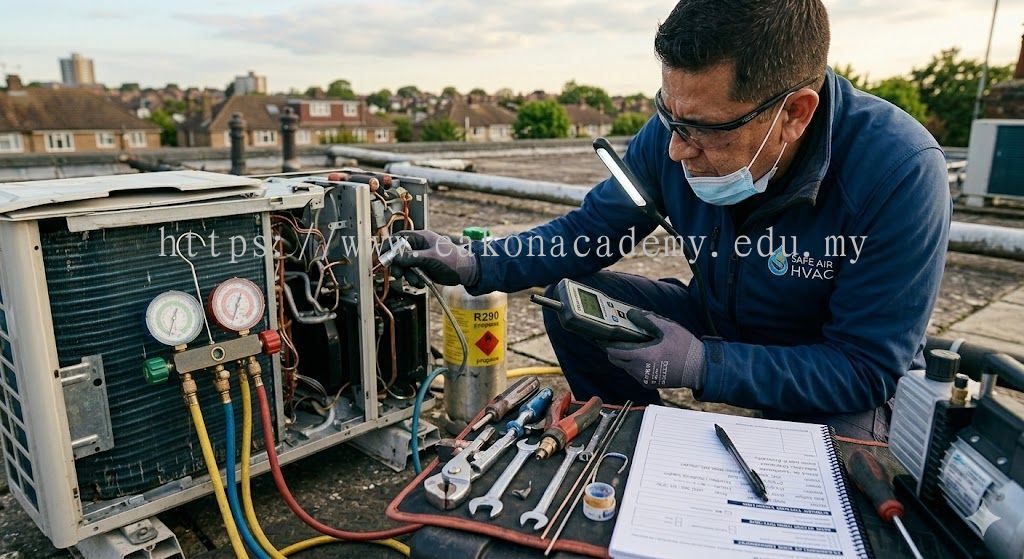
R290 REFRIGERANT LEAK SERVICING PROCEDURES FOR SAFE DETECTION, REPAIR, AND COMPLIANT HVAC-R MAINTENANCE PRACTICES
R290 refrigerant leak servicing procedures refer to the standardized technical methods used to detect, isolate, repair, and prevent leaks in HVAC-R systems that use R290 (propane) as a natural hydrocarbon refrigerant. As the HVAC industry increasingly adopts environmentally friendly refrigerants with low global warming potential (GWP), R290 has become a widely used solution due to its high energy efficiency, excellent cooling performance, and reduced environmental impact. However, because R290 is classified as a flammable refrigerant, strict leak servicing procedures are required to ensure technician safety, prevent fire hazards, and maintain system reliability. At eakonacadem.edu.my, we provide professional HVAC education and technical training that supports the correct understanding and application of R290 refrigerant leak servicing procedures for industry professionals.
R290 refrigerant leak servicing procedures are designed to ensure that all leak-related issues are handled in a controlled, systematic, and safe manner. These procedures include leak detection, system isolation, refrigerant recovery, component repair or replacement, pressure testing, vacuum procedures, controlled recharging, and post-repair verification. Proper servicing is essential not only for restoring system performance but also for ensuring long-term safety and environmental compliance.
One of the most important steps in R290 leak servicing procedures is accurate leak detection. Because R290 is flammable, even small leaks can create hazardous conditions if exposed to ignition sources. Technicians must use approved leak detection equipment specifically designed for hydrocarbon refrigerants. This may include electronic leak detectors, bubble solutions, or pressure testing methods. Early and accurate detection helps prevent safety risks and minimizes refrigerant loss.
Once a leak is identified, system isolation is the next critical step. The affected section of the HVAC system must be safely isolated to prevent further refrigerant loss and reduce the risk of flammable gas accumulation. Proper isolation ensures that servicing can be performed in a controlled and safe environment.
Refrigerant recovery is another essential part of leak servicing procedures. Before any repair work begins, R290 refrigerant must be safely recovered using certified recovery machines designed for flammable gases. Proper recovery prevents accidental release into the environment and significantly reduces fire hazards during servicing operations.
Repair or replacement of faulty components is a key stage in the servicing process. Technicians must identify the root cause of the leak, which may include damaged piping, faulty joints, worn seals, or defective components. Repairs must be carried out using approved materials and techniques to ensure long-term reliability and leak prevention.
Pressure testing is also an important step in R290 leak servicing procedures. After repairs are completed, the system must undergo pressure testing to confirm that all leaks have been successfully sealed. This ensures system integrity before refrigerant is reintroduced.
Vacuum procedures are then performed to remove air, moisture, and contaminants from the system. Proper vacuuming is essential for maintaining system efficiency and preventing internal damage.
Controlled refrigerant recharging is the final technical step. Technicians must recharge the system with the correct amount of R290 refrigerant according to manufacturer specifications. Accurate charging ensures optimal performance and safe operation.
Post-repair verification is also required under leak servicing procedures. The system must be monitored to ensure no further leaks occur and that performance remains stable. Continuous monitoring helps maintain long-term system reliability.
Emergency response awareness is another important aspect of leak servicing procedures. Technicians must be trained to handle unexpected refrigerant releases safely and respond effectively to potential fire hazards.
At eakonacadem.edu.my, we emphasize the importance of professional HVAC education related to R290 refrigerant leak servicing procedures. Through structured training programs and practical hands-on learning, technicians gain the knowledge and skills required to safely detect and repair leaks in modern HVAC systems using natural refrigerants.
Furthermore, proper leak servicing practices support environmental sustainability by reducing refrigerant emissions and preventing unnecessary waste. Efficient leak management contributes to cleaner, safer, and more energy-efficient HVAC operations.
In conclusion, R290 refrigerant leak servicing procedures are essential for ensuring safe, efficient, and reliable HVAC-R system maintenance. By following proper steps for leak detection, isolation, recovery, repair, pressure testing, vacuuming, charging, and verification, HVAC professionals can significantly reduce risks while improving system performance. This comprehensive approach strengthens HVAC education and makes it a key focus area for training platforms like eakonacadem.edu.my.
更多 EAKON ACADEMY SDN BHD 相关资料 Malaysia