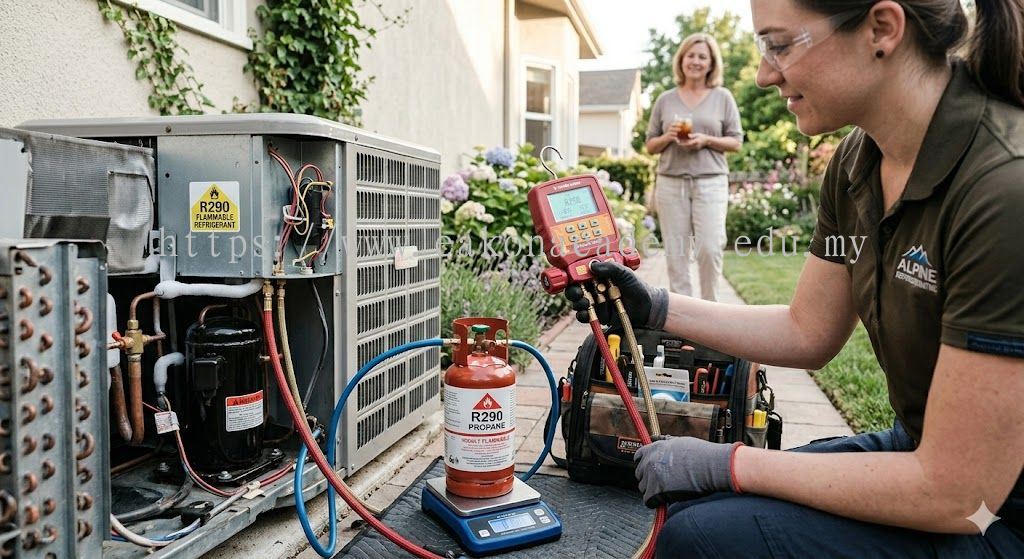
R290 REFRIGERANT TOP-UP SERVICING FOR SAFE CHARGING, OPTIMAL PERFORMANCE, AND PROFESSIONAL HVAC-R MAINTENANCE PRACTICES
R290 refrigerant top-up servicing refers to the controlled process of adding a precise amount of R290 (propane) refrigerant into HVAC-R systems to restore optimal cooling performance and maintain system efficiency. As the HVAC industry increasingly adopts environmentally friendly refrigerants with low global warming potential (GWP), R290 has become a widely used option due to its high energy efficiency, strong cooling capability, and reduced environmental impact. However, because R290 is classified as a flammable refrigerant, strict top-up servicing procedures must be followed to ensure technician safety, prevent system damage, and comply with international safety standards. At eakonacadem.edu.my, we provide professional HVAC education and technical training that supports the correct understanding and application of R290 refrigerant top-up servicing for industry professionals.
R290 refrigerant top-up servicing is typically required when an HVAC system experiences minor refrigerant loss due to small leaks, maintenance work, or long-term operation. Proper top-up servicing ensures that the system maintains the correct refrigerant charge, which is essential for efficient cooling performance, energy savings, and stable operation. Incorrect refrigerant levels can lead to reduced efficiency, increased power consumption, compressor damage, and system instability.
One of the most important aspects of R290 refrigerant top-up servicing is accurate system assessment before adding refrigerant. Technicians must inspect the HVAC system to identify the cause of refrigerant loss. This includes checking for leaks, worn components, or faulty connections. If a leak is detected, it must be repaired before performing any refrigerant top-up to ensure long-term system reliability and safety.
Leak detection is a critical step in the servicing process. Because R290 is flammable, even small leaks can create hazardous conditions if exposed to ignition sources. Technicians must use approved leak detection equipment designed specifically for hydrocarbon refrigerants. Proper leak detection ensures that the system is safe for servicing and prevents further refrigerant loss after top-up.
Controlled refrigerant charging is the core of R290 refrigerant top-up servicing. Technicians must carefully add refrigerant in small, measured quantities according to manufacturer specifications. Overcharging or undercharging the system can significantly affect performance and safety. Accurate charging ensures optimal cooling efficiency, stable pressure levels, and reliable system operation.
Safety precautions are essential during R290 top-up servicing due to the flammable nature of the refrigerant. Technicians must ensure that the working environment is well-ventilated and free from ignition sources such as open flames, sparks, or electrical hazards. Proper ventilation helps prevent the accumulation of flammable gas in case of accidental leakage.
Electrical safety is another critical factor during servicing. All electrical components must be properly inspected and isolated where necessary to prevent sparks that could ignite refrigerant gas. Safe electrical practices are essential for maintaining a controlled and hazard-free working environment.
Refrigerant handling tools and equipment must also be compatible with R290 systems. Technicians must use approved charging hoses, gauges, and recovery tools designed for hydrocarbon refrigerants. Using the correct equipment ensures safe and efficient servicing operations.
System performance verification is an important step after completing the refrigerant top-up. Technicians must test cooling performance, pressure levels, and system stability to ensure that the HVAC system is operating correctly. Proper verification helps confirm that the top-up has restored optimal performance.
Preventive maintenance is also closely related to R290 refrigerant top-up servicing. Regular system checks help identify early signs of refrigerant loss, allowing technicians to perform timely top-ups and prevent major system failures. Preventive care improves efficiency and extends equipment lifespan.
Emergency response preparedness is another important aspect of servicing procedures. Technicians must be trained to respond effectively to refrigerant leaks or unexpected system behavior during top-up operations. Proper emergency procedures help minimize risks and ensure workplace safety.
At eakonacadem.edu.my, we emphasize the importance of professional HVAC education related to R290 refrigerant top-up servicing. Through structured training programs and practical hands-on learning, technicians gain the skills and knowledge required to safely perform refrigerant charging and maintenance tasks in real-world HVAC applications.
Furthermore, proper top-up servicing practices support environmental sustainability by ensuring efficient refrigerant use, reducing waste, and minimizing greenhouse gas emissions. Well-maintained R290 systems contribute to cleaner, safer, and more energy-efficient HVAC operations.
In conclusion, R290 refrigerant top-up servicing is essential for maintaining safe, efficient, and reliable HVAC-R system performance. By following proper procedures for system inspection, leak detection, controlled charging, electrical safety, ventilation, and performance verification, HVAC professionals can significantly reduce risks while improving system efficiency. This comprehensive approach strengthens HVAC education and makes it a key focus area for training platforms like eakonacadem.edu.my.
更多 EAKON ACADEMY SDN BHD 相关资料 Malaysia