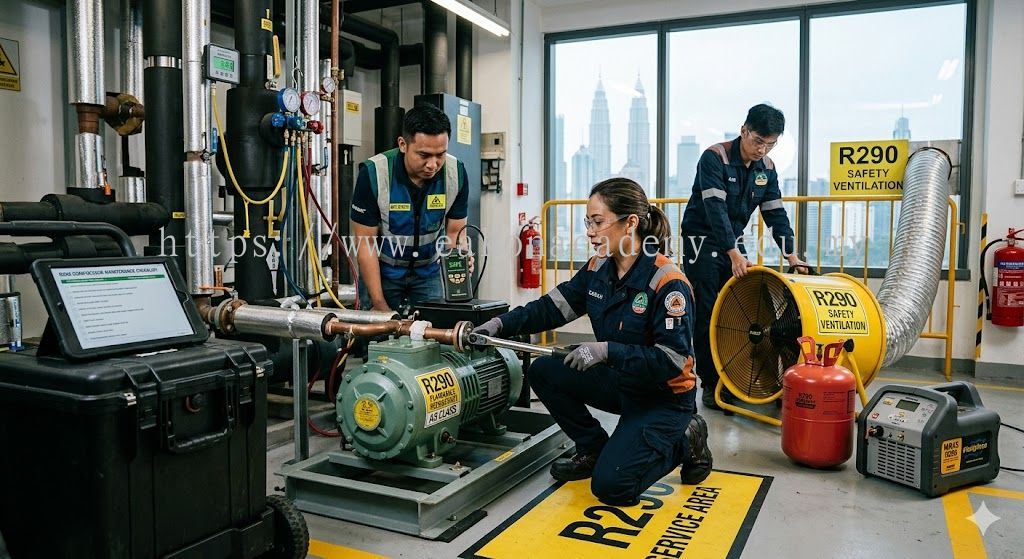
R290 COMPRESSOR MAINTENANCE PROCEDURES: ADVANCED HVAC-R SERVICE TECHNIQUES FOR SAFE, EFFICIENT AND RELIABLE PROPANE REFRIGERATION SYSTEM PERFORMANCE
R290 compressor maintenance procedures are a vital component of modern HVAC-R servicing practices, especially as the industry continues to adopt propane (R290) as a natural refrigerant in commercial and industrial refrigeration systems. The compressor is the heart of any refrigeration system, responsible for circulating refrigerant and maintaining the required pressure levels for effective cooling performance. In R290 systems, proper compressor maintenance is even more critical due to the flammable nature of propane and the need for precise operational control to ensure both safety and efficiency. Standard maintenance procedures include systematic inspection of compressor components, checking oil levels and oil quality, verifying suction and discharge pressures, testing motor winding resistance, monitoring vibration and noise levels, and ensuring that all electrical connections are secure and free from overheating risks. Technicians must also assess compressor temperature conditions and evaluate performance under different load conditions to detect early signs of mechanical wear or inefficiency.
A key aspect of R290 compressor maintenance procedures is preventive servicing, which helps reduce unexpected system failures and extends equipment lifespan. This includes regular cleaning of condenser coils to reduce compressor load, ensuring proper refrigerant charge levels to prevent overworking, and inspecting valves and seals for potential leakage. Because R290 is a highly efficient refrigerant with excellent thermodynamic properties, compressors must be maintained at optimal conditions to fully benefit from its energy-saving potential. Any deviation in pressure or lubrication quality can significantly impact system performance and may increase energy consumption or risk system breakdown. Therefore, accurate diagnostic tools and professional servicing techniques are essential for maintaining system stability and operational safety in R290 refrigeration applications.
Safety is a fundamental priority when performing R290 compressor maintenance procedures. Due to the flammable characteristics of propane, technicians must follow strict safety protocols, including proper ventilation in working environments, use of spark-free tools, and adherence to refrigerant recovery and charging guidelines. Leak detection must be performed regularly using approved electronic leak detectors designed for hydrocarbon refrigerants. Additionally, technicians must ensure that electrical components associated with the compressor are properly insulated and compliant with explosion-safe standards. These precautions are critical in preventing ignition risks and ensuring safe maintenance operations in commercial refrigeration environments such as supermarkets, cold storage facilities, food processing plants, and hospitality refrigeration systems.
From an industry development and SEO perspective, R290 compressor maintenance procedures represent a highly valuable keyword focus as global demand for sustainable refrigeration solutions continues to rise. Businesses and training institutions that emphasize this area position themselves as leaders in eco-friendly HVAC-R education and technical expertise. Platforms such as Eakon Academy Malaysia play an important role in providing structured training programs that equip learners with the skills needed to perform advanced compressor diagnostics, preventive maintenance, and safe handling of natural refrigerants. Through hands-on training and theoretical understanding, technicians develop the ability to troubleshoot compressor issues, optimize system performance, and ensure compliance with environmental and safety regulations.
Furthermore, proper R290 compressor maintenance procedures contribute significantly to energy efficiency and environmental sustainability. Well-maintained compressors operate with reduced energy consumption, lower carbon emissions, and improved cooling stability, making them essential for industries seeking cost-effective and eco-friendly refrigeration solutions. Regular maintenance also helps identify minor issues before they escalate into major system failures, reducing downtime and repair costs. As the HVAC-R industry continues to transition toward low-GWP refrigerants, expertise in R290 compressor maintenance is becoming increasingly important, offering strong career opportunities for technicians and enhancing operational reliability for businesses that depend on continuous refrigeration performance.
更多 EAKON ACADEMY SDN BHD 相关资料 Malaysia