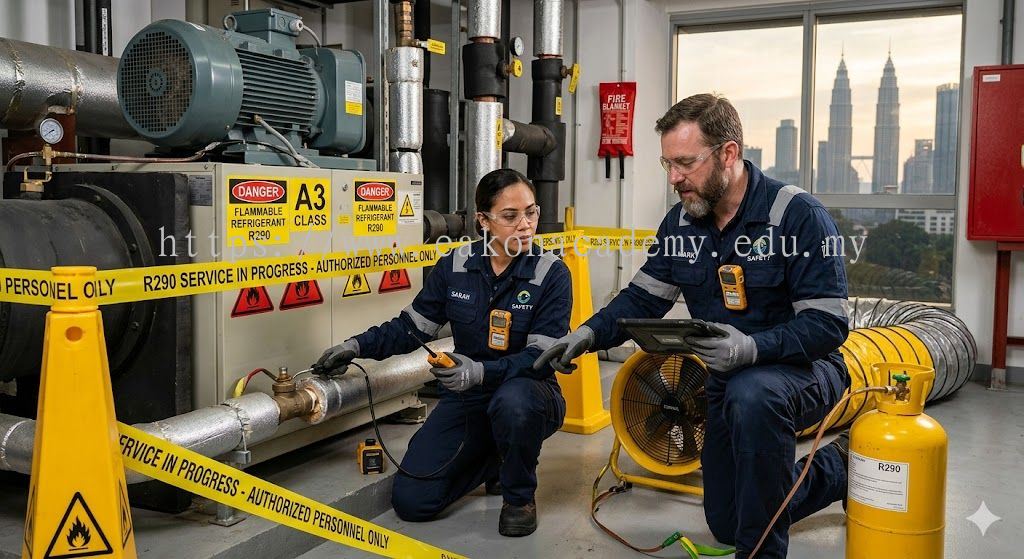
R290 INDUSTRIAL SAFETY DURING MAINTENANCE: CRITICAL HVAC-R RISK MANAGEMENT, FLAMMABLE REFRIGERANT HANDLING PROCEDURES AND COMPLIANCE TRAINING
R290 industrial safety during maintenance is a fundamental aspect of modern HVAC-R engineering, focusing on the safe handling, servicing, and maintenance of refrigeration systems that use propane (R290) as a natural refrigerant in industrial applications. As industries increasingly adopt R290 due to its low global warming potential (GWP) and high energy efficiency, safety has become the most critical priority during installation, servicing, and maintenance operations. R290 is classified as a flammable hydrocarbon refrigerant, which means that even small leaks or improper handling practices can pose fire or explosion risks if safety protocols are not strictly followed. Therefore, industrial maintenance procedures must be designed around comprehensive risk assessment, hazard prevention, and strict compliance with international HVAC safety standards. Key safety practices include proper ventilation control, elimination of ignition sources, use of explosion-proof tools, gas leak detection, pressure control monitoring, and safe refrigerant recovery techniques. These procedures ensure that technicians can perform maintenance tasks while minimizing risks to personnel, equipment, and the surrounding environment.
A critical element of R290 industrial safety during maintenance is the implementation of strict operational protocols before any servicing work begins. Technicians must conduct a full system inspection to identify potential leak points, damaged components, or unsafe operating conditions. The work area must be properly ventilated to prevent the accumulation of flammable gas, and all electrical equipment used in the vicinity must be certified as explosion-safe. Grounding and bonding techniques are also essential to prevent static electricity discharge, which could ignite refrigerant vapors. Additionally, refrigerant cylinders must be handled with extreme care, ensuring correct storage, secure positioning, and proper labeling to avoid accidental release. During maintenance operations, technicians must continuously monitor gas concentrations using approved hydrocarbon leak detectors to ensure that R290 levels remain within safe limits.
In industrial refrigeration environments such as cold storage facilities, food processing plants, logistics centers, and manufacturing industries, maintaining R290 safety standards is essential for uninterrupted and secure operations. Maintenance activities such as compressor servicing, evaporator and condenser cleaning, and refrigerant charging must all be performed with precision and strict adherence to safety guidelines. Any deviation from approved procedures can increase the risk of refrigerant exposure or ignition hazards. Therefore, technicians must be highly trained in emergency response procedures, including leak containment, system shutdown protocols, and evacuation measures in case of abnormal gas detection. Proper documentation of maintenance activities is also important to ensure compliance with Department of Environment (DOE) regulations and international safety standards.
From an educational and professional development perspective, R290 industrial safety during maintenance is a core competency in advanced HVAC-R training programs. Institutions such as Eakon Academy Malaysia provide specialized training designed to equip technicians with the knowledge and practical skills required to safely handle flammable refrigerants in industrial environments. These programs focus on risk assessment, safety protocol implementation, system diagnostics, and hands-on maintenance procedures under controlled conditions. By developing strong safety awareness and technical competence, technicians are better prepared to manage complex industrial refrigeration systems while minimizing operational risks.
Furthermore, prioritizing R290 industrial safety during maintenance contributes significantly to sustainability and long-term operational reliability. Safe maintenance practices reduce the likelihood of refrigerant leaks, system failures, and workplace accidents, while also supporting energy-efficient operation and environmental protection. As global demand for natural refrigerants continues to grow, safety expertise in R290 systems is becoming increasingly valuable, offering strong career opportunities for HVAC-R professionals and enabling industries to achieve safer, more efficient, and environmentally responsible refrigeration operations in a rapidly evolving global market.
更多 EAKON ACADEMY SDN BHD 相关资料 Malaysia