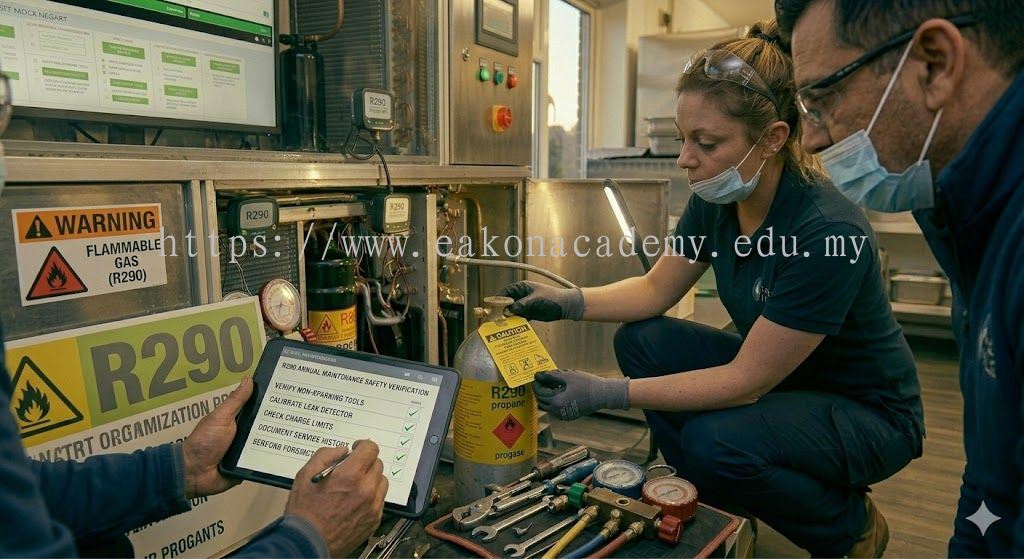
R290 MAINTENANCE SAFETY PRECAUTIONS: CRITICAL HVAC-R RISK CONTROL, FLAMMABLE REFRIGERANT HANDLING GUIDELINES AND PROFESSIONAL INDUSTRIAL SAFETY PRACTICES
R290 maintenance safety precautions are an essential part of modern HVAC-R servicing practices, focusing on the safe handling, maintenance, and operation of refrigeration systems that use propane (R290) as a natural refrigerant. As the HVAC industry continues to shift toward environmentally friendly, low-GWP (Global Warming Potential) refrigerants, R290 has become increasingly popular in commercial and industrial applications due to its high energy efficiency and low environmental impact. However, because R290 is a flammable hydrocarbon refrigerant, strict safety precautions must always be followed during maintenance activities to prevent fire hazards, system damage, and personal injury. These safety precautions are designed to ensure that technicians can perform servicing tasks such as leak detection, compressor maintenance, refrigerant charging, and system inspection in a controlled and safe environment. Proper implementation of R290 maintenance safety precautions helps maintain system reliability, reduce operational risks, and ensure compliance with international HVAC safety standards and environmental regulations.
A key aspect of R290 maintenance safety precautions involves controlling the working environment before any maintenance work begins. Technicians must ensure that the area is well-ventilated to prevent the accumulation of flammable refrigerant vapors. All potential ignition sources, such as open flames, smoking materials, and non-explosion-proof electrical equipment, must be strictly prohibited in the maintenance zone. Proper risk assessment must be conducted to identify any hazards associated with the refrigeration system, including possible refrigerant leaks, damaged components, or electrical faults. Grounding and bonding procedures are also critical safety measures to prevent static electricity discharge, which could ignite R290 gas. Additionally, technicians must use only approved tools and equipment that are specifically designed for use with hydrocarbon refrigerants to ensure safe and reliable maintenance operations.
Another important element of R290 maintenance safety precautions is the correct handling of refrigerant cylinders and system components. Cylinders must always be stored and transported in an upright position, secured to prevent tipping, and kept away from heat sources or direct sunlight. During maintenance operations, technicians must carefully monitor refrigerant levels using approved leak detection devices to ensure that no gas is released into the environment. Pressure testing and system charging must be performed with precision to avoid overcharging or undercharging, both of which can affect system performance and safety. Personal protective equipment (PPE), including safety gloves, goggles, and anti-static clothing, must always be worn to minimize exposure risks during maintenance procedures.
From a training and professional development perspective, understanding R290 maintenance safety precautions is a core requirement for HVAC-R technicians working with natural refrigerant systems. Institutions such as Eakon Academy Malaysia provide specialized training programs that teach technicians how to apply safety protocols effectively in real-world environments. These programs cover essential topics such as hazard identification, risk control measures, emergency response procedures, and safe system servicing techniques. Through hands-on training and theoretical instruction, learners gain the skills needed to maintain R290 systems safely while adhering to industry regulations and best practices.
Furthermore, implementing proper R290 maintenance safety precautions contributes significantly to environmental protection and system efficiency. Safe maintenance practices reduce the risk of refrigerant leaks, minimize energy waste, and ensure stable system performance in commercial and industrial refrigeration applications. As the HVAC-R industry continues to evolve toward sustainable and energy-efficient technologies, expertise in R290 safety procedures is becoming increasingly valuable, offering strong career opportunities for technicians while enabling businesses to achieve safer, more efficient, and environmentally responsible refrigeration operations in a rapidly advancing global industry.
更多 EAKON ACADEMY SDN BHD 相关资料 Malaysia