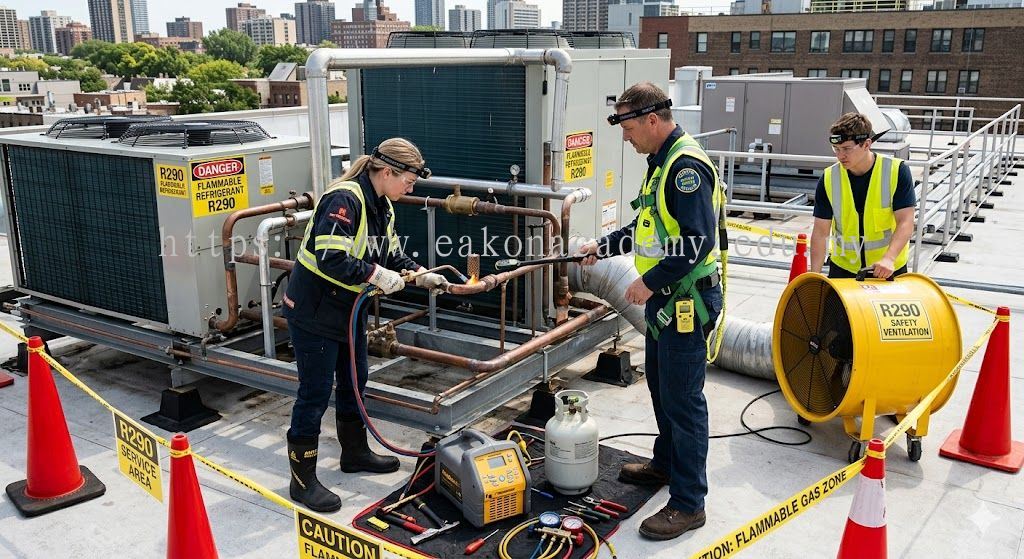
R290 REFRIGERANT LEAK MAINTENANCE PROCEDURES: ADVANCED HVAC-R SAFETY PROTOCOLS, LEAK DETECTION METHODS AND NATURAL REFRIGERANT SYSTEM PROTECTION
R290 refrigerant leak maintenance procedures are a critical aspect of modern HVAC-R system servicing, focusing on the safe detection, repair, and prevention of propane (R290) refrigerant leaks in refrigeration and air conditioning systems. As industries increasingly adopt R290 due to its low global warming potential (GWP) and high energy efficiency, ensuring proper leak maintenance has become essential for system safety, environmental protection, and operational reliability. R290 is a flammable hydrocarbon refrigerant, which means that even small leaks can pose significant safety risks if not properly controlled. Therefore, structured leak maintenance procedures are required to identify potential hazards early, prevent refrigerant loss, and maintain compliance with international HVAC safety standards and environmental regulations. These procedures include systematic leak detection, risk assessment, system isolation, repair techniques, pressure testing, and post-repair verification to ensure the refrigeration system operates safely and efficiently.
A key step in R290 refrigerant leak maintenance procedures is accurate leak detection. Technicians must use approved hydrocarbon-compatible leak detection equipment designed specifically for flammable refrigerants. These devices are used to inspect all critical system components, including compressor seals, evaporator coils, condenser joints, piping connections, and service valves. Early detection is essential to prevent refrigerant accumulation in enclosed spaces, which could create a flammable atmosphere. Visual inspection is also an important part of the process, as technicians look for signs of oil residue, corrosion, or frost buildup that may indicate a leak. In addition, pressure testing using inert gases is often conducted to confirm system integrity before and after maintenance activities.
Once a leak is identified, proper R290 refrigerant leak maintenance procedures require immediate system isolation to prevent further refrigerant loss and reduce safety risks. Technicians must safely recover remaining refrigerant using approved recovery equipment designed for hydrocarbon systems. The affected area must be properly ventilated, and all ignition sources must be eliminated before repair work begins. Depending on the severity of the leak, repairs may involve tightening connections, replacing damaged components, or re-brazing pipe joints. All repair work must be carried out using explosion-safe tools and in accordance with strict HVAC safety guidelines.
After repairs are completed, the system undergoes a thorough pressure test and vacuum process to ensure that no further leaks are present. The system is then recharged with the correct amount of R290 refrigerant, following precise charging procedures to maintain optimal performance and efficiency. Technicians must monitor system pressure, temperature, and airflow to verify that the refrigeration system is operating within manufacturer specifications. A final leak detection test is conducted to confirm system integrity before returning the equipment to normal operation.
From an educational and industry training perspective, mastering R290 refrigerant leak maintenance procedures is essential for HVAC-R professionals working with natural refrigerant systems. Institutions such as Eakon Academy Malaysia provide structured training programs that equip technicians with the knowledge and hands-on skills required to safely detect and repair refrigerant leaks. Through practical workshops and theoretical instruction, learners gain expertise in leak detection technology, system diagnostics, preventive maintenance, and safety compliance.
Furthermore, proper implementation of R290 refrigerant leak maintenance procedures plays a significant role in improving system efficiency, reducing environmental impact, and ensuring workplace safety. By preventing refrigerant loss, systems operate more efficiently, consume less energy, and produce fewer emissions. As the HVAC-R industry continues to shift toward sustainable and eco-friendly technologies, expertise in leak maintenance for R290 systems is becoming increasingly valuable, offering strong career opportunities for technicians while supporting safer, more reliable, and environmentally responsible refrigeration operations across commercial and industrial sectors.
更多 EAKON ACADEMY SDN BHD 相关资料 Malaysia