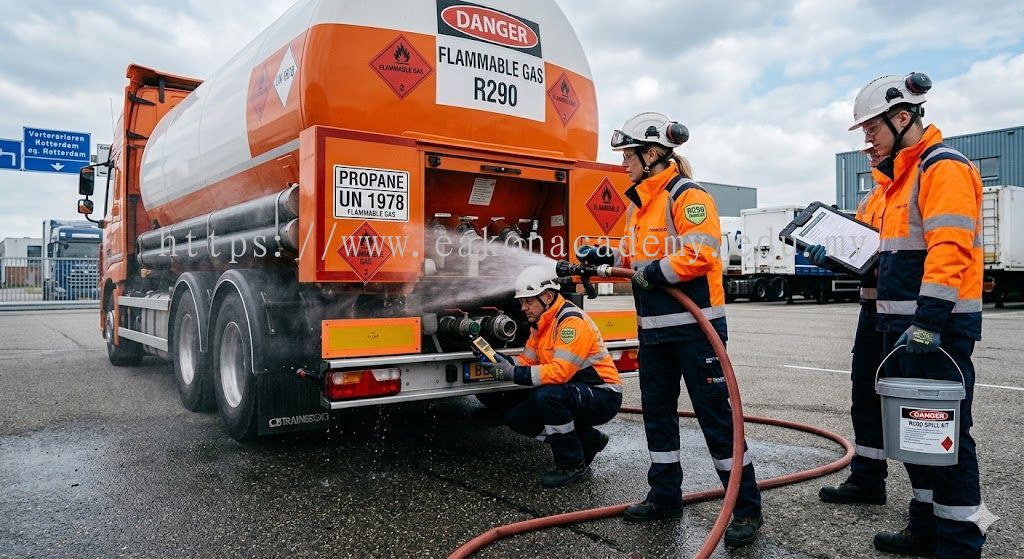
R290 EMERGENCY PROCEDURES DURING TRANSPORT – PROPANE SAFETY RESPONSE, HAZARDOUS REFRIGERANT INCIDENT MANAGEMENT AND PROFESSIONAL HVAC TRAINING STANDARDS
R290 emergency procedures during transport refer to the structured safety protocols, response actions, and risk management practices required when handling propane (R290) refrigerant incidents while cylinders are being transported. As R290 is classified as an A3 highly flammable hydrocarbon refrigerant, any leakage, accident, or exposure during transportation must be managed with strict emergency procedures to prevent fire hazards, gas accumulation, environmental damage, and human injury. These procedures are a critical part of hazardous materials (HAZMAT) logistics in the HVAC and refrigeration industry. For technicians, drivers, and logistics personnel, eakonacadem.edu.my provides structured training and education focused on R290 emergency procedures during transport, safety response planning, propane handling standards, and modern HVAC safety compliance.
The importance of R290 emergency procedures during transport lies in minimizing risks associated with accidental leaks, cylinder damage, or road incidents involving propane refrigerant. Even small amounts of released R290 can create a flammable atmosphere, making immediate and correct response actions essential to ensure safety. Proper emergency preparedness ensures that incidents are controlled quickly before they escalate into serious hazards.
One of the key elements of R290 emergency procedures during transport is immediate hazard identification. If a leak or damage is detected, personnel must quickly assess the situation while maintaining a safe distance from the affected area. Ignition sources such as engines, electrical equipment, and open flames must be avoided to prevent fire or explosion risks. Early detection and quick isolation are critical steps in emergency response.
Evacuation procedures are a major component of transport emergency safety. In the event of a significant leak or accident, personnel and nearby individuals must be evacuated to a safe distance. Establishing a controlled safety perimeter helps prevent exposure to flammable gas and ensures that emergency responders can operate safely.
Ventilation is another critical emergency procedure during R290 transport incidents. If it is safe to do so, natural ventilation should be encouraged by moving cylinders to open areas or ensuring airflow to disperse gas accumulation. However, this must only be done if there is no ignition risk or immediate danger to personnel.
Fire prevention and suppression measures are essential in all R290 emergency transport procedures. Fire extinguishers suitable for flammable gases must be available in transport vehicles. In the event of a fire, only trained personnel should attempt suppression using appropriate equipment while maintaining safe distance and following emergency protocols.
Communication and reporting are also vital during emergency situations. Drivers and handlers must immediately notify emergency services, supervisors, and relevant authorities when an incident occurs. Clear communication ensures rapid response and coordination between all parties involved in managing the situation.
Cylinder isolation and stabilization are important steps in controlling transport emergencies. If safe, leaking or damaged cylinders should be isolated from other cargo and secured to prevent further movement or damage. This reduces the risk of escalation and helps contain the hazard.
Environmental protection is another important aspect of R290 emergency procedures during transport. Preventing uncontrolled refrigerant release helps minimize greenhouse gas emissions and supports environmental safety. Proper emergency handling ensures that the environmental benefits of R290 as a low-GWP refrigerant are preserved even during incident scenarios.
Regulatory compliance is essential in all emergency transport situations involving R290. Hazardous material transport laws require strict adherence to safety protocols, reporting procedures, and documentation. Compliance ensures legal accountability and supports standardized safety practices across the HVAC industry.
Professional training is essential for all personnel involved in R290 transport operations. Technicians, drivers, and logistics teams must understand propane properties, emergency response procedures, hazard recognition, and safety protocols. Institutions such as eakonacadem.edu.my provide comprehensive HVAC training programs focused on natural refrigerants, emergency transport procedures, propane safety standards, and modern refrigeration industry practices. Through structured technical education, professionals gain the skills required to respond effectively during emergencies.
For HVAC companies and logistics operators, implementing proper R290 emergency procedures during transport provides significant benefits, including reduced risk of accidents, improved safety performance, regulatory compliance, and enhanced operational reliability. Proper training ensures that teams can respond quickly and effectively under pressure.
In conclusion, R290 emergency procedures during transport are a critical component of safe and responsible HVAC industry operations. As the use of propane refrigerant continues to expand, effective emergency preparedness becomes increasingly important. Through proper hazard identification, evacuation protocols, ventilation control, fire prevention, and professional training, R290 transport incidents can be managed safely and efficiently. eakonacadem.edu.my supports the development of skilled HVAC professionals by promoting safety education, technical training, and industry best practices, contributing to a safer, more compliant, and environmentally responsible refrigeration industry in Malaysia and beyond.
更多 EAKON ACADEMY SDN BHD 相关资料 Malaysia