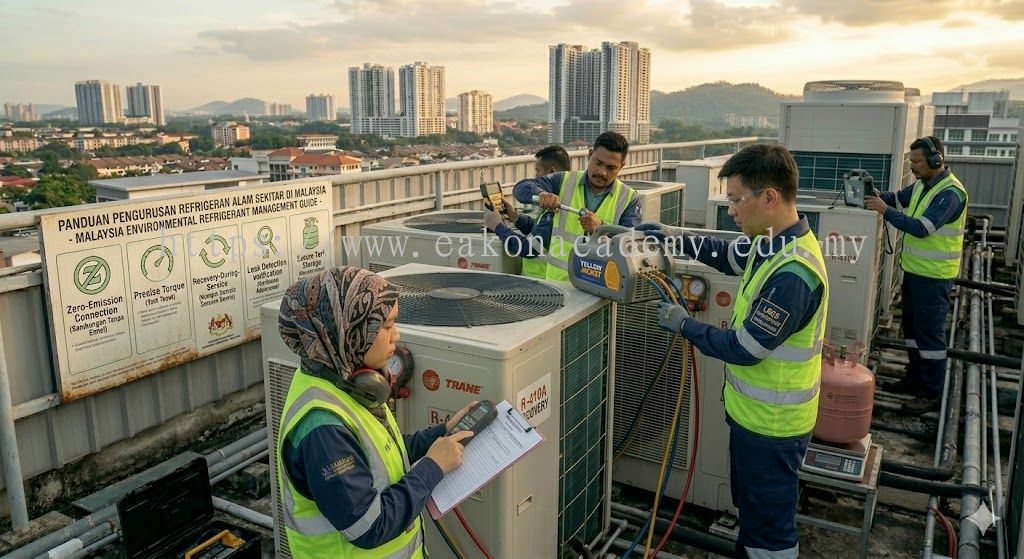
Environmental Refrigerant Management: Supporting Sustainable HVACR Practices, Regulatory Compliance, and Climate Protection
Environmental refrigerant management has become one of the most important priorities within the HVACR (Heating, Ventilation, Air Conditioning, and Refrigeration) industry as governments, businesses, and environmental organizations work together to reduce greenhouse gas emissions and protect the global environment. Refrigerants are essential for cooling and refrigeration systems used in commercial buildings, industrial facilities, hospitals, hotels, supermarkets, data centers, educational institutions, and residential properties. However, many refrigerants have high Global Warming Potential (GWP) and can contribute significantly to climate change when released into the atmosphere. Effective environmental refrigerant management helps organizations minimize environmental impact, improve system efficiency, ensure regulatory compliance, and support long-term sustainability goals.
Environmental refrigerant management involves the responsible control, handling, monitoring, recovery, recycling, reclamation, and disposal of refrigerants throughout the entire lifecycle of HVACR systems. The primary objective is to prevent refrigerant emissions that can damage the environment while ensuring that refrigeration and air conditioning systems operate safely and efficiently. As environmental regulations continue to evolve, organizations are increasingly required to adopt structured refrigerant management programs that prioritize leak prevention, refrigerant containment, and environmentally responsible practices.
One of the most critical aspects of environmental refrigerant management is refrigerant leak prevention. Even small refrigerant leaks can have a significant environmental impact over time, particularly when systems contain refrigerants with high GWP values. Regular inspections, preventive maintenance programs, pressure testing, and electronic leak detection technologies help identify potential leak points before they become major issues. Proactive leak management reduces refrigerant loss, protects the environment, and improves overall system reliability.
Refrigerant recovery and recycling are also fundamental components of environmental refrigerant management. During equipment servicing, repairs, retrofits, or system decommissioning, refrigerants should be recovered using certified recovery equipment rather than being released into the atmosphere. Recovered refrigerants can often be recycled, reclaimed, or processed for future use. This approach minimizes waste, reduces the demand for newly manufactured refrigerants, and supports sustainable resource utilization within the HVACR industry.
The transition to environmentally friendly refrigerants is another key focus of environmental refrigerant management. Many organizations are moving away from refrigerants with high ozone depletion potential (ODP) and high GWP values toward low-GWP alternatives and natural refrigerants. These environmentally responsible refrigerants help reduce the carbon footprint of cooling systems while supporting international climate agreements and sustainability initiatives. Proper training and system design are essential to ensure the safe adoption of these new refrigerant technologies.
Energy efficiency is closely connected to environmental refrigerant management. HVACR systems that maintain proper refrigerant charge levels and operate without leaks typically perform more efficiently and consume less energy. Energy-efficient systems reduce indirect greenhouse gas emissions associated with electricity generation while lowering operating costs. Through effective refrigerant management practices, organizations can optimize both environmental performance and business profitability.
Documentation and refrigerant tracking are important elements of environmental refrigerant management programs. Maintaining accurate records of refrigerant inventories, leak incidents, recovery activities, servicing procedures, and disposal processes helps organizations demonstrate compliance with environmental regulations and industry standards. Detailed record keeping also supports performance analysis and continuous improvement initiatives.
Technician competency plays a vital role in environmental refrigerant management. HVACR professionals must be trained in refrigerant handling procedures, leak detection methods, recovery and recycling techniques, environmental regulations, and safety requirements. Ongoing education ensures that technicians remain informed about changing environmental standards and emerging refrigerant technologies. Skilled technicians are essential for reducing refrigerant emissions and maintaining environmentally responsible HVACR operations.
Advanced technologies are increasingly enhancing environmental refrigerant management efforts. Automated monitoring systems, smart sensors, remote diagnostics, and predictive maintenance tools allow organizations to monitor refrigerant performance in real time. These technologies help identify inefficiencies, detect leaks early, and improve overall refrigerant management effectiveness.
At eakonacadem.edu.my, HVACR professionals, technicians, facility managers, and industry stakeholders can access specialized training programs focused on environmental refrigerant management. These programs cover refrigerant containment strategies, leak detection techniques, refrigerant recovery and recycling procedures, environmental compliance requirements, sustainable HVACR practices, and energy efficiency optimization. Through a combination of theoretical knowledge and practical hands-on training, participants gain the expertise required to manage refrigerants responsibly and effectively.
As environmental sustainability becomes an increasingly important priority worldwide, environmental refrigerant management will continue to play a crucial role in the future of the HVACR industry. Organizations that implement strong refrigerant management programs can reduce greenhouse gas emissions, improve operational efficiency, strengthen regulatory compliance, and demonstrate environmental leadership. Through professional education and industry-focused training provided by eakonacadem.edu.my, HVACR professionals can develop the knowledge and skills needed to support a cleaner, more sustainable, and environmentally responsible future for refrigeration and air conditioning systems.
More detail about EAKON ACADEMY SDN BHD Malaysia