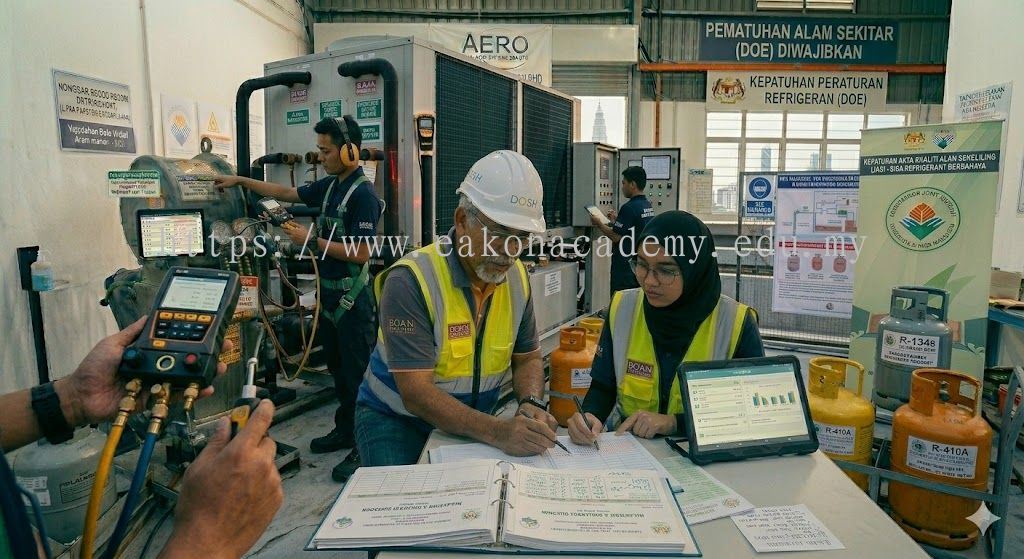
DOE Approved HVAC Compliance Guidelines: Ensuring Environmental Responsibility, Regulatory Compliance, and Sustainable HVACR Operations in Malaysia
DOE Approved HVAC Compliance Guidelines refer to the environmental standards, operational requirements, best practices, and compliance procedures established or recognized by the Malaysian Department of Environment (DOE) to ensure the responsible operation and management of HVACR (Heating, Ventilation, Air Conditioning, and Refrigeration) systems. These guidelines play a vital role in helping industries, commercial facilities, building operators, maintenance teams, and HVAC professionals comply with environmental regulations while reducing refrigerant emissions, improving energy efficiency, and supporting Malaysia’s sustainability objectives. As environmental awareness and climate-related regulations continue to evolve, adherence to DOE approved HVAC compliance guidelines has become increasingly important for organizations seeking to maintain regulatory compliance and environmental stewardship.
HVAC systems are widely used throughout Malaysia in industrial manufacturing facilities, commercial buildings, shopping complexes, hospitals, educational institutions, hotels, cold storage warehouses, pharmaceutical plants, food processing facilities, logistics centers, and data centers. These systems are essential for maintaining indoor comfort, process cooling, product preservation, and operational continuity. However, HVAC systems also contain refrigerants that may contribute to ozone depletion and global warming if improperly managed. DOE approved HVAC compliance guidelines provide organizations with a structured framework for minimizing environmental impact while maintaining system performance and reliability.
One of the primary focuses of DOE approved HVAC compliance guidelines is refrigerant management. Organizations are encouraged to adopt responsible refrigerant handling practices throughout the entire lifecycle of HVAC equipment. This includes proper refrigerant selection, storage, installation, maintenance, leak prevention, recovery, recycling, reclamation, and disposal. Effective refrigerant management helps reduce greenhouse gas emissions, supports environmental protection initiatives, and ensures compliance with national environmental regulations.
Leak detection and leak prevention are essential components of HVAC compliance. Refrigerant leaks are among the most significant environmental concerns associated with HVAC systems because they can release greenhouse gases into the atmosphere and reduce system efficiency. DOE approved HVAC compliance guidelines encourage regular inspections, preventive maintenance programs, refrigerant monitoring systems, pressure testing, and the use of advanced leak detection technologies. These practices help organizations identify potential leaks early, minimize refrigerant losses, and maintain optimal equipment performance.
Energy efficiency is another important aspect of HVAC compliance guidelines. Properly maintained HVAC systems consume less energy, reduce operating costs, and lower carbon emissions. DOE approved HVAC compliance guidelines emphasize the importance of regular equipment servicing, proper refrigerant charge management, system optimization, and performance monitoring. Energy-efficient HVAC systems not only contribute to environmental sustainability but also provide significant long-term cost savings for organizations.
Proper refrigerant recovery and recycling procedures are also highlighted within DOE approved HVAC compliance guidelines. During equipment servicing, retrofitting, or decommissioning, refrigerants must be safely recovered using certified recovery equipment rather than being released into the atmosphere. Recovered refrigerants can be recycled, reclaimed, or disposed of according to approved environmental procedures. These practices support sustainable refrigerant lifecycle management and reduce the environmental impact of HVAC operations.
Documentation and record keeping are critical requirements for HVAC compliance. Organizations should maintain accurate records of refrigerant inventories, maintenance activities, leak inspections, recovery operations, equipment servicing, and environmental reporting. Proper documentation supports regulatory audits, demonstrates compliance, and helps organizations monitor their environmental performance over time. Comprehensive records also improve accountability and facilitate continuous improvement initiatives.
Environmental reporting and compliance monitoring are increasingly important for industrial and commercial facilities. DOE approved HVAC compliance guidelines encourage organizations to implement systems for tracking refrigerant usage, emissions, maintenance activities, and energy performance. This information can be used to support environmental audits, sustainability reporting, and corporate environmental management programs. Effective reporting helps organizations demonstrate their commitment to responsible environmental practices.
Safety management is another important element of HVAC compliance. Refrigerants can present hazards related to toxicity, flammability, high pressure, or oxygen displacement depending on the refrigerant type. DOE approved HVAC compliance guidelines emphasize the importance of conducting risk assessments, implementing safety procedures, providing appropriate personal protective equipment (PPE), and ensuring emergency response readiness. Strong safety programs protect employees, equipment, and facility operations.
Training and competency development are fundamental to successful compliance implementation. HVAC technicians, engineers, facility managers, environmental officers, and maintenance personnel must possess the knowledge and skills necessary to manage refrigerants responsibly and operate HVAC systems in accordance with environmental requirements. Continuous professional development helps ensure that personnel remain informed about regulatory updates, technological advancements, and industry best practices.
At eakonacadem.edu.my, HVAC professionals, industrial engineers, maintenance teams, facility managers, and environmental compliance officers can access comprehensive training programs focused on DOE approved HVAC compliance guidelines, refrigerant management, leak detection and prevention, refrigerant recovery and recycling, environmental reporting, energy-efficient HVAC operations, and industrial sustainability practices. These industry-focused programs combine theoretical learning with practical applications to help organizations strengthen compliance and improve environmental performance.
As Malaysia continues to advance its environmental protection initiatives and climate commitments, DOE approved HVAC compliance guidelines will remain an essential foundation for responsible HVACR management. Organizations that adopt these guidelines can reduce refrigerant emissions, improve energy efficiency, enhance workplace safety, strengthen environmental compliance, and support long-term sustainability goals. Through professional education and specialized technical training offered by eakonacadem.edu.my, industry professionals can develop the expertise required to implement best-in-class HVAC compliance practices and contribute to a cleaner, greener, and more sustainable future for Malaysia’s industrial and commercial sectors.
More detail about EAKON ACADEMY SDN BHD Malaysia