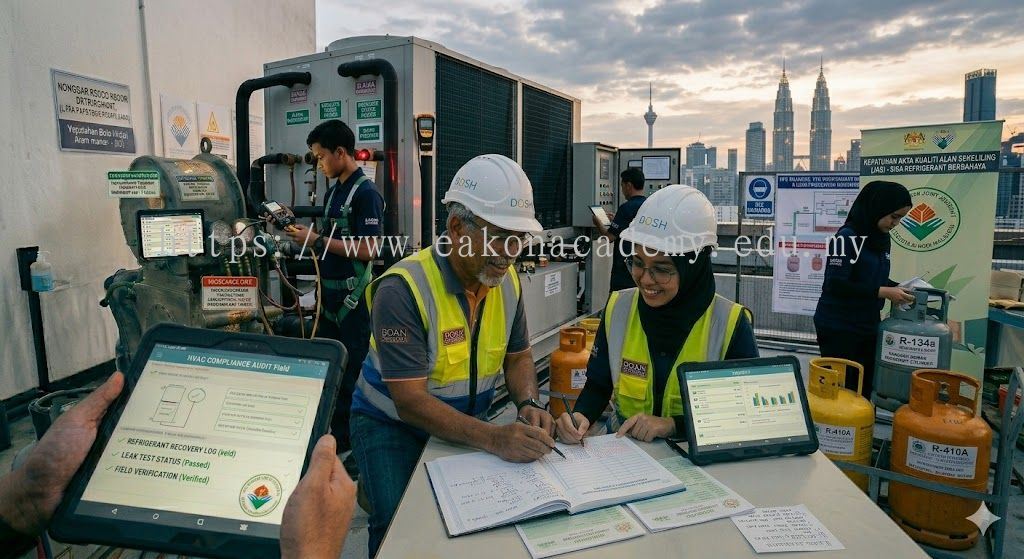
HVAC Inspection Compliance Malaysia DOE: Ensuring Regulatory Compliance, System Reliability, and Environmental Sustainability
HVAC Inspection Compliance Malaysia DOE refers to the systematic inspection, assessment, monitoring, and maintenance of Heating, Ventilation, Air Conditioning, and Refrigeration (HVACR) systems to ensure compliance with environmental regulations, refrigerant management requirements, safety standards, and operational best practices promoted by the Department of Environment (DOE) Malaysia. Regular HVAC inspections play a critical role in maintaining efficient system performance, preventing refrigerant emissions, improving energy efficiency, and supporting environmental sustainability goals. As Malaysia continues to strengthen environmental protection initiatives and climate-related policies, HVAC inspection compliance has become an essential component of responsible facility management across industrial, commercial, institutional, and government sectors.
HVAC systems are widely installed in manufacturing plants, office buildings, shopping malls, hospitals, hotels, universities, logistics centers, cold storage facilities, pharmaceutical factories, food processing plants, and data centers throughout Malaysia. These systems provide cooling, ventilation, humidity control, and temperature regulation that are vital for business operations and occupant comfort. However, HVAC equipment can also become a source of environmental concern if refrigerant leaks, poor maintenance practices, or inefficient operation occur. HVAC Inspection Compliance Malaysia DOE helps organizations identify potential issues before they become serious environmental, operational, or financial problems.
One of the primary objectives of HVAC inspection compliance is refrigerant leak detection and prevention. Refrigerants are essential for cooling operations, but many refrigerant gases have high Global Warming Potential (GWP). If refrigerants escape into the atmosphere through leaks, they can contribute significantly to climate change while reducing HVAC system efficiency. Routine inspections help identify refrigerant leaks, damaged components, loose fittings, corroded pipes, and other issues that may lead to refrigerant emissions. Early detection enables timely corrective action, reducing environmental impact and preventing costly repairs.
HVAC inspection compliance also focuses on evaluating overall system performance. During inspections, technicians assess key components such as compressors, condensers, evaporators, cooling towers, ventilation systems, controls, sensors, pumps, and refrigerant piping. Performance assessments help determine whether equipment is operating efficiently and within recommended parameters. Identifying performance issues early allows organizations to improve system reliability, reduce energy consumption, and extend equipment lifespan.
Energy efficiency is a major consideration within HVAC Inspection Compliance Malaysia DOE programs. HVAC systems often account for a significant portion of energy usage in commercial and industrial facilities. Inspections help identify inefficiencies such as dirty coils, clogged filters, improper refrigerant charge levels, malfunctioning controls, restricted airflow, and aging equipment. Addressing these issues improves energy efficiency, reduces electricity costs, and lowers carbon emissions associated with energy consumption. Efficient HVAC operation supports both environmental and economic sustainability objectives.
Preventive maintenance is closely linked to inspection compliance. Rather than waiting for equipment failures to occur, preventive inspection programs focus on identifying and correcting potential problems before they affect system performance. Routine inspections support predictive maintenance strategies, minimize unplanned downtime, and reduce maintenance costs. Organizations that implement regular inspection schedules often experience improved equipment reliability and greater operational continuity.
Environmental compliance is another important benefit of HVAC inspections. Regulatory expectations increasingly emphasize responsible refrigerant management, emission control, and environmental stewardship. HVAC Inspection Compliance Malaysia DOE encourages organizations to monitor refrigerant usage, inspect systems regularly, document maintenance activities, and implement corrective actions when necessary. These practices help businesses demonstrate environmental responsibility and maintain compliance with relevant environmental requirements.
Documentation and record keeping are essential elements of inspection compliance programs. Organizations should maintain detailed records of inspection results, maintenance activities, refrigerant inventories, leak detection findings, repair actions, and performance evaluations. Accurate documentation supports environmental audits, internal reviews, regulatory inspections, and sustainability reporting. Comprehensive records also help organizations track equipment performance trends and identify opportunities for continuous improvement.
Safety management is an important aspect of HVAC inspections. Refrigeration and air conditioning systems may involve hazards such as high-pressure refrigerants, electrical systems, moving mechanical components, and potentially flammable or toxic refrigerants. Inspection programs help identify safety risks and ensure that equipment operates safely and reliably. Proper inspections contribute to workplace safety while protecting personnel, facility assets, and business operations.
Advanced inspection technologies are increasingly being utilized to support HVAC compliance efforts. Thermal imaging cameras, ultrasonic testing devices, electronic leak detectors, vibration analysis equipment, refrigerant monitoring systems, and smart building management platforms allow technicians to identify hidden issues quickly and accurately. These technologies improve inspection effectiveness and support proactive maintenance strategies.
The adoption of digital monitoring systems further enhances HVAC inspection compliance. Automated monitoring solutions provide real-time data on system performance, refrigerant levels, temperature control, energy usage, and equipment condition. Continuous monitoring enables facility managers to detect abnormalities early, optimize maintenance schedules, and improve operational efficiency. These technologies support both compliance objectives and long-term asset management strategies.
Training and competency development are essential for effective HVAC inspection compliance. HVAC technicians, engineers, maintenance personnel, facility managers, and environmental compliance officers must understand inspection procedures, refrigerant management practices, energy efficiency principles, environmental requirements, and safety protocols. Ongoing professional development ensures that personnel remain informed about evolving industry standards and technological advancements.
At eakonacadem.edu.my, HVAC professionals, facility managers, industrial engineers, environmental officers, and maintenance teams can access specialized training programs focused on HVAC Inspection Compliance Malaysia DOE, refrigerant management, leak detection technologies, preventive maintenance practices, environmental reporting, energy-efficient HVAC operations, and sustainable cooling system management. These industry-relevant programs provide practical knowledge and technical expertise to help organizations improve compliance, strengthen operational performance, and achieve sustainability goals.
As environmental regulations continue to evolve and organizations place greater emphasis on efficiency and sustainability, HVAC Inspection Compliance Malaysia DOE will remain a critical component of responsible HVACR management. Businesses that prioritize regular inspections can reduce refrigerant emissions, improve energy efficiency, enhance equipment reliability, strengthen environmental compliance, and lower operating costs. Through professional education and technical training offered by eakonacadem.edu.my, industry professionals can develop the skills needed to implement effective inspection programs and contribute to a more sustainable, efficient, and environmentally responsible HVAC industry in Malaysia.
More detail about EAKON ACADEMY SDN BHD Malaysia