
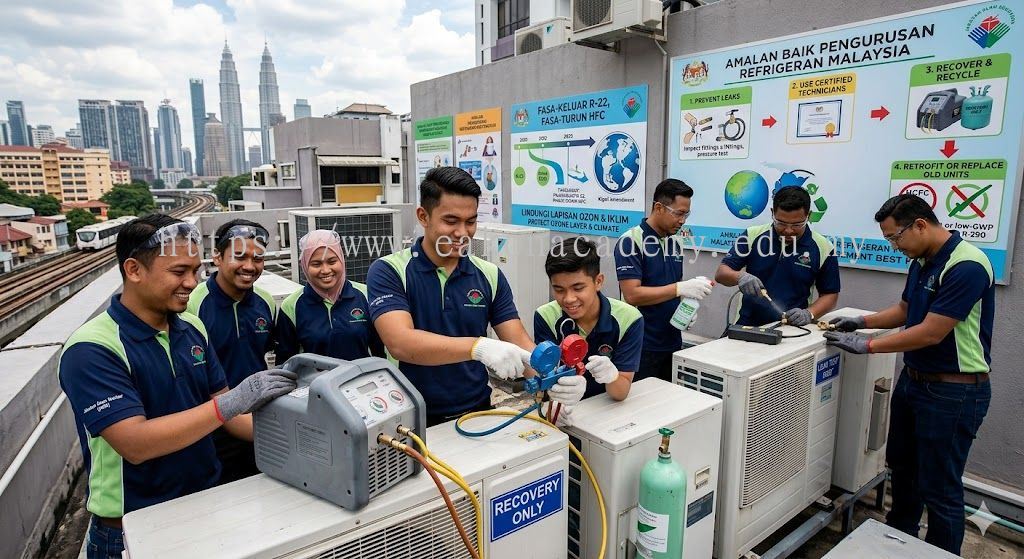
REFRIGERANT MANAGEMENT BEST PRACTICES MALAYSIA
Refrigerant management best practices Malaysia refer to the structured environmental, technical, and operational standards used within the HVACR (Heating, Ventilation, Air Conditioning, and Refrigeration) industry to ensure refrigerants are handled, controlled, and maintained in a safe, efficient, and environmentally responsible manner. These best practices are strongly supported by the Department of Environment (DOE) in Malaysia and are aligned with international environmental frameworks such as the Montreal Protocol and the Kigali Amendment. The main objective is to reduce greenhouse gas emissions, prevent ozone depletion, and promote sustainable cooling solutions across residential, commercial, and industrial applications.
In Malaysia, refrigerant management best practices cover the entire lifecycle of refrigerants, including system design, installation, commissioning, operation, maintenance, leak prevention, recovery, recycling, storage, transportation, and disposal. Proper management ensures that refrigerants remain contained within HVACR systems and are not released into the atmosphere. High Global Warming Potential (GWP) refrigerants such as hydrofluorocarbons (HFCs), as well as ozone-depleting substances like CFCs and HCFCs, must be strictly controlled under DOE-aligned practices. Even modern low-GWP refrigerants such as hydrofluoroolefins (HFOs), ammonia (NH ), carbon dioxide (CO ), and hydrocarbon refrigerants require proper management to ensure safety, efficiency, and environmental compliance.
A key element of refrigerant management best practices Malaysia is system efficiency and leak prevention. HVACR systems must be designed and installed with precision to minimize potential leak points and ensure long-term reliability. Regular inspections, preventive maintenance schedules, and performance monitoring are essential to detect issues early and maintain system integrity. Leak detection tools and pressure testing procedures are commonly used to ensure that refrigerant levels remain stable and that no environmental emissions occur during operation or servicing activities.
Training and certification play a crucial role in ensuring compliance with refrigerant management best practices in Malaysia. HVACR technicians must be properly trained to understand refrigerant behavior, environmental regulations, and safe handling techniques. Without proper training, improper management can lead to refrigerant leakage, reduced system efficiency, environmental damage, and legal consequences. Institutions such as Eakon Academy provide structured HVACR training programs that focus on DOE refrigerant management best practices, environmental compliance, and hands-on technical skills. These programs ensure that technicians are fully prepared to meet industry standards and regulatory expectations.
Refrigerant management best practices also contribute significantly to energy efficiency and cost reduction. Properly maintained HVACR systems operate more efficiently, consume less energy, and deliver consistent cooling performance. Poor refrigerant management can result in system inefficiencies, higher electricity consumption, frequent breakdowns, and increased maintenance costs. By implementing proper management practices, businesses can improve system reliability, extend equipment lifespan, and reduce long-term operational expenses. This makes refrigerant management not only an environmental responsibility but also a financially beneficial strategy.
In addition to environmental and economic advantages, refrigerant management best practices Malaysia support the country’s broader sustainability and climate action goals. HVACR systems are among the largest contributors to greenhouse gas emissions in buildings and industries. By enforcing proper refrigerant management standards, Malaysia is actively reducing environmental impact and promoting the adoption of energy-efficient and environmentally friendly technologies. Companies that comply with DOE-aligned best practices demonstrate strong environmental responsibility, enhance their sustainability profile, and align with global environmental standards. Compliance also reduces regulatory risks and ensures smoother approval processes for HVACR operations.
In conclusion, refrigerant management best practices Malaysia are essential for ensuring safe, efficient, and environmentally responsible HVACR operations. By following DOE guidelines, implementing proper management strategies, and participating in professional training programs offered by institutions such as Eakon Academy, HVACR professionals can strengthen their technical expertise and contribute to a cleaner, safer, and more sustainable future for Malaysia.
更多 EAKON ACADEMY SDN BHD 相关资料 Malaysia
