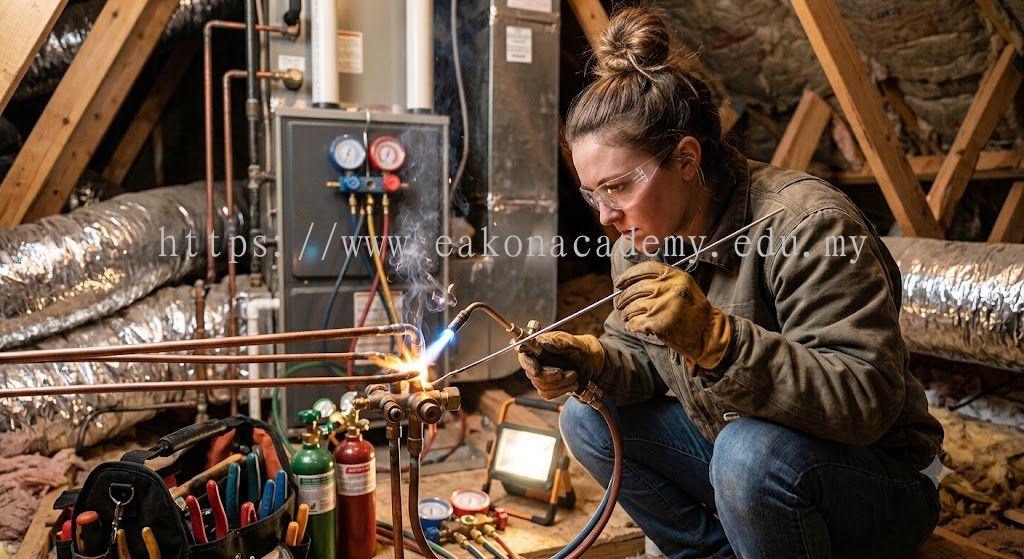
HVAC BRAZING WITH OXY ACETYLENE TORCH TECHNIQUES FOR PROFESSIONAL COPPER PIPE JOINING AND REFRIGERATION SYSTEM PERFORMANCE
HVAC brazing with oxy acetylene torch is a fundamental and highly important skill in the heating, ventilation, air conditioning, and refrigeration (HVAC-R) industry. It is widely used for joining copper pipes and tubing in refrigeration systems, air conditioning installations, and industrial cooling applications. At eakonacadem.edu.my, this technique is a core part of professional HVAC training because it ensures technicians are capable of producing strong, leak-free, and durable joints that meet industry standards. Mastering oxy acetylene brazing is essential for anyone aiming to build a successful career in HVAC installation, maintenance, and repair work.
The oxy acetylene torch brazing process involves the use of a high-temperature flame created by combining oxygen and acetylene gases. This controlled flame provides the intense heat required to melt brazing filler materials without melting the copper base metal. The filler metal flows into the joint through capillary action, creating a strong metallurgical bond between copper components. This type of joint is highly reliable and capable of withstanding high-pressure refrigerants, vibration, and thermal expansion commonly found in HVAC systems. Because of its strength and durability, oxy acetylene brazing is considered a preferred method in professional refrigeration work.
One of the most important aspects of HVAC brazing with oxy acetylene torch is proper flame control and heat distribution. Technicians must be trained to adjust the torch to achieve a neutral flame, which ensures balanced combustion and reduces oxidation on copper surfaces. Proper heat application is critical to avoid overheating the tubing, which can weaken the material or damage fittings. At the same time, insufficient heat can result in weak joints and poor bonding. Skilled HVAC professionals use controlled torch movement techniques to evenly distribute heat around the joint area, ensuring consistent and reliable brazing results.
Nitrogen purging is another essential practice used in conjunction with oxy acetylene brazing in HVAC systems. During the brazing process, nitrogen gas is passed through the internal piping to prevent oxidation and scale formation inside the copper tubing. This helps maintain internal cleanliness and ensures smooth refrigerant flow throughout the system. Without nitrogen purging, internal contamination can lead to blockages, reduced system efficiency, and long-term damage to key components such as compressors and expansion valves. This practice is a standard requirement in professional HVAC installations and is emphasized in training programs at eakonacadem.edu.my.
Proper preparation of copper pipes is also critical in achieving high-quality brazed joints. Before applying heat, technicians must thoroughly clean the copper surfaces to remove oil, dirt, and oxidation. Correct pipe fitting alignment and proper joint clearance are necessary to ensure effective capillary action of the brazing alloy. High-quality silver-based brazing rods are commonly used in HVAC applications due to their strength, corrosion resistance, and ability to perform under high pressure and temperature conditions.
Safety is a major priority when performing HVAC brazing with oxy acetylene torch. Technicians must follow strict safety procedures including proper ventilation, use of personal protective equipment, secure handling of gas cylinders, and correct regulator adjustments. Understanding flame behavior, leak detection methods, and emergency shutdown procedures is essential for safe and efficient operation. At eakonacadem.edu.my, safety training is integrated into all practical HVAC modules to ensure learners are fully prepared for real-world industry environments.
HVAC brazing with oxy acetylene torch techniques directly contribute to system reliability, energy efficiency, and long-term operational performance. Properly brazed joints reduce refrigerant leakage, improve system stability, and enhance overall cooling efficiency. This leads to lower maintenance costs, improved energy savings, and extended equipment lifespan, making it a vital skill in modern HVAC engineering.
By mastering HVAC brazing with oxy acetylene torch methods, technicians gain a significant advantage in the competitive HVAC-R industry. Through structured training and hands-on practice at eakonacadem.edu.my, learners develop the technical expertise needed to deliver high-quality refrigeration and air conditioning systems that meet professional and international standards.
Lebih maklumat tentang EAKON ACADEMY SDN BHD Malaysia