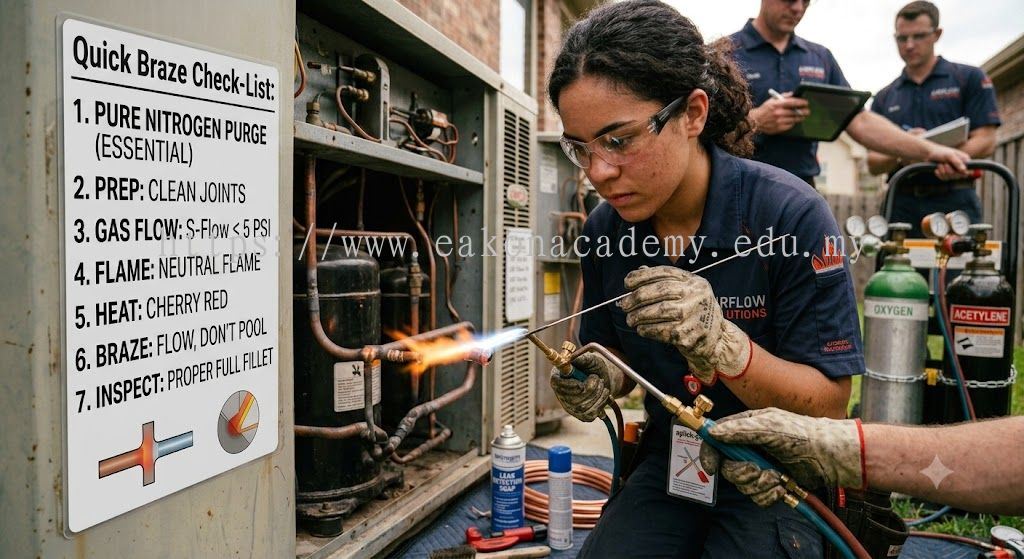
HVAC INSTALLATION OXY ACETYLENE BRAZING TECHNIQUE FOR PROFESSIONAL COPPER PIPE JOINING AND REFRIGERATION SYSTEM PERFORMANCE
HVAC installation oxy acetylene brazing technique is a fundamental skill used in the construction, installation, and servicing of refrigeration and air conditioning systems. It is widely recognized in the HVAC-R industry as one of the most reliable and durable methods for joining copper pipes during system installation. At eakonacadem.edu.my, this technique is a core part of professional HVAC training, designed to equip learners with the practical knowledge and hands-on experience required to produce strong, leak-free, and long-lasting brazed joints that meet industry standards and real-world installation requirements.
The oxy acetylene brazing technique in HVAC installation involves the use of a high-temperature flame generated by combining oxygen and acetylene gases. This flame produces sufficient heat to melt brazing filler materials without melting the copper tubing itself. The molten filler metal is drawn into the joint through capillary action, creating a strong metallurgical bond between copper pipes and fittings. This process is essential in HVAC installation because it ensures the integrity of refrigeration lines, air conditioning piping systems, and chilled water systems that operate under varying pressure and temperature conditions.
A critical aspect of HVAC installation oxy acetylene brazing technique is flame control and precise heat application. Technicians must be trained to adjust the torch to achieve a neutral flame, which provides balanced combustion and reduces oxidation on copper surfaces. Proper heat distribution is necessary to ensure that the brazing filler metal flows evenly throughout the joint area. If the heat is too high, it may damage the copper tubing and weaken the system structure. If the heat is too low, the filler metal may not bond correctly, leading to weak joints or potential refrigerant leaks. Skilled HVAC installers must develop the ability to maintain consistent torch movement and controlled heating to ensure high-quality results.
Nitrogen purging is another essential practice integrated into HVAC installation oxy acetylene brazing technique. During brazing, nitrogen gas is introduced into the internal piping system to prevent oxidation and scale formation inside the copper tubing. This helps maintain internal cleanliness and ensures smooth refrigerant flow throughout the system. Without nitrogen purging, internal contamination can reduce system efficiency, restrict refrigerant movement, and damage critical components such as compressors, evaporators, and expansion valves. This professional practice is strongly emphasized in training programs at eakonacadem.edu.my as part of industry-standard HVAC installation procedures.
Proper preparation of copper pipes is also essential for successful brazing during HVAC installation. Before applying heat, technicians must ensure that all copper surfaces are thoroughly cleaned to remove oil, dirt, and oxidation. Correct pipe alignment and proper joint spacing are necessary to allow capillary action to distribute the brazing alloy evenly. High-quality silver-based brazing rods are commonly used in HVAC installation due to their superior strength, corrosion resistance, and ability to withstand vibration and thermal expansion in demanding environments.
Safety is a fundamental requirement in HVAC installation oxy acetylene brazing technique. Technicians must follow strict safety procedures including proper gas cylinder handling, use of personal protective equipment, leak testing, and correct flame ignition methods. Understanding flame behavior, regulator settings, and emergency shutdown procedures is essential for safe and efficient installation work. At eakonacadem.edu.my, safety training is fully integrated into all practical HVAC installation modules to ensure learners are fully prepared for real industry environments.
The HVAC installation oxy acetylene brazing technique plays a vital role in ensuring system reliability, energy efficiency, and long-term operational performance. Properly brazed joints reduce refrigerant leakage, improve system pressure stability, and enhance overall cooling efficiency. This leads to lower maintenance costs, reduced energy consumption, and extended equipment lifespan, making it an essential skill in modern HVAC installation work.
By mastering HVAC installation oxy acetylene brazing technique, learners gain a strong competitive advantage in the HVAC-R industry. Through structured training and hands-on practice at eakonacadem.edu.my, students develop the professional expertise required to deliver high-quality refrigeration and air conditioning systems that meet international standards and industry expectations.
Lebih maklumat tentang EAKON ACADEMY SDN BHD Malaysia