HVAC OXY ACETYLENE BRAZING SAFETY PROCEDURES FOR PROFESSIONAL REFRIGERATION AND AIR CONDITIONING WORK PRACTICES
HVAC oxy acetylene brazing safety procedures are essential guidelines that ensure technicians, engineers, and students can perform copper pipe brazing operations safely, efficiently, and in compliance with industry standards. In the heating, ventilation, air conditioning, and refrigeration (HVAC-R) industry, safety is not optional—it is a critical requirement that protects both personnel and equipment. At eakonacadem.edu.my, safety-focused training is a core component of HVAC education, ensuring learners are fully prepared to handle oxy acetylene brazing equipment responsibly in real installation, maintenance, and repair environments.
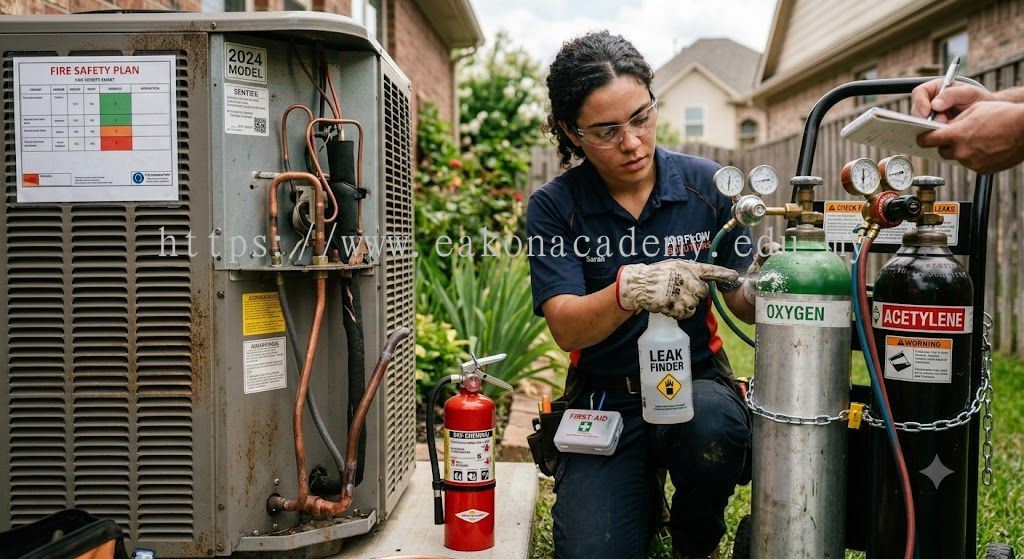
The oxy acetylene brazing process involves the use of highly flammable gases—oxygen and acetylene—which produce an extremely hot flame capable of reaching temperatures suitable for brazing copper pipes. Because of this, strict HVAC oxy acetylene brazing safety procedures must be followed at all times. Proper handling of gas cylinders is the first and most important step. Cylinders must always be stored upright, secured with chains or stands, and kept away from heat sources or direct sunlight. Regulators and hoses must be inspected regularly for leaks, damage, or wear before any brazing work begins.
Another key element of HVAC oxy acetylene brazing safety procedures is correct personal protective equipment (PPE). Technicians must wear safety goggles or welding helmets to protect their eyes from bright flame exposure and sparks. Heat-resistant gloves are required to prevent burns from hot copper tubing and molten filler materials. Flame-resistant clothing should be worn to reduce the risk of fire-related injuries during brazing operations. Proper footwear is also essential to protect against falling objects and accidental contact with hot materials.
Work area preparation plays a major role in ensuring safety during oxy acetylene brazing. The surrounding environment must be clear of flammable materials such as chemicals, paper, or plastic. Adequate ventilation is required to prevent the buildup of harmful gases and ensure safe breathing conditions. Fire extinguishers must always be available nearby, and technicians should be trained in emergency fire response procedures. At eakonacadem.edu.my, learners are trained to assess job site conditions before beginning any HVAC brazing task to ensure a safe working environment.
Proper ignition and flame control are also critical safety components in HVAC oxy acetylene brazing procedures. Technicians must follow correct lighting sequences, starting with opening the acetylene valve slightly before igniting the flame and then gradually adding oxygen to achieve a neutral flame. Backfire and flashback prevention techniques must be understood, including the use of flashback arrestors on gas lines. These devices help prevent dangerous flame reverse flow into hoses and cylinders, significantly reducing the risk of explosion.
Nitrogen purging safety is another important aspect of HVAC brazing procedures. While nitrogen is non-flammable, proper handling and controlled flow rates are necessary to avoid pressure-related issues within the piping system. Technicians must ensure correct connections and monitor flow carefully during brazing operations to maintain system integrity and safety.
Post-brazing safety procedures are equally important. After completing a brazing joint, technicians must allow sufficient cooling time before handling copper pipes to avoid burns. All gas valves must be properly shut off, and equipment must be checked for leaks or damage before storage. A final inspection of the brazed joint ensures structural integrity and system safety before commissioning.
HVAC oxy acetylene brazing safety procedures directly contribute to accident prevention, equipment protection, and long-term system reliability. Following proper safety protocols reduces the risk of fire hazards, gas leaks, and workplace injuries while ensuring high-quality brazed joints in HVAC systems. This makes safety training an essential part of professional HVAC education.
By mastering HVAC oxy acetylene brazing safety procedures, learners gain not only technical skills but also the discipline required for real-world HVAC environments. Through structured training and hands-on practice at eakonacadem.edu.my, students develop the knowledge and safety awareness needed to perform professional refrigeration and air conditioning work confidently, efficiently, and safely according to international industry standards.
Lebih maklumat tentang EAKON ACADEMY SDN BHD Malaysia