AC Copper Pipe Brazing Procedure Guide – Complete HVAC Refrigeration Copper Jointing Techniques for Professional Installation
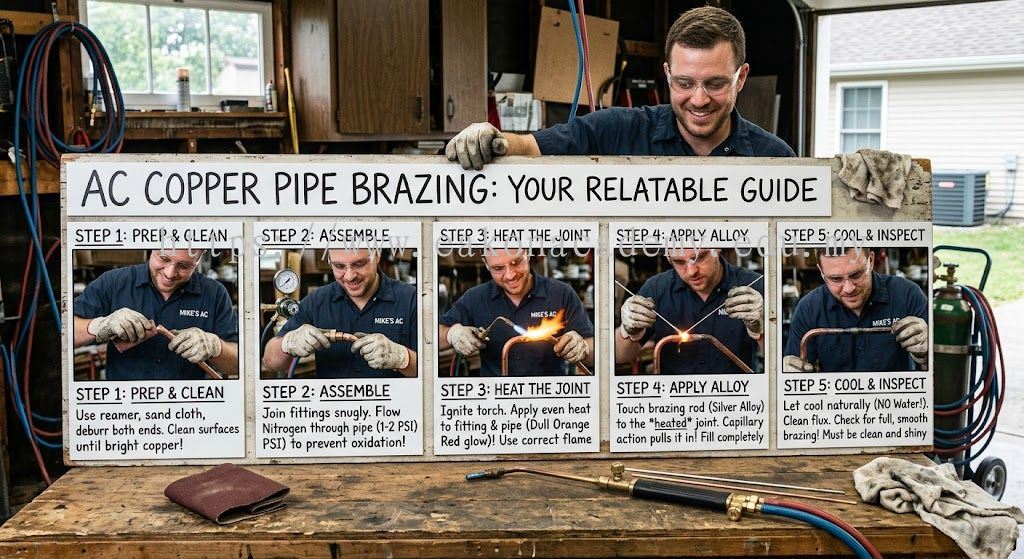
The AC copper pipe brazing procedure guide is an essential technical reference for HVAC and refrigeration learners, technicians, and industry professionals who want to achieve high-quality, durable, and leak-free copper pipe connections in air conditioning systems. In modern refrigeration applications, proper brazing is critical because it directly affects system efficiency, safety, and long-term performance. At Eakon Academy, this knowledge forms a core part of HVAC training programs, helping students develop industry-standard skills that meet real-world installation and maintenance requirements. Understanding the correct brazing procedure ensures that every copper joint can withstand high pressure, thermal expansion, and continuous operational stress without failure. The process begins with careful preparation of the copper tubing, where precise cutting using a tube cutter is required to maintain roundness and avoid deformation. After cutting, deburring both inside and outside edges is necessary to eliminate sharp surfaces that may disrupt refrigerant flow or weaken the joint structure. Cleanliness is a major factor in successful brazing, so all pipe ends and fittings must be thoroughly cleaned using abrasive pads or emery cloth to remove oxidation, oil, and contaminants. Any residue left on the surface can significantly reduce bonding strength and lead to future leakage issues. Once preparation is complete, proper fitting alignment is carried out to ensure that the copper pipe fits snugly into the joint with the correct capillary gap, allowing molten filler metal to flow evenly during brazing. At this stage, technicians may apply flux depending on the type of filler rod used, although many HVAC applications rely on flux-free silver brazing rods designed specifically for refrigeration systems. One of the most important steps in the AC copper pipe brazing procedure guide is nitrogen purging, where a controlled flow of nitrogen is introduced into the pipe system during heating. This prevents internal oxidation and scale formation, which can otherwise damage compressors, clog expansion valves, and reduce system efficiency. The heating process is then performed using an oxy-acetylene torch with a neutral flame, ensuring even heat distribution around the joint area. The technician must carefully monitor the copper color change to determine the correct brazing temperature, typically between 600°C and 650°C. Once the correct temperature is achieved, the brazing filler rod is applied, allowing it to melt through heat transfer from the base metal rather than direct flame contact. This ensures strong metallurgical bonding and proper capillary action throughout the joint. After brazing is completed, the joint must be left to cool naturally without forced cooling methods, as rapid temperature changes can introduce stress fractures and weaken the joint integrity. Once cooled, a thorough visual inspection is conducted to ensure proper filler flow and complete sealing around the joint. Finally, pressure testing and leak detection are performed to confirm system reliability before commissioning. Mastering the AC copper pipe brazing procedure guide is vital for anyone entering the HVAC field, as it ensures safe, efficient, and professional-grade installations. Through structured learning and hands-on training at Eakon Academy, students gain the technical competence required to excel in air conditioning installation, refrigeration servicing, and advanced HVAC system maintenance, making them highly skilled professionals in a growing global industry.
Lebih maklumat tentang EAKON ACADEMY SDN BHD Malaysia