Air Conditioning Brazing Safety Procedure – Essential HVAC Copper Brazing Safety Practices for Professional Installation
The air conditioning brazing safety procedure is a critical aspect of HVAC and refrigeration installation work, ensuring that technicians can perform copper pipe brazing operations safely, efficiently, and in compliance with industry safety standards. Brazing involves high temperatures, flammable gases, and pressurized systems, which makes safety control essential to prevent accidents, equipment damage, and poor installation quality. At Eakon Academy, safety training is a core part of HVAC education, helping students develop the discipline and awareness required to perform professional air conditioning installation work in real field conditions.
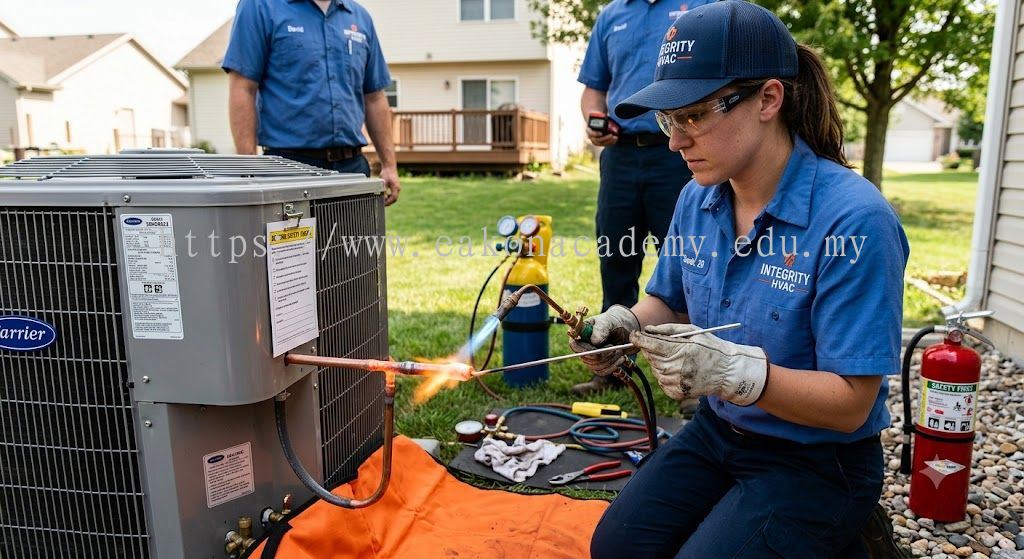
The air conditioning brazing safety procedure begins with proper personal protective equipment (PPE). Technicians must always wear safety goggles or face shields to protect against sparks and molten metal splashes during heating. Heat-resistant gloves are required to prevent burns when handling hot pipes and tools, while flame-resistant clothing helps reduce fire risk. Proper safety footwear is also essential to protect against falling tools or heated materials. These basic protective measures form the foundation of safe HVAC brazing practices.
Before starting any brazing work, proper worksite preparation is necessary. The area must be well-ventilated to avoid gas buildup from oxy-acetylene equipment and to reduce exposure to fumes generated during heating. Flammable materials such as paper, chemicals, or insulation must be removed from the working zone to minimize fire hazards. Fire extinguishers should always be accessible, and technicians must ensure that all gas cylinders are properly secured in an upright position to prevent tipping or leakage.
A key component of the air conditioning brazing safety procedure is the safe handling of oxy-acetylene equipment. Technicians must inspect hoses, regulators, and torch connections for leaks before ignition. Soap solution tests can be used to detect gas leaks. The flame must always be properly adjusted to a neutral flame to ensure controlled heating and reduce the risk of overheating or pipe damage. Gas cylinders must be opened slowly, and flashback arrestors should be installed to prevent flame reversal into the hose or cylinder, which can cause serious accidents.
During the brazing process, safe heating practices must be followed. The copper pipe should be heated evenly to avoid localized overheating, which can weaken the material or cause burns. Technicians must maintain a safe distance from the flame and avoid direct contact with hot surfaces. Nitrogen purging should also be conducted safely using properly regulated pressure to prevent excessive internal pipe pressure buildup.
After brazing, the joint must be allowed to cool naturally without using water or forced cooling methods, as sudden temperature changes can cause cracking or injury from steam or splashing. Technicians should always assume that brazed joints remain hot for several minutes after completion and handle them with caution. Proper inspection should only be done once the joint has cooled sufficiently to avoid burn injuries.
Finally, system testing must also follow safety protocols. Pressure testing using nitrogen must be conducted gradually and within recommended limits to avoid pipe rupture. Leak detection should be performed using safe electronic or soap-based methods rather than open flame techniques, which are dangerous and outdated.
In conclusion, the air conditioning brazing safety procedure is essential for protecting technicians, ensuring proper installation quality, and maintaining safe working environments in HVAC applications. Through structured training and hands-on practice at Eakon Academy, learners gain the safety awareness and technical skills required to perform professional copper brazing work confidently, safely, and in compliance with modern HVAC industry standards.
Lebih maklumat tentang EAKON ACADEMY SDN BHD Malaysia