HVAC Maintenance Guidelines for Efficient System Performance, Preventive Care, and Professional Technician Training
HVAC maintenance guidelines are essential for ensuring heating, ventilation, and air conditioning systems operate efficiently, safely, and reliably throughout their service life. Proper maintenance procedures help improve system performance, reduce energy consumption, prevent unexpected breakdowns, and extend the lifespan of HVAC equipment. At Eakon Academy, we provide professional HVAC training programs that focus on practical maintenance skills, system inspection techniques, troubleshooting procedures, and industry-standard servicing methods to prepare technicians for modern HVAC maintenance requirements.
Following proper HVAC maintenance guidelines allows technicians and building owners to maintain reliable cooling and ventilation performance in residential, commercial, and industrial environments. HVAC systems consist of many important components, including compressors, evaporators, condensers, fans, motors, electrical controls, refrigerant circuits, and air distribution systems. Each component requires regular inspection and maintenance to ensure the complete system operates effectively and efficiently.
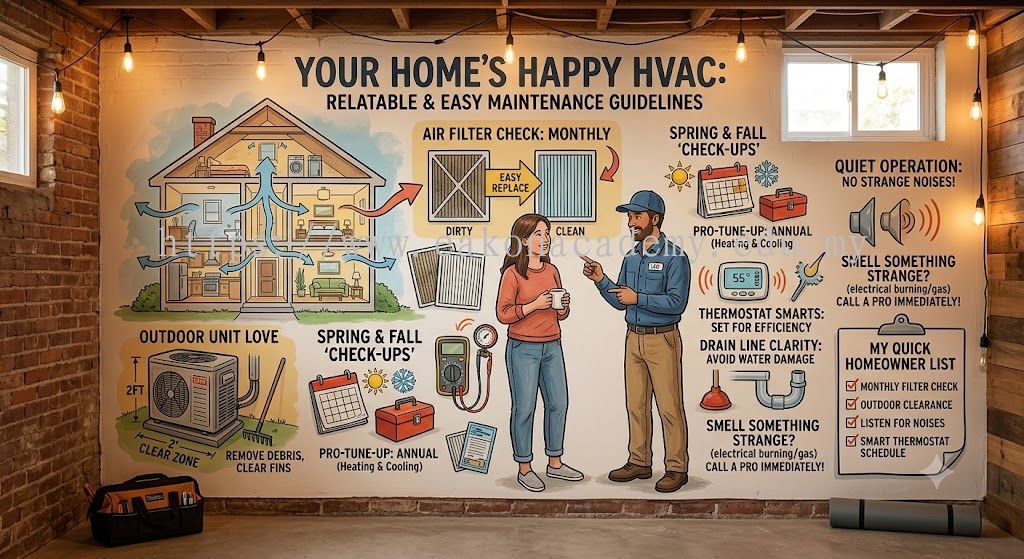
One of the most important HVAC maintenance guidelines is implementing a scheduled preventive maintenance program. Regular inspections allow technicians to identify potential problems before they become major system failures. Preventive maintenance includes checking equipment conditions, cleaning components, testing system operation, and making necessary adjustments. A structured maintenance plan helps reduce downtime, control repair costs, and improve the overall reliability of HVAC systems.
Air filter inspection and replacement are key steps in maintaining HVAC performance. Dirty or blocked air filters can reduce airflow, increase energy consumption, and cause additional stress on HVAC components. Proper filter maintenance improves air circulation, supports better indoor air quality, and allows the system to operate more efficiently. Professional HVAC technicians must understand the correct filter selection, cleaning methods, and replacement schedules to maintain optimal system performance.
Another important part of HVAC maintenance guidelines is cleaning and inspecting major system components such as evaporator coils, condenser coils, blower fans, and drainage systems. Dust and debris buildup can reduce heat transfer efficiency and affect cooling capacity. Regular cleaning helps maintain proper airflow, improve energy efficiency, and prevent unnecessary strain on compressors and motors. Through hands-on HVAC training, technicians can develop the skills needed to perform safe and effective cleaning procedures.
Refrigerant system inspection is also an essential element of proper HVAC maintenance. Technicians should check refrigerant levels, inspect refrigerant lines, perform pressure testing, and identify possible leaks. Incorrect refrigerant conditions can reduce cooling performance, increase operating costs, and damage important system components. Proper refrigerant handling knowledge allows technicians to maintain system efficiency while following safe servicing practices.
Electrical system inspection should also be included in every HVAC maintenance procedure. Technicians need to check electrical connections, wiring, capacitors, contactors, motors, control panels, and safety devices to ensure reliable operation. Electrical faults can lead to equipment failure, reduced efficiency, and safety risks. Learning effective electrical troubleshooting methods enables HVAC professionals to identify issues accurately and provide suitable maintenance solutions.
HVAC maintenance guidelines also emphasize the importance of accurate documentation and service records. Recording inspection results, maintenance activities, equipment conditions, and repair history helps technicians and facility managers monitor system performance. Proper documentation supports better maintenance planning and allows organizations to make informed decisions about repairs, upgrades, and equipment replacement.
Energy efficiency is one of the major benefits of following professional HVAC maintenance guidelines. Well-maintained HVAC systems require less energy, provide more consistent temperature control, and reduce operating expenses. Regular servicing also supports sustainable building operations by improving equipment efficiency and reducing unnecessary energy waste.
Eakon Academy offers comprehensive HVAC training courses designed to provide practical knowledge in HVAC maintenance guidelines, preventive maintenance, troubleshooting, equipment servicing, and system inspection procedures. Our training programs are suitable for beginners, HVAC technicians, contractors, and industry professionals who want to strengthen their technical abilities and improve career opportunities.
By understanding and applying HVAC maintenance guidelines, professionals can deliver reliable maintenance solutions, improve system performance, and achieve higher customer satisfaction. Visit eakonacadem.edu.my to explore professional HVAC training programs that provide the practical skills and technical knowledge required for successful HVAC maintenance and servicing careers.
Lebih maklumat tentang EAKON ACADEMY SDN BHD Malaysia