
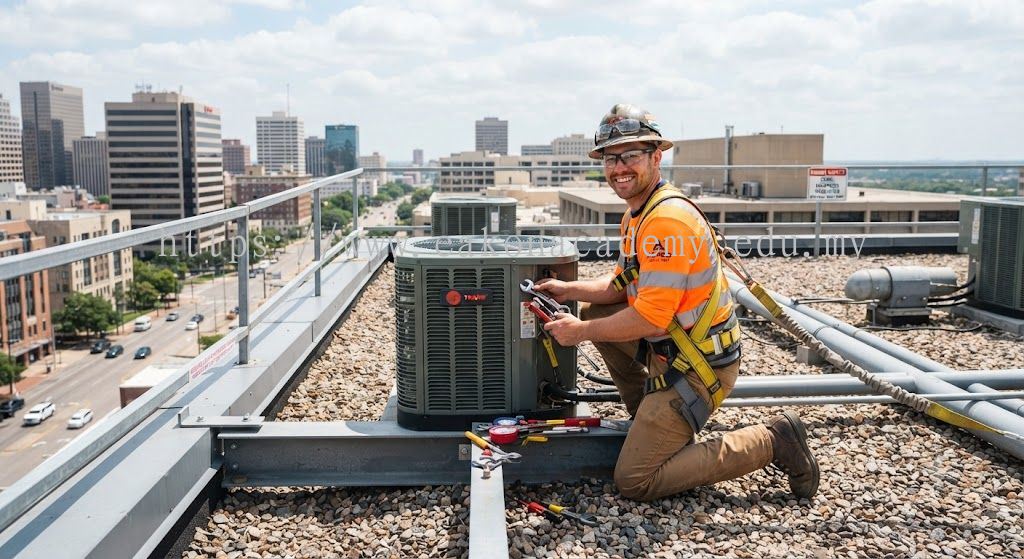
Air Conditioning Contractor Height Safety Requirements: Essential Guidelines for Safe HVAC Work at Elevated Locations
Air conditioning contractor height safety requirements are an essential component of professional HVAC operations, ensuring technicians can safely perform installation, servicing, maintenance, inspection, and repair work at elevated locations. Whether working on residential split-unit systems, commercial rooftop air conditioning units, VRF and VRV systems, industrial chillers, cooling towers, or ventilation equipment, HVAC contractors are frequently exposed to fall hazards that require strict safety controls. Working at height is one of the highest-risk activities in the HVAC industry, making comprehensive safety planning, proper equipment selection, and continuous competency training vital for accident prevention. At Eakon Academy (eakonacadem.edu.my), we provide industry-focused training that helps air conditioning contractors understand height safety requirements, comply with workplace safety regulations, and develop practical skills to safely complete HVAC projects in elevated environments. Investing in professional height safety knowledge not only protects workers but also improves productivity, enhances company reputation, and ensures legal compliance throughout every stage of an HVAC project.
Height safety requirements begin with comprehensive planning before any work is performed. Air conditioning contractors should conduct a detailed risk assessment to identify hazards associated with the worksite, including roof edges, fragile roofing materials, unstable working platforms, slippery surfaces, electrical hazards, adverse weather conditions, limited access points, and overhead obstructions. Every project should include a documented safe work method statement that outlines potential risks, required control measures, emergency response procedures, and individual worker responsibilities. By identifying hazards before work begins, contractors can reduce the likelihood of accidents while ensuring appropriate safety measures are implemented throughout the project lifecycle. Proper planning is the first and most effective step toward maintaining a safe working environment for HVAC technicians.
An important aspect of air conditioning contractor height safety requirements is selecting the appropriate access equipment. Depending on the work location, contractors may use ladders, scaffolding, mobile elevated work platforms (MEWPs), boom lifts, scissor lifts, or permanent roof access systems. Equipment should always be inspected before use to ensure structural integrity and safe operation. Ladders should only be used for short-duration tasks and positioned on stable, level surfaces while maintaining the correct climbing angle. Workers should always maintain three points of contact and avoid carrying heavy equipment during ascent or descent. For extended work periods or complex installations, elevated work platforms or scaffolding provide safer and more stable working environments. Choosing the correct access solution significantly reduces worker fatigue and minimizes fall risks during HVAC installation and maintenance activities.
Personal fall protection equipment is another critical requirement for contractors performing work at height. Certified full-body harnesses, energy-absorbing lanyards, self-retracting lifelines, anchor points, horizontal lifeline systems, rope grab devices, and fall arrest equipment must be selected based on the specific work environment and regularly inspected before each use. Contractors must receive competency-based training to understand proper harness fitting, anchor point selection, fall clearance calculations, equipment limitations, and emergency rescue procedures. Simply wearing fall protection equipment is not sufficient; technicians must understand how to correctly inspect, use, maintain, and store the equipment to ensure maximum protection throughout the duration of the job.
Weather conditions significantly influence the safety of air conditioning contractors working at height. Rain, strong winds, lightning, excessive heat, and poor visibility increase the likelihood of slips, trips, falls, and equipment instability. Height safety requirements recommend continuous monitoring of weather conditions and suspending work whenever environmental risks become unacceptable. Wet roofing materials, metal structures, and elevated platforms can become extremely hazardous during adverse weather, making it essential for supervisors to evaluate changing conditions before allowing work to continue. Proper scheduling and weather awareness help prevent unnecessary exposure to hazardous situations while protecting both personnel and equipment.
Safe material handling is equally important when working on elevated HVAC installations. Outdoor condensing units, copper piping, refrigerant cylinders, compressors, ductwork, insulation materials, and power tools should be transported using appropriate lifting equipment whenever possible. Contractors should avoid manually carrying heavy loads while climbing ladders or accessing rooftops, as this significantly increases the risk of losing balance. Mechanical lifting devices, rope systems, cranes, or material hoists can improve efficiency while reducing physical strain and minimizing fall hazards. Good housekeeping practices, including maintaining organized work areas and securing loose materials, further contribute to safer working conditions.
Emergency preparedness forms an essential part of height safety requirements for air conditioning contractors. Every project involving work at height should have a clearly defined emergency rescue plan that outlines communication procedures, rescue equipment, first aid arrangements, and emergency contact information. Workers should receive training on responding to falls, suspended worker rescue, medical emergencies, and evacuation procedures. Regular emergency drills improve response times and ensure team members understand their individual responsibilities during unexpected incidents. A well-prepared rescue plan can significantly reduce injury severity and improve survival outcomes following workplace accidents.
Continuous education and competency development remain fundamental to maintaining high standards of height safety within the HVAC industry. Air conditioning contractors should participate in regular refresher training covering work-at-height regulations, hazard identification, risk assessment, ladder safety, scaffold safety, fall protection systems, PPE inspection, and emergency response techniques. At Eakon Academy (eakonacadem.edu.my), our practical HVAC safety training programs are designed to help technicians develop confidence, improve workplace safety performance, and meet industry best practices for working at elevated locations. By combining technical HVAC expertise with comprehensive height safety training, contractors can deliver reliable, compliant, and professional air conditioning services while protecting their workforce, reducing workplace incidents, improving operational efficiency, and strengthening customer confidence. Following air conditioning contractor height safety requirements is not only a legal obligation but also a long-term investment in business sustainability, employee wellbeing, and excellence within the HVAC industry.
Lebih maklumat tentang EAKON ACADEMY SDN BHD Malaysia
