
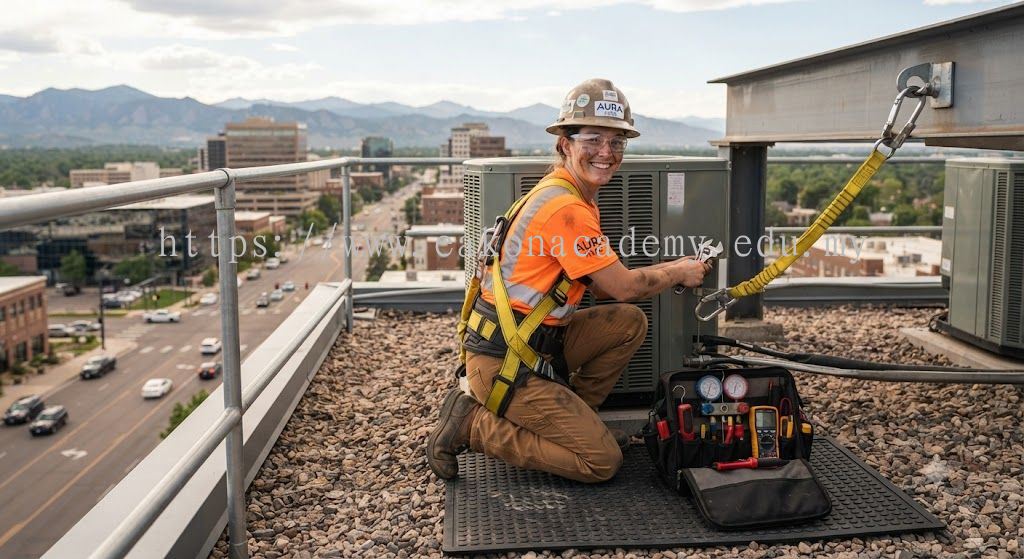
Air Conditioning Contractor PPE Height Safety Requirements: Essential Personal Protective Equipment for Safe HVAC Work at Height
Air conditioning contractor PPE height safety requirements are fundamental to ensuring the safety, health, and wellbeing of HVAC technicians performing installation, servicing, maintenance, inspection, and repair work at elevated locations. Air conditioning contractors frequently work on rooftops, balconies, external building walls, ceiling spaces, elevated platforms, scaffolding, and ladders, where the risk of falls and serious injuries is significantly higher than ground-level work. Implementing the correct personal protective equipment (PPE), together with effective work-at-height procedures, risk assessments, and safety training, is essential for preventing workplace accidents and maintaining compliance with occupational safety regulations. At Eakon Academy (eakonacadem.edu.my), we provide comprehensive HVAC safety training that equips air conditioning contractors with the knowledge and practical skills needed to select, inspect, use, and maintain PPE correctly while working safely at height. By following recognized PPE height safety requirements, contractors can improve workplace safety, reduce operational risks, enhance productivity, and strengthen customer confidence in every HVAC project.
Before commencing any work at height, air conditioning contractors should perform a detailed risk assessment to identify hazards associated with the work environment. Common risks include roof edges, fragile roofing materials, unstable working platforms, slippery surfaces, electrical hazards, falling objects, poor weather conditions, and restricted access points. Once these hazards have been identified, contractors should implement the hierarchy of controls by eliminating unnecessary work at height whenever possible, introducing engineering controls such as guardrails or edge protection, establishing safe work procedures, and using appropriate PPE as the final layer of protection. PPE should never be considered the only safety measure but rather an important component of a comprehensive workplace safety management system designed to minimize injury risks during HVAC operations.
One of the most critical PPE requirements for air conditioning contractors working at height is the use of a certified full-body safety harness. Unlike traditional waist belts, a full-body harness distributes fall forces across stronger parts of the body, reducing the risk of severe injury during a fall arrest event. Harnesses should meet recognized safety standards and be selected according to the specific work environment and fall protection system being used. Contractors must inspect harnesses before every use, checking for damaged stitching, worn webbing, corrosion, broken buckles, deformation, or signs of excessive wear. Any defective harness should be removed from service immediately. Regular inspection records and scheduled maintenance further ensure that fall protection equipment remains safe and reliable throughout its service life.
In addition to safety harnesses, contractors must use compatible fall arrest equipment, including shock-absorbing lanyards, self-retracting lifelines (SRLs), vertical lifelines, horizontal lifeline systems, rope grabs, and certified anchor points. Proper anchor selection is particularly important because an improperly installed or weak anchorage may fail during a fall. Air conditioning technicians should understand how to calculate fall clearance distances, maintain proper lanyard connections, and avoid swing fall hazards that may occur when working away from the anchor point. Practical training helps workers develop confidence in using fall protection equipment correctly while ensuring compliance with work-at-height regulations and manufacturer recommendations.
Protective headwear is another essential component of air conditioning contractor PPE height safety requirements. Safety helmets designed specifically for work at height should include secure chin straps to prevent displacement during climbing or accidental falls. Helmets protect workers from falling tools, construction materials, low overhead obstacles, and accidental impacts while moving around rooftop equipment or confined ceiling spaces. Regular helmet inspections should identify cracks, UV damage, impact deformation, or worn suspension systems. Replacing damaged helmets promptly ensures continuous protection throughout HVAC installation and maintenance activities.
Appropriate hand protection is equally important for HVAC contractors. Depending on the specific task, technicians should wear cut-resistant gloves when handling sheet metal, insulated gloves when working near electrical systems, chemical-resistant gloves when handling refrigerants or cleaning agents, and durable work gloves when carrying heavy equipment. Proper glove selection improves grip, reduces hand fatigue, and minimizes injuries caused by sharp edges, hot surfaces, or hazardous substances commonly encountered during air conditioning installation and servicing.
Safety footwear plays a major role in preventing slips, trips, and falls. Contractors should wear safety boots with slip-resistant soles, reinforced toe protection, puncture-resistant midsoles, and adequate ankle support to improve stability on uneven rooftops, ladders, scaffolding, and construction sites. Footwear should provide good traction under both dry and wet conditions while protecting workers from falling objects and sharp debris. Comfortable, properly fitted safety boots also reduce fatigue during extended working hours, allowing technicians to maintain better balance and concentration when performing precision HVAC tasks.
Eye and face protection are necessary whenever air conditioning contractors perform drilling, cutting, grinding, brazing, pressure testing, refrigerant charging, or chemical handling. Safety glasses, face shields, and welding goggles protect against flying debris, sparks, refrigerant splashes, metal fragments, and ultraviolet radiation generated during brazing operations. Respiratory protection may also be required when working in dusty environments, confined spaces, or areas with poor ventilation. Appropriate hearing protection should be used when operating loud equipment such as power tools, compressors, generators, or mechanical plant machinery to minimize long-term hearing damage.
Training and competency remain essential components of effective PPE height safety programs. Air conditioning contractors should receive regular instruction on hazard identification, PPE selection, equipment inspection, fall protection systems, emergency rescue procedures, and safe work practices. Practical exercises reinforce correct equipment usage and prepare workers to respond effectively during emergencies. Employers should also establish routine PPE inspections, refresher training sessions, toolbox talks, and safety audits to maintain consistent compliance across all HVAC projects.
At Eakon Academy (eakonacadem.edu.my), we are dedicated to helping HVAC professionals achieve the highest standards of workplace safety through industry-focused training programs that combine technical expertise with comprehensive work-at-height education. Our courses cover personal protective equipment, fall prevention, risk assessment, emergency response, ladder safety, rooftop safety, and regulatory compliance to prepare technicians for real-world working environments. By implementing proper air conditioning contractor PPE height safety requirements, HVAC companies can reduce workplace injuries, improve operational efficiency, meet legal obligations, protect valuable human resources, and build a strong reputation for delivering safe, professional, and high-quality air conditioning services across residential, commercial, and industrial sectors. Consistent commitment to PPE and height safety is not only an investment in employee wellbeing but also a key driver of sustainable business growth and long-term success within the HVAC industry.
Lebih maklumat tentang EAKON ACADEMY SDN BHD Malaysia
