
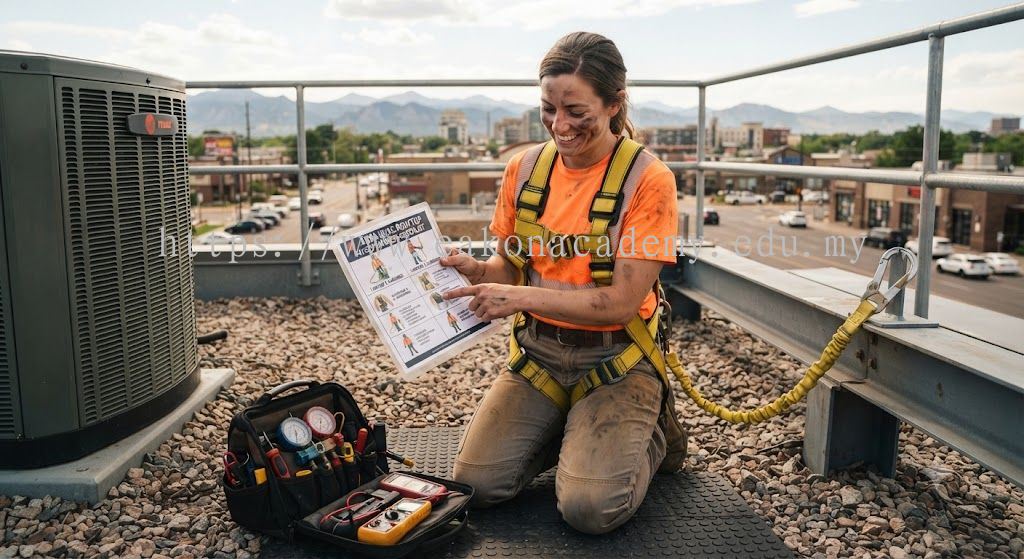
Aircon Contractor Safety Harness Requirements: Essential Fall Protection Standards for Safe HVAC Work at Height
Aircon contractor safety harness requirements are a critical aspect of workplace safety for HVAC technicians who perform installation, servicing, maintenance, inspection, troubleshooting, and repair work at elevated locations. Air conditioning contractors regularly work on rooftops, elevated platforms, balconies, ladders, scaffolding, ceiling spaces, and high-rise buildings where the risk of falls is one of the most significant workplace hazards. A properly selected, correctly fitted, and well-maintained safety harness is one of the most effective forms of personal fall protection available for technicians working at height. However, a safety harness alone cannot eliminate risk unless it is used as part of a comprehensive fall protection system that includes proper planning, hazard assessment, certified anchorage points, rescue procedures, and ongoing safety training. At Eakon Academy (eakonacadem.edu.my), we provide practical HVAC safety training that equips air conditioning contractors with the knowledge and hands-on experience required to safely use fall protection equipment while complying with industry standards and occupational safety regulations.
Before any work at height begins, air conditioning contractors should conduct a comprehensive risk assessment to determine whether the use of a safety harness is necessary. The assessment should identify hazards such as unprotected roof edges, fragile roofing materials, elevated work platforms, unstable ladders, confined rooftop spaces, slippery surfaces, and areas where collective fall prevention measures cannot completely eliminate the risk of falling. Following the hierarchy of controls, contractors should first attempt to eliminate work at height or implement engineering controls such as guardrails and edge protection. When fall hazards remain, certified personal fall protection equipment, including a full-body safety harness, becomes an essential requirement for protecting workers during HVAC installation and maintenance activities.
One of the primary safety harness requirements for aircon contractors is selecting the correct type of harness for the task being performed. Full-body safety harnesses are the preferred option because they distribute fall arrest forces across the shoulders, chest, pelvis, and thighs, significantly reducing the likelihood of serious injury during a fall. Harnesses should comply with recognized international or local safety standards and be compatible with other fall protection equipment such as shock-absorbing lanyards, self-retracting lifelines (SRLs), rope grab systems, horizontal lifelines, and certified anchor points. Choosing compatible equipment ensures the complete fall protection system functions effectively under emergency conditions and provides maximum protection for HVAC technicians working at height.
Proper inspection of safety harnesses before every use is another critical requirement. Air conditioning contractors should examine harness webbing for cuts, abrasions, burns, chemical damage, frayed stitching, excessive wear, or UV degradation. Metal components such as D-rings, buckles, connectors, and adjustment mechanisms should be checked for corrosion, cracks, deformation, or signs of mechanical damage. Any harness that shows evidence of wear, damage, or previous fall loading should be removed from service immediately and replaced according to manufacturer recommendations. Regular inspection records and scheduled maintenance programs help ensure fall protection equipment remains reliable and compliant throughout its service life.
Correct harness fitting is equally important for effective fall protection. A poorly adjusted safety harness may fail to protect the worker during a fall or may increase the risk of injury due to improper load distribution. Air conditioning technicians should be trained to tighten shoulder straps, chest straps, waist straps, and leg straps correctly while ensuring the dorsal D-ring is positioned between the shoulder blades. Harnesses should fit securely without restricting movement, allowing technicians to safely perform installation, servicing, and maintenance tasks while remaining fully protected. Employers should provide competency-based training to ensure workers understand how to inspect, wear, adjust, and remove safety harnesses correctly before accessing elevated work areas.
Anchor point selection forms another essential component of aircon contractor safety harness requirements. A safety harness can only provide effective protection when connected to a certified anchorage system capable of supporting the required load during a fall arrest event. Air conditioning contractors should never attach lanyards to unsuitable structures such as handrails, pipes, electrical conduits, or temporary fixtures that have not been approved for fall protection. Approved anchor points should be selected based on engineering specifications, work location, and the direction of potential fall forces. Workers should also understand fall clearance requirements to ensure sufficient distance exists below the work area to prevent contact with lower levels during a fall.
Lanyards and connecting devices must also be carefully selected according to the work environment. Energy-absorbing lanyards reduce impact forces during fall arrest, while self-retracting lifelines provide greater mobility and minimize free-fall distance. Horizontal lifeline systems may be required when technicians need to move across large rooftop work areas while remaining continuously connected to fall protection. Every connector, carabiner, snap hook, and attachment point should be compatible with the safety harness and anchorage system to prevent accidental disengagement or equipment failure.
Weather conditions should always be considered when using safety harnesses during rooftop HVAC work. Strong winds, heavy rain, lightning, and slippery surfaces increase the likelihood of falls and may affect worker balance, stability, and rescue operations. Supervisors should continuously monitor weather conditions and suspend work whenever environmental conditions create unacceptable safety risks. Safe work planning should include clear stop-work procedures and emergency evacuation arrangements to protect workers during changing weather conditions.
Emergency rescue planning is a vital part of every aircon contractor safety harness program. Fall arrest systems protect workers during a fall, but suspended workers must be rescued promptly to reduce the risk of suspension trauma. Every project involving work at height should include a documented rescue plan outlining emergency communication procedures, rescue equipment locations, first aid arrangements, and worker responsibilities. Rescue kits should be readily available, and technicians should participate in regular rescue drills to ensure they can respond effectively if an incident occurs. A well-prepared rescue plan significantly improves emergency response times and reduces injury severity.
Continuous training and competency development remain essential for maintaining high standards of fall protection within the HVAC industry. Air conditioning contractors should participate in regular training covering work-at-height safety, safety harness inspection, fall prevention, risk assessment, anchor point selection, ladder safety, rooftop safety, emergency rescue, and PPE management. Refresher courses help technicians remain current with changing regulations, modern fall protection equipment, and evolving industry best practices. Skilled workers who understand the correct use of safety harnesses contribute to a stronger workplace safety culture while improving operational efficiency and reducing accident rates.
At Eakon Academy (eakonacadem.edu.my), we are committed to developing highly competent HVAC professionals through practical, industry-relevant safety training that combines technical excellence with comprehensive work-at-height education. Our training programs cover safety harness requirements, fall protection systems, PPE inspection, emergency preparedness, risk assessment, and occupational safety compliance to help air conditioning contractors perform elevated work confidently and safely. By consistently following aircon contractor safety harness requirements, HVAC companies can reduce workplace accidents, protect valuable employees, improve legal compliance, strengthen customer confidence, and build a reputation for delivering safe, reliable, and professional air conditioning services. Investing in proper safety harness training and fall protection practices is not only a legal responsibility but also a long-term commitment to operational excellence, employee wellbeing, and sustainable success within the HVAC and refrigeration industry.
Lebih maklumat tentang EAKON ACADEMY SDN BHD Malaysia
