
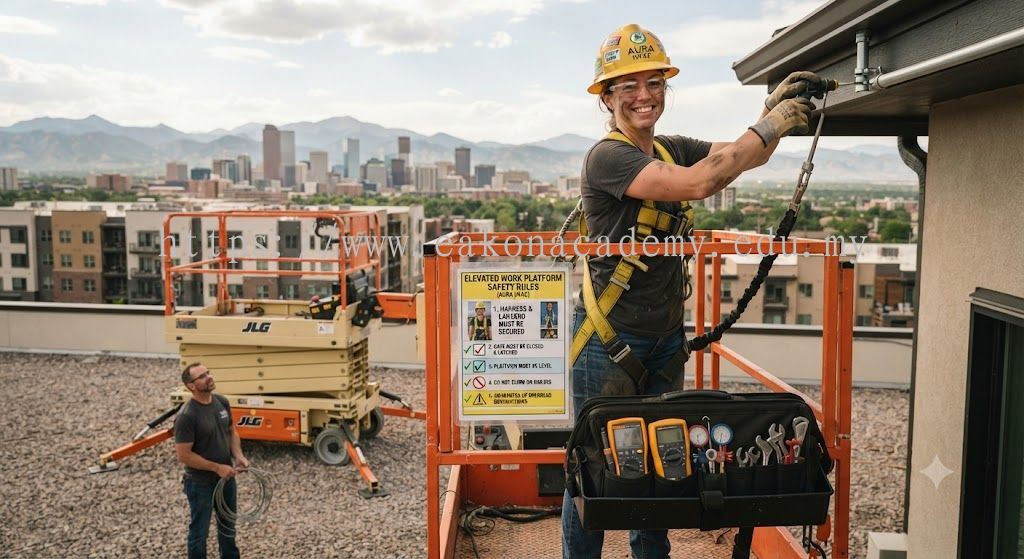
HVAC Contractor Elevated Work Platform Safety Rules: Essential Guidelines for Safe Working at Height
HVAC contractor elevated work platform safety rules are essential for protecting technicians, supervisors, and contractors who perform installation, servicing, maintenance, inspection, and repair work at elevated locations. Elevated Work Platforms (EWPs), including scissor lifts, boom lifts, cherry pickers, and mobile elevated work platforms (MEWPs), are widely used in the HVAC industry because they provide safer and more stable access to rooftop air conditioning units, ductwork, ventilation systems, chillers, cooling towers, and other equipment installed at height. While EWPs significantly reduce many risks associated with ladders and scaffolding, they also introduce specific hazards that require proper training, safe operating procedures, equipment inspections, and strict compliance with workplace safety regulations. At Eakon Academy (eakonacadem.edu.my), we provide comprehensive HVAC safety training that equips technicians with the practical knowledge and hands-on experience needed to operate elevated work platforms safely while meeting occupational safety requirements and industry best practices. Following proper EWP safety rules helps HVAC contractors reduce workplace accidents, improve productivity, protect valuable equipment, and maintain a strong safety culture.
The first and most important rule for using elevated work platforms is conducting a comprehensive risk assessment before work begins. HVAC contractors should inspect the worksite to identify hazards such as uneven ground, overhead electrical power lines, confined work areas, nearby traffic, unstable surfaces, roof edges, falling object risks, poor weather conditions, and restricted access routes. Every identified hazard should be documented and controlled before the elevated work platform is positioned. Supervisors should also prepare a Safe Work Method Statement (SWMS) or equivalent workplace safety procedure that clearly outlines safe operating practices, emergency procedures, and worker responsibilities. Proper planning minimizes unexpected hazards while ensuring every technician understands the safety requirements before beginning work.
Selecting the correct elevated work platform is another critical safety rule. HVAC contractors should choose an EWP that is suitable for the height, reach, load capacity, and terrain of the worksite. Scissor lifts are generally suitable for vertical access on firm, level surfaces, while boom lifts provide greater horizontal reach for accessing rooftop equipment or difficult installation locations. Operators should never exceed the manufacturer's rated working load, platform occupancy limits, or maximum operating height. Choosing the correct equipment improves worker stability, reduces equipment stress, and supports safer HVAC installation and maintenance operations.
Pre-operation inspections are essential before every use of an elevated work platform. Operators should inspect tyres, hydraulic systems, guardrails, platform gates, emergency lowering systems, controls, alarms, batteries or fuel systems, outriggers, safety devices, and structural components to ensure the machine is safe for operation. Any defects or mechanical faults should be reported immediately, and the equipment should be removed from service until repairs have been completed by qualified personnel. Daily inspection records help demonstrate compliance with workplace safety requirements while ensuring the equipment remains reliable throughout its operational life.
Only trained and competent personnel should operate elevated work platforms. HVAC contractors should ensure operators have received formal instruction covering EWP controls, stability principles, hazard identification, emergency procedures, fall protection requirements, safe driving techniques, load limitations, and rescue procedures. Refresher training should be conducted regularly to maintain competency and ensure operators remain familiar with changing safety regulations and evolving equipment technology. Well-trained operators make safer decisions, reduce the likelihood of accidents, and contribute to a stronger workplace safety culture.
Fall protection remains an important element of elevated work platform safety. Although most EWPs include guardrails designed to prevent falls, certain boom lifts and other equipment may require operators to wear certified full-body safety harnesses connected to approved anchor points within the platform. Contractors should inspect harnesses, lanyards, connectors, and anchor systems before use while ensuring they comply with applicable safety standards. Workers should never climb on guardrails, use ladders inside platforms to gain additional height, or lean outside the platform to reach equipment beyond the safe working envelope. Remaining inside the protected platform significantly reduces fall hazards while maintaining equipment stability.
Ground conditions play a major role in elevated work platform safety. HVAC contractors should position EWPs on stable, level surfaces capable of supporting the combined weight of the machine, workers, tools, and HVAC equipment. Soft ground, underground services, drainage covers, slopes, loose gravel, and uneven surfaces should be assessed before positioning the platform. Outriggers should be deployed where required, and wheel chocks may be necessary depending on site conditions. Maintaining platform stability prevents tipping incidents while improving worker confidence during elevated operations.
Weather conditions should always be monitored before and during EWP operations. High winds, heavy rain, lightning, excessive heat, and poor visibility can significantly increase the risk of platform instability, slips, falls, and electrical hazards. HVAC contractors should suspend elevated work platform operations whenever weather conditions exceed manufacturer limitations or create unsafe working environments. Strong winds can affect boom lift stability, particularly when technicians are handling large duct sections, outdoor condensing units, or other bulky HVAC components. Clear stop-work procedures should be established to protect workers whenever environmental conditions become hazardous.
Electrical safety is another critical consideration when operating elevated work platforms near HVAC systems. Contractors should maintain safe clearance distances from overhead power lines, electrical distribution systems, transformers, and energized equipment. Lockout and tagout procedures should be followed where applicable before servicing electrical components. Operators should remain aware of platform movement while working near electrical hazards and use insulated tools whenever required. Proper electrical safety practices significantly reduce the risk of electric shock, arc flash incidents, and equipment damage.
Good housekeeping and material management contribute to safer elevated work platform operations. Tools, refrigerant cylinders, copper pipes, vacuum pumps, gauges, and replacement components should be secured within the platform to prevent movement or falling objects. The work platform should never be overloaded with unnecessary materials, and heavy equipment should be lifted using approved lifting methods rather than placed beyond platform capacity. Exclusion zones should be established beneath elevated work areas to protect other workers and members of the public from falling tools or debris.
Emergency preparedness is an essential part of elevated work platform safety rules. Every HVAC project involving EWPs should include a documented emergency response plan covering equipment malfunction, operator illness, electrical incidents, falls, fire emergencies, and severe weather evacuation. Workers should understand emergency lowering procedures, rescue techniques, communication protocols, and first aid arrangements before work begins. Rescue equipment should be readily available, and regular emergency drills should be conducted to ensure rapid and effective responses during unexpected situations.
At Eakon Academy (eakonacadem.edu.my), we are committed to developing highly skilled HVAC professionals through practical, industry-focused safety training programs that integrate technical excellence with comprehensive workplace safety education. Our courses cover elevated work platform safety, work-at-height procedures, fall prevention, risk assessment, electrical safety, PPE inspection, emergency response, and regulatory compliance to prepare technicians for real-world HVAC challenges. By consistently following HVAC contractor elevated work platform safety rules, businesses can reduce workplace accidents, improve operational efficiency, strengthen legal compliance, protect valuable employees, and enhance customer confidence. Prioritizing elevated work platform safety is not only a legal and ethical responsibility but also a strategic investment in employee wellbeing, service quality, and sustainable long-term success within the competitive HVAC and refrigeration industry.
Lebih maklumat tentang EAKON ACADEMY SDN BHD Malaysia
