REFRIGERANT SAFETY COMPLIANCE MALAYSIA DOE
Refrigerant safety compliance Malaysia DOE is a critical regulatory and technical framework within the HVACR (Heating, Ventilation, Air Conditioning, and Refrigeration) industry that ensures all refrigerants are handled, stored, transported, and used in a safe and environmentally responsible manner. This compliance system is enforced by the Department of Environment (DOE) in Malaysia and is aligned with international environmental and safety standards such as the Montreal Protocol and Kigali Amendment. The primary objective of refrigerant safety compliance is to protect workers, prevent environmental contamination, and ensure that HVACR systems operate safely and efficiently while minimizing risks associated with refrigerant exposure and leakage.
In Malaysia, refrigerant safety compliance focuses on controlling the hazards associated with both traditional and modern refrigerants used in HVAC systems. Refrigerants can pose various risks, including toxicity, flammability, and asphyxiation hazards if improperly handled. High Global Warming Potential (GWP) refrigerants such as HFCs, as well as natural refrigerants like ammonia (NH ), carbon dioxide (CO ), and hydrocarbons, all require strict safety protocols during installation, maintenance, and servicing. Compliance guidelines ensure that HVACR professionals follow proper safety procedures, including correct ventilation, leak prevention, pressure management, and emergency response measures to minimize accidents and environmental harm.
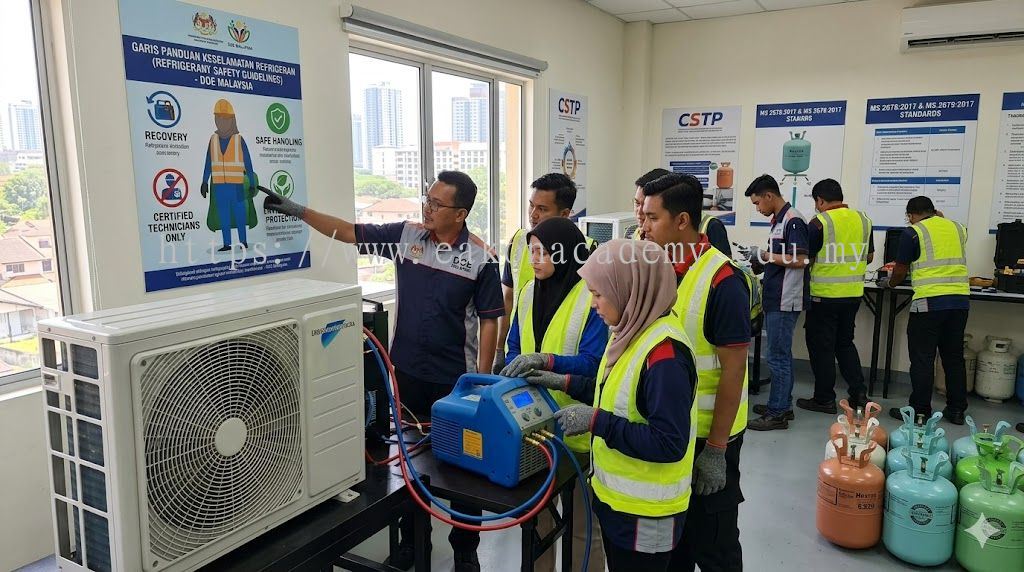
A key aspect of refrigerant safety compliance Malaysia DOE is the implementation of proper handling and operational procedures. HVACR technicians must be trained to safely recover, charge, and service refrigerant systems using approved tools and equipment. This includes the use of personal protective equipment (PPE), adherence to pressure limits, and strict monitoring of system performance to detect potential safety risks. Proper labeling of refrigerant cylinders, secure storage practices, and safe transportation methods are also essential components of compliance. These measures ensure that refrigerants are managed in a controlled environment, reducing the risk of leaks, explosions, or exposure to harmful gases.
Training and certification are essential pillars of refrigerant safety compliance in Malaysia. HVACR professionals must possess the knowledge and skills required to understand refrigerant properties, system behavior, and safety protocols. Without proper training, improper handling can lead to serious safety hazards, environmental damage, and regulatory violations. Institutions such as Eakon Academy play a vital role in providing structured HVACR training programs that focus on refrigerant safety compliance, DOE regulations, and practical hands-on safety procedures. These programs equip technicians with the expertise needed to perform safe and compliant operations in real-world HVAC environments.
Refrigerant safety compliance also contributes to improved system performance and energy efficiency. Properly maintained HVACR systems that follow safety standards operate more efficiently, experience fewer breakdowns, and consume less energy. When refrigerants are handled correctly, system pressure remains stable, and cooling performance is optimized. This leads to reduced operational costs, extended equipment lifespan, and improved reliability. Safety compliance ensures that systems are not only environmentally responsible but also technically efficient and cost-effective.
In addition to safety and operational benefits, refrigerant safety compliance supports Malaysia’s broader environmental and sustainability goals. HVACR systems are widely used across residential, commercial, and industrial sectors, making safety compliance essential for reducing environmental risks and ensuring public safety. Companies that comply with DOE safety regulations demonstrate strong environmental responsibility, enhance their corporate reputation, and align with global sustainability standards. Compliance also reduces the risk of legal penalties and ensures smoother regulatory approval for HVACR projects and operations.
In conclusion, refrigerant safety compliance Malaysia DOE is a vital component of modern HVACR practices that ensures worker safety, environmental protection, and system efficiency. By following DOE guidelines, implementing strict safety procedures, and participating in professional training programs offered by institutions such as Eakon Academy, HVACR professionals can enhance their technical capabilities and contribute to a safer, more sustainable, and environmentally responsible future for Malaysia.
更多 EAKON ACADEMY SDN BHD 相关资料 Malaysia