
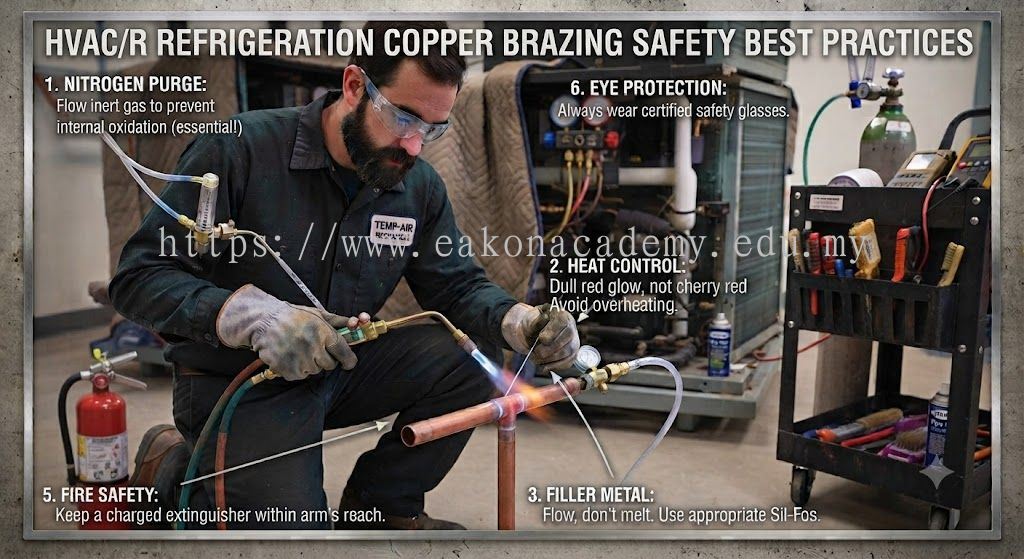
Refrigeration Copper Brazing Safety Best Practices
Eakon Academy is a professional HVAC-R training provider dedicated to equipping learners with essential technical skills and safety knowledge required in modern refrigeration and air conditioning systems. One of the most critical focus areas in this industry is refrigeration copper brazing safety best practices, which ensures that technicians perform brazing operations in a safe, controlled, and professional manner while maintaining high-quality copper joint integrity. Since brazing involves high-temperature flames, pressurized gases, and metal components, strict safety procedures are essential to prevent accidents, injuries, system damage, and workplace hazards.
Refrigeration copper brazing safety best practices begin with proper personal protective equipment (PPE). Technicians must always wear safety goggles or face shields to protect their eyes from sparks, heat, and molten filler metal. Heat-resistant gloves are required to prevent burns when handling hot copper tubing or brazing equipment. Flame-resistant clothing is also essential to reduce the risk of fire-related injuries, while proper footwear provides additional protection in industrial or workshop environments. Maintaining full PPE compliance is the first step in ensuring safe brazing operations in HVAC-R systems.
Another important aspect of refrigeration copper brazing safety best practices is safe handling of gas cylinders used for brazing, such as oxygen and acetylene. These cylinders must always be stored in an upright position and secured to prevent tipping or accidental damage. Regulators and flashback arrestors must be properly installed and inspected before use to ensure safe gas flow control. Technicians must also check for gas leaks using approved methods before ignition, as even small leaks can create serious fire or explosion hazards. Proper handling and storage of gas equipment are fundamental to maintaining a safe working environment.
Worksite preparation is also a critical safety requirement. Before starting any brazing operation, technicians must ensure that the surrounding area is free from flammable materials such as oil, insulation, solvents, or debris. Adequate ventilation must be provided to prevent the buildup of harmful fumes generated during heating and flux application. Fire extinguishers must be readily available, and emergency procedures should be clearly understood by all personnel on site. A clean and organized workspace significantly reduces the risk of accidents during brazing operations.
Heat management is another key element of refrigeration copper brazing safety best practices. Technicians must apply heat carefully using a controlled flame, ensuring that surrounding components such as electrical wiring, plastic insulation, and nearby equipment are protected from heat damage. Heat shields or wet cloths may be used to safeguard sensitive areas. Maintaining control over flame direction and intensity helps prevent accidental fires and ensures precise brazing results.
Nitrogen purging, while primarily a technical requirement, also contributes to safety by reducing internal oxidation and minimizing contamination risks. However, technicians must handle nitrogen cylinders carefully, ensuring proper pressure regulation and secure connections to avoid accidents related to pressurized gas systems.
Post-brazing safety procedures are equally important. After completing brazing work, technicians must shut off gas supplies in the correct sequence, allow sufficient cooling time for joints, and inspect the area for any remaining heat or fire risks. Proper shutdown procedures help prevent accidental ignition or injury after work completion.
At Eakon Academy, students are trained through structured HVAC-R programs that emphasize refrigeration copper brazing safety best practices in both theory and hands-on practice. The training focuses on real-world safety protocols, equipment handling, and industry compliance to ensure learners are fully prepared for professional fieldwork.
In conclusion, mastering refrigeration copper brazing safety best practices is essential for ensuring technician safety, preventing workplace hazards, and achieving high-quality refrigeration system performance. Proper training, disciplined safety habits, and strict adherence to industry standards are key to long-term success in the HVAC-R industry.
更多 EAKON ACADEMY SDN BHD 相关资料 Malaysia
