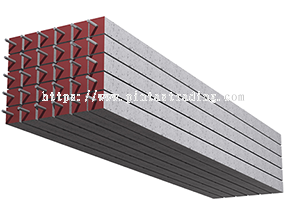
Description
Precast piles exert extra strength to resist bending moment during pile pick up, transportation, vertical loads, and bending moment as a result of lateral loads.
MAIN LONGITUDINAL REINFORCEMENT is designed for lifting, handling and pitching. It is also been taken into consideration for contributing to the axial load capacity.
LATERAL REINFORCEMENT in the form of links is provided to prevent shattering or splitting of pile during driving.
Specification
|
CONCRETE STRENGTH |
45 N/mm² |
|
WATER/ CEMENT RATIO |
0.45 |
|
CEMENT |
Ordinary Portland Cement to MS 522 |
|
AGGREGATES |
MS 29 |
|
REINFORCEMENT |
MS 144 and MS 146 |
|
PILE |
Min 0.6% steel content by Volume (at pile head / toe) |
|
Min 0.2% steel content by Volume (at pile body) |
General Considerations when Choosing Pile Type
Poor quality of upper soil layer
Costly soil in construction site
To withstand lateral loads (horizontal)
To withstand uplift forces
Bridge abutment and piers
Types of Pile Shoes
FLAT SHOE
.png)
POINTED SHOE
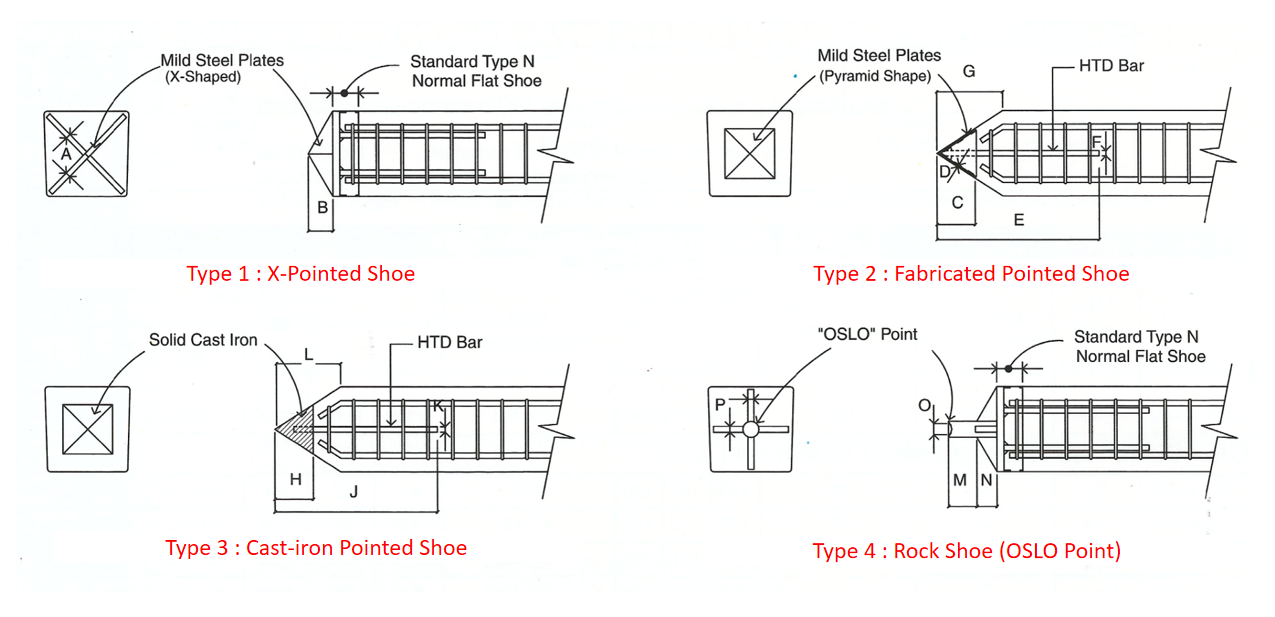
|
Shoe Type |
Characteristics |
|
FLAT SHOE |
|
|
Normal Flat Shoe (Flat-ended MS Plate) |
Easy to medium hard driving |
|
POINTED SHOE |
|
|
X-Pointed Shoe |
Moderate to hard driving |
|
Fabricated Pointed Shoe |
Normal hard driving |
|
Cast-iron Pointed Shoe |
Normal hard driving, to penetrate cemented soil layer, pile seating on weak rock |
|
Rock Shoe (OSLO Point) |
Hard driving and piles seating on hard rock strata |
* The type of pile shoe selected depend on driving and soil conditions.
Compliance with
MS 1314:2004 Malaysian Standard for Precast Concrete Piles
BS 8004:1986 British Standard Code for Practice for Foundation
BS 8110:Pt 1:1985 British Standard on Structural Use of Concrete - Code of Practice for Design and Construction