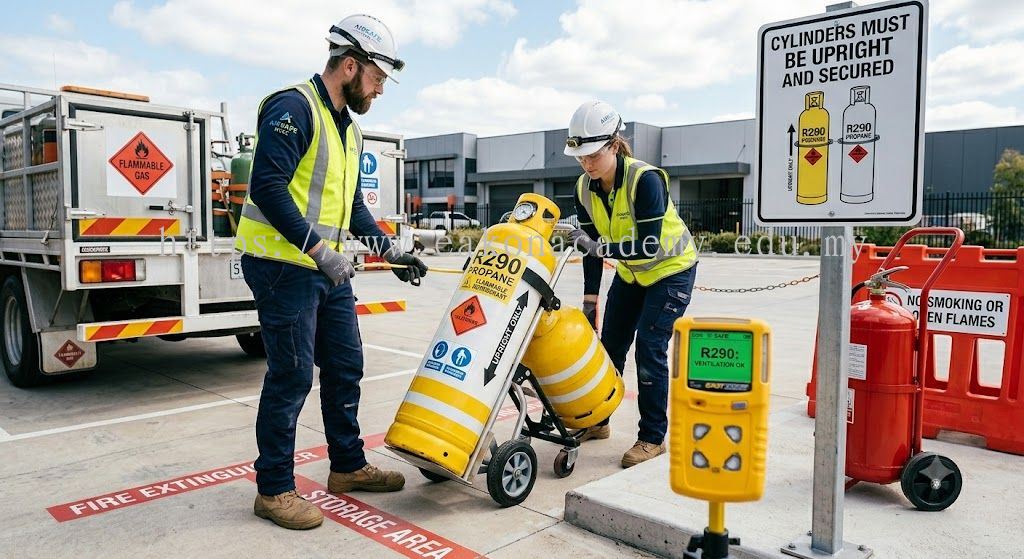
R290 Cylinder Safety Risk Procedures – Professional Hydrocarbon Refrigerant Handling Training and Safety Guidelines
R290 cylinder safety risk procedures are essential knowledge for HVAC and refrigeration professionals who work with propane-based hydrocarbon refrigerants. As the adoption of environmentally friendly refrigerants continues to increase, proper handling, storage, transportation, and servicing procedures for R290 refrigerant cylinders have become a critical requirement in the air conditioning and refrigeration industry. Eakon Academy provides professional technical knowledge and competency development related to safe refrigerant practices, helping technicians understand the importance of risk control measures, workplace safety procedures, and industry best practices for R290 refrigerant applications.
R290 refrigerant is classified as an A3 category flammable refrigerant due to its high flammability characteristics. Therefore, implementing proper R290 cylinder safety risk procedures is necessary to minimize hazards such as refrigerant leakage, ignition risks, cylinder damage, and unsafe handling practices. Technicians must be trained to identify potential risks associated with propane refrigerant cylinders, including incorrect storage conditions, exposure to excessive heat sources, improper transportation methods, and unsuitable charging or recovery practices. Understanding these safety principles helps create a safer working environment for HVAC technicians, contractors, and end users.
Proper R290 cylinder storage procedures are one of the most important aspects of refrigerant safety management. R290 cylinders should be stored in a well-ventilated area away from direct sunlight, open flames, sparks, and other ignition sources. Safety procedures should include checking cylinder conditions, ensuring protective caps are installed, maintaining proper labeling, and preventing unauthorized handling. By following correct cylinder storage requirements, businesses can reduce the possibility of accidents and maintain compliance with recommended refrigerant safety practices.
R290 cylinder handling procedures also require technicians to understand safe connection, charging, and recovery techniques. Before using an R290 cylinder, technicians should inspect the cylinder valve, confirm refrigerant identification, and use appropriate tools designed for flammable refrigerants. Proper grounding procedures, leak detection methods, and ventilation requirements should be applied during refrigerant servicing activities. These practices help prevent the accumulation of flammable refrigerant concentrations and reduce the possibility of fire incidents during HVAC maintenance work.
Another important component of R290 cylinder safety risk procedures is emergency response preparation. Technicians should understand how to respond to refrigerant leaks, accidental releases, damaged cylinders, and potential fire hazards. Having proper emergency procedures, including isolation of the affected area, elimination of ignition sources, and appropriate ventilation methods, can significantly reduce safety risks. Training programs that focus on R290 refrigerant safety awareness provide technicians with the confidence and technical skills required to manage hydrocarbon refrigerant systems responsibly.
With increasing demand for low Global Warming Potential (GWP) refrigerants, R290 technology is becoming more widely used in modern refrigeration and air conditioning systems. However, the benefits of propane refrigerant can only be achieved when technicians follow strict safety procedures and professional handling standards. Knowledge of R290 cylinder safety risk assessment, refrigerant handling guidelines, and workplace safety requirements is essential for companies aiming to improve operational safety and environmental responsibility.
Eakon Academy supports the development of skilled HVAC professionals through structured learning related to advanced refrigeration technology, refrigerant safety management, and practical industry applications. Learning proper R290 cylinder safety risk procedures helps technicians improve their competency in handling flammable refrigerants while supporting safer, more sustainable HVAC practices. By strengthening technical knowledge in R290 refrigerant handling, storage, recovery, and servicing procedures, HVAC professionals can meet modern industry expectations and contribute to a safer and more environmentally responsible refrigeration sector.
Tingnan ang karagdagang mga detalye tungkol sa EAKON ACADEMY SDN BHD