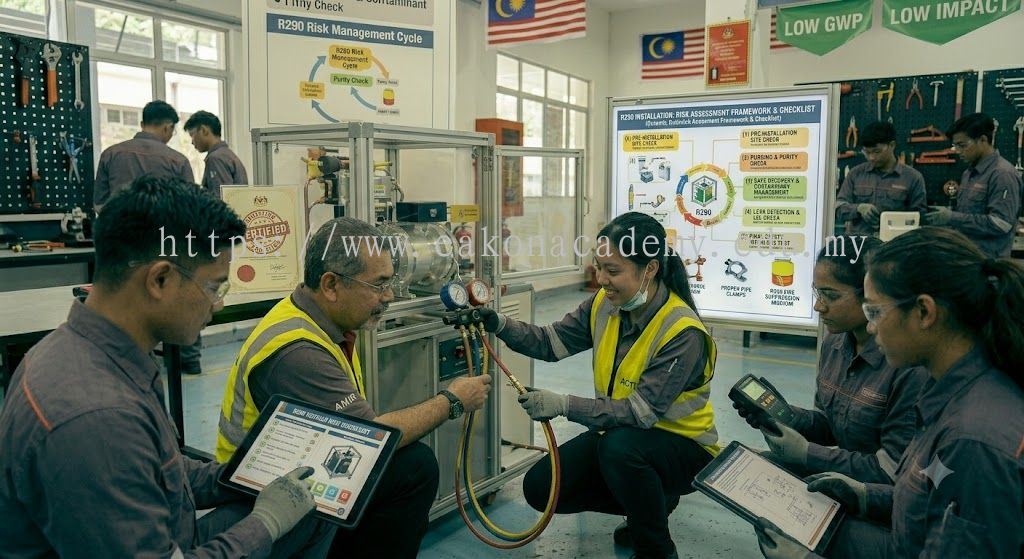
R290 Installation Risk Assessment – Professional Safety Evaluation for Hydrocarbon Refrigerant System Installation
R290 installation risk assessment is an essential safety process designed to identify, evaluate, and control potential hazards during the installation of HVAC and refrigeration systems using propane-based hydrocarbon refrigerants. As the demand for environmentally friendly cooling technologies continues to increase, R290 has become a popular refrigerant choice because of its low Global Warming Potential (GWP), zero Ozone Depletion Potential (ODP), and high energy efficiency performance. However, R290 is classified as an A3 flammable refrigerant, which requires proper planning, technical knowledge, and safety procedures during installation activities. Eakon Academy provides professional HVAC technical education to support technicians, contractors, and industry professionals in developing competency for safe refrigerant handling and modern HVAC system applications.
A comprehensive R290 installation risk assessment helps ensure that every stage of the installation process is performed safely and according to recommended industry practices. Before installing an R290 HVAC system, technicians must evaluate important factors such as installation location, ventilation conditions, refrigerant charge quantity, equipment positioning, electrical safety, and possible ignition sources. Proper risk assessment allows potential hazards to be identified early and ensures suitable preventive measures are implemented before system operation begins.
One of the most important elements of R290 installation risk assessment is evaluating the installation environment. The surrounding area must be assessed to determine whether sufficient ventilation is available and whether the location is suitable for a flammable refrigerant system. Poor ventilation may increase the risk of refrigerant accumulation in the event of a leak. Technicians must consider room size, airflow conditions, equipment placement, and accessibility when planning the installation process. These considerations help reduce safety risks and support reliable HVAC system performance.
R290 installation risk assessment also involves analysing potential ignition sources that may exist around the installation area. Since propane refrigerant can ignite when exposed to suitable ignition conditions, technicians must identify possible hazards such as electrical components, sparks, open flames, hot surfaces, and unsuitable equipment. Implementing appropriate control measures, including safe equipment selection, correct installation procedures, and proper isolation of ignition risks, is essential for maintaining a safe working environment.
Another critical aspect of R290 installation risk assessment is ensuring correct refrigerant system preparation and installation procedures. Technicians must understand proper piping installation, connection methods, leak testing requirements, vacuum procedures, refrigerant charging techniques, and system commissioning practices. Incorrect installation methods may increase the possibility of refrigerant leakage or system malfunction. A structured risk assessment ensures that installation activities are completed with attention to safety, quality, and long-term system reliability.
Technician competency plays a major role in successful R290 system installation. Working with flammable refrigerants requires specialised knowledge of refrigerant characteristics, safety precautions, installation procedures, and emergency response actions. Professional training enables technicians to understand the risks involved and apply effective safety controls during installation activities. Skilled technicians are better prepared to manage challenges and ensure that R290 HVAC systems operate safely and efficiently.
Emergency planning should also be included in the R290 installation risk assessment process. Technicians and organisations should establish procedures for responding to accidental refrigerant release, equipment damage, or unexpected safety issues during installation. Proper preparation helps minimise risks and ensures quick response when problems occur. Regular training and safety reviews contribute to improved workplace protection and professional service quality.
As the HVAC industry continues to move toward sustainable refrigerant solutions, R290 systems are expected to become increasingly important in residential, commercial, and industrial applications. However, safe adoption requires proper installation planning, effective risk assessment, and continuous technician development. Understanding R290 installation risk assessment provides HVAC professionals with the knowledge needed to perform safe, reliable, and environmentally responsible refrigerant system installations.
Eakon Academy is committed to strengthening HVAC industry skills through professional training, technical education, and safety-focused learning. By developing expertise in R290 installation risk assessment, technicians and businesses can improve installation quality, reduce safety risks, and support the transition toward energy-efficient and sustainable HVAC technologies. Proper assessment and safe installation practices are essential foundations for achieving a safer and more advanced refrigeration industry.
Tingnan ang karagdagang mga detalye tungkol sa EAKON ACADEMY SDN BHD