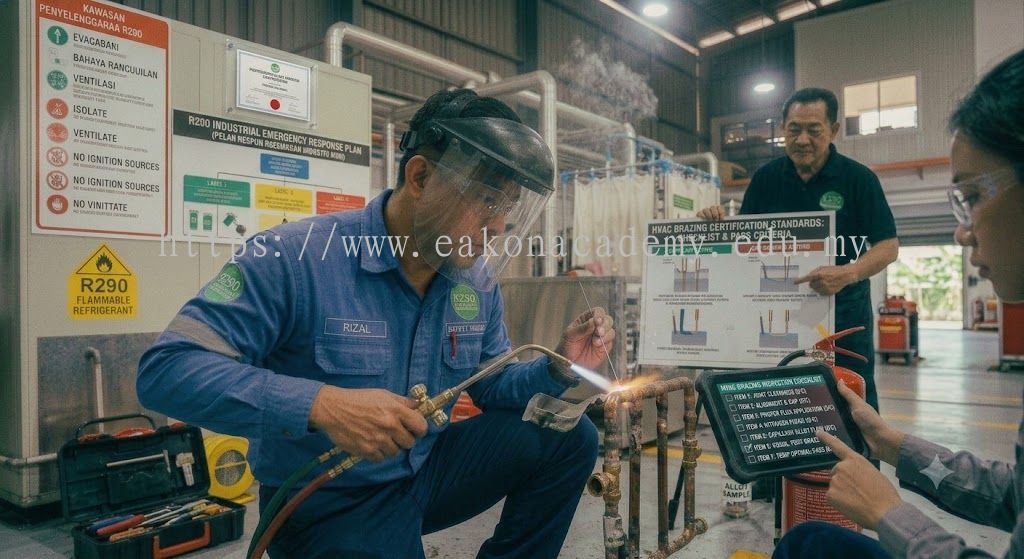
HVAC Brazing Inspection Checklist: Ensuring Leak-Free Copper Pipe Connections and System Reliability
HVAC brazing inspection checklist is an essential quality control process used by air conditioning and refrigeration technicians to ensure that copper pipe brazed joints meet industry standards for strength, safety, and leak prevention. Proper inspection of brazed joints is critical in HVAC systems because even small defects can lead to refrigerant leakage, reduced system efficiency, increased energy consumption, and costly equipment failures. At Eakon Academy, professional HVAC training emphasizes the importance of systematic brazing inspection procedures to help technicians deliver high-quality installation and maintenance work in real-world applications.
A complete HVAC brazing inspection checklist focuses on evaluating the quality of copper pipe joints after the brazing process is completed. The inspection ensures that each joint is properly formed, structurally strong, and free from defects such as cracks, pinholes, incomplete bonding, or overheating damage. Since refrigeration systems operate under high pressure and temperature variations, every brazed connection must be carefully checked to ensure long-term reliability and performance.
One of the first steps in an HVAC brazing inspection checklist is visual examination of the brazed joint. Technicians must check whether the brazing filler material has flowed evenly around the joint and formed a complete seal between copper surfaces. A properly brazed joint should show smooth, uniform filler distribution without gaps or rough edges. Any signs of uneven heating, discoloration, or insufficient filler flow may indicate poor workmanship and potential weakness in the connection.
Another important part of the inspection process is checking for signs of overheating or underheating during brazing. Overheated joints may show excessive oxidation, burnt copper surfaces, or weakened structural integrity, while underheated joints may result in incomplete bonding and poor mechanical strength. Identifying these issues early helps prevent system failures and ensures that HVAC installations meet professional standards.
Leak testing is a critical component of the HVAC brazing inspection checklist. After brazing is completed, technicians must perform pressure testing using nitrogen or other approved testing methods to verify the integrity of the refrigeration piping system. This step helps detect any hidden leaks that may not be visible during visual inspection. A properly executed leak test ensures that the system is safe for refrigerant charging and operation.
Joint alignment and mechanical strength are also important factors in the inspection process. Technicians must confirm that copper pipes are properly aligned and supported, reducing stress on brazed joints during system operation. Poor alignment or lack of support can lead to vibration-related damage, weakening the brazed connection over time. Proper installation practices help improve the durability of HVAC systems and reduce long-term maintenance issues.
Nitrogen purging quality during brazing may also be evaluated as part of the HVAC brazing inspection checklist. Proper nitrogen flow helps prevent internal oxidation inside copper tubing, ensuring cleaner and more efficient refrigeration systems. Inspecting internal pipe cleanliness indirectly confirms whether correct brazing procedures were followed during installation.
At Eakon Academy, HVAC training programs emphasize practical knowledge of brazing inspection techniques, helping technicians understand how to identify defects, evaluate joint quality, and apply corrective actions when necessary. This structured approach improves technical competency and ensures that technicians can deliver reliable HVAC installation and maintenance services.
A well-executed HVAC brazing inspection checklist is essential for maintaining system efficiency, safety, and long-term performance. By following proper inspection procedures, technicians can reduce refrigerant leakage risks, improve energy efficiency, and extend the lifespan of air conditioning and refrigeration equipment. High-quality brazing inspection practices are a key part of professional HVAC workmanship and industry standards.
Mastering HVAC brazing inspection checklist procedures allows technicians to improve their attention to detail, enhance installation quality, and build stronger professional skills. With proper training and consistent inspection practices, HVAC professionals can ensure that every brazed joint meets safety requirements and delivers dependable cooling performance in residential, commercial, and industrial systems.
Tingnan ang karagdagang mga detalye tungkol sa EAKON ACADEMY SDN BHD