
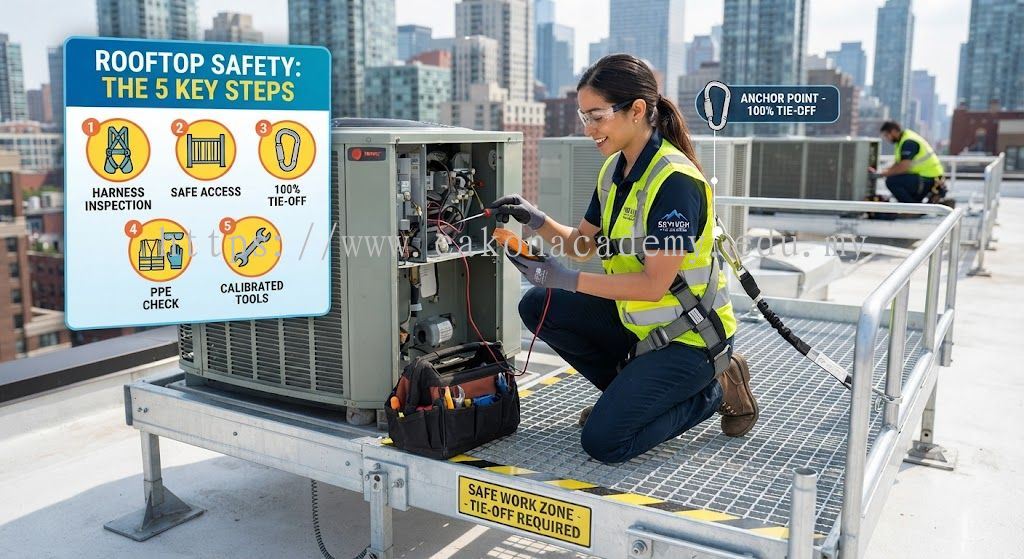
Aircon Technician Safety Procedures at Height: Complete Guide to Safe HVAC Work Practices for Professional Technicians
Aircon technician safety procedures at height are essential for ensuring HVAC professionals can perform air conditioning installation, servicing, maintenance, troubleshooting, inspections, and repairs safely in elevated working environments. Air conditioning technicians frequently carry out work on rooftops, external walls, balconies, suspended ceilings, plant rooms, cooling towers, scaffolding, ladders, and high-rise buildings where working at height presents significant safety risks. Without proper planning and adherence to recognised safety procedures, technicians may be exposed to falls, electrical hazards, falling objects, unstable work surfaces, and environmental dangers. Following professional aircon technician safety procedures at height helps reduce workplace accidents, improve productivity, ensure regulatory compliance, and maintain high standards of workmanship. At Eakon Academy (eakonacadem.edu.my), our HVAC training programmes combine practical technical education with comprehensive workplace safety instruction, preparing technicians to work safely and professionally across residential, commercial, and industrial HVAC projects.
Every successful HVAC project begins with careful preparation and risk assessment. Before working at height, technicians should inspect the worksite, evaluate roof conditions, identify structural hazards, assess weather conditions, verify safe access routes, and establish appropriate emergency response procedures. Aircon technician safety procedures at height require technicians to identify all potential hazards before installation or maintenance begins. These hazards may include fragile roofing materials, uneven surfaces, slippery floors, overhead power lines, nearby construction activities, restricted working spaces, or unstable mounting locations. Conducting a comprehensive workplace risk assessment allows technicians to implement preventive measures that minimise accidents while improving operational efficiency.
Safe access to elevated work areas is one of the most important elements of height safety. Depending on the installation or maintenance task, technicians may use extension ladders, platform ladders, scaffolding, mobile elevated work platforms (MEWPs), aerial lifts, permanent roof access systems, or suspended platforms. Every access method should be inspected before use to ensure structural integrity, stability, and suitability for the working environment. Technicians should understand proper ladder positioning, three-point contact climbing techniques, safe scaffold usage, equipment load limits, and manufacturer operating guidelines. Proper access equipment selection allows technicians to perform air conditioning work efficiently while significantly reducing fall risks.
Personal protective equipment (PPE) forms a critical part of aircon technician safety procedures at height. HVAC professionals should wear safety helmets, full-body harnesses, non-slip safety footwear, protective gloves, eye protection, and high-visibility clothing whenever required by the work environment. Fall protection systems, including shock-absorbing lanyards, anchor points, and fall arrest devices, should always be inspected before use to verify that they are free from damage, corrosion, excessive wear, or defects. Correct use of PPE provides an additional level of protection while supporting a strong workplace safety culture and reducing the likelihood of serious injuries during elevated work.
Electrical safety is closely connected with working at height because many HVAC servicing tasks involve electrical wiring, testing, commissioning, troubleshooting, and equipment replacement. Aircon technician safety procedures at height include isolating electrical power where appropriate, following lockout and tagout procedures, verifying circuit isolation, using insulated testing equipment, and maintaining safe distances from energised electrical components. Technicians should also inspect cables, connectors, and electrical panels before commencing work to ensure all systems are safe for servicing. Integrating electrical safety with fall prevention measures creates a safer working environment throughout every HVAC project.
Manual handling safety is another important consideration when working at height. Air conditioning technicians regularly transport outdoor condensing units, refrigerant cylinders, compressors, copper piping, mounting brackets, electrical tools, and maintenance equipment to elevated work areas. Safe lifting techniques, mechanical lifting devices, cranes, hoists, and coordinated team lifting methods should be used whenever necessary to reduce the risk of musculoskeletal injuries and prevent equipment from falling. Proper tool management is equally important, with tools secured using tool lanyards or organised storage systems to minimise the risk of falling objects.
Environmental conditions can greatly influence workplace safety during elevated HVAC operations. High winds, heavy rainfall, lightning, excessive temperatures, poor visibility, and slippery roof surfaces significantly increase workplace hazards. Professional technicians should continuously monitor weather conditions before and throughout every project, postponing work whenever environmental conditions create unacceptable risks. Effective communication between team members, ongoing supervision, and emergency rescue planning further strengthen workplace safety by ensuring technicians are prepared to respond appropriately to changing conditions or unexpected incidents.
Good housekeeping practices are another key component of aircon technician safety procedures at height. Maintaining clean work areas, organising tools properly, securing loose materials, managing refrigerant hoses safely, and keeping access pathways clear reduce the risk of slips, trips, and falls. Proper housekeeping also improves work efficiency by allowing technicians to move safely while carrying out installation, maintenance, or troubleshooting activities in confined elevated spaces.
At eakonacadem.edu.my, our professional HVAC training programmes integrate technical competency with occupational safety education. Students receive practical instruction in split air conditioner installation, commercial HVAC servicing, VRF and VRV systems, refrigeration equipment maintenance, refrigerant handling, leak detection, electrical diagnostics, preventive maintenance, and system commissioning. Alongside these technical skills, participants receive hands-on training in workplace risk assessment, working at height procedures, ladder safety, scaffold safety, rooftop safety, fall prevention systems, emergency response planning, hazard identification, personal protective equipment management, and safe work practices. This balanced training prepares graduates to perform HVAC work confidently while maintaining the highest standards of workplace safety.
For HVAC contractors and employers, implementing comprehensive aircon technician safety procedures at height offers significant business advantages. Organisations that invest in safety training experience fewer workplace injuries, lower insurance costs, improved productivity, stronger regulatory compliance, increased employee confidence, enhanced customer satisfaction, and reduced project delays. Customers are more likely to engage contractors who demonstrate professionalism by consistently following recognised safety standards during every installation and maintenance project. A commitment to workplace safety also strengthens company reputation and creates opportunities to secure larger residential, commercial, industrial, and government HVAC contracts.
As Malaysia's HVAC industry continues to expand, employers increasingly seek technicians who possess both advanced technical expertise and comprehensive safety awareness. Understanding and applying aircon technician safety procedures at height enables professionals to perform installations, servicing, inspections, and repairs safely while delivering reliable, high-quality workmanship. Eakon Academy is committed to developing highly skilled HVAC professionals through industry-focused education that combines practical technical training with workplace safety excellence. Visit eakonacadem.edu.my to explore our professional air conditioning installation courses, HVAC maintenance programmes, working at height safety training, certification courses, and hands-on technical workshops designed to prepare technicians for successful, safe, and rewarding careers in the heating, ventilation, air conditioning, and refrigeration industry.
Tingnan ang karagdagang mga detalye tungkol sa EAKON ACADEMY SDN BHD
