
HVAC Technician Fall Protection Safety Guide: Complete Safety Practices for Working at Height in the HVAC Industry
HVAC technician fall protection safety guide is an essential resource for air conditioning and refrigeration professionals who perform installation, maintenance, servicing, and repair work in elevated environments. As HVAC systems become more complex and are increasingly installed in commercial buildings, industrial facilities, high-rise properties, and rooftop locations, technicians are frequently required to work at height. These activities involve potential hazards such as falls, unstable surfaces, electrical risks, equipment handling challenges, and changing environmental conditions. A proper understanding of fall protection methods enables HVAC technicians to work safely, reduce workplace accidents, improve job performance, and maintain professional safety standards. At Eakon Academy (eakonacadem.edu.my), we provide industry-focused HVAC training that combines practical technical knowledge with comprehensive workplace safety education to prepare technicians for safe and successful careers in the air conditioning and refrigeration industry.
Working at height is a common requirement for many HVAC tasks, including installing outdoor condenser units, maintaining rooftop air conditioning systems, servicing VRF and VRV equipment, repairing commercial HVAC systems, inspecting ductwork, and performing preventive maintenance on industrial cooling equipment. These activities often require technicians to access elevated areas using ladders, scaffolding, mobile elevated work platforms (MEWPs), or rooftop access systems. Without proper fall protection knowledge, technicians may be exposed to serious workplace hazards. The HVAC technician fall protection safety guide helps professionals understand how to identify fall risks, select suitable safety equipment, and apply effective prevention strategies before beginning any elevated work.
The first step in effective fall protection is conducting a detailed workplace risk assessment. Before starting HVAC work at height, technicians should evaluate the job location, inspect access routes, identify potential hazards, and determine appropriate safety controls. Common risks include unprotected roof edges, slippery surfaces, unstable ladders, fragile roofing materials, poor lighting, overhead obstacles, electrical hazards, and unsafe weather conditions. Through proper risk assessment, technicians can plan safer working methods, select suitable equipment, and reduce the possibility of accidents during installation and maintenance activities.
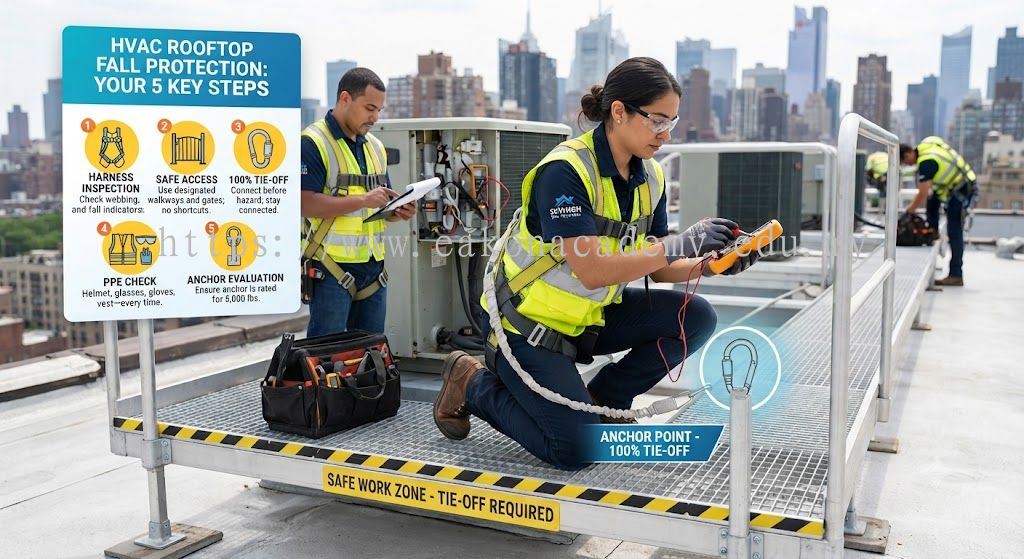
A critical part of HVAC technician fall protection safety guide practices is understanding the correct use of personal protective equipment (PPE). HVAC professionals working at height may require safety helmets, full-body harnesses, shock-absorbing lanyards, anchor points, fall arrest systems, safety footwear, gloves, and eye protection. Each piece of equipment must be selected based on the specific working environment and inspected before use. Technicians should check harness straps, buckles, connectors, D-rings, lanyards, and attachment points for damage, wear, or defects. Proper inspection and maintenance ensure fall protection equipment remains reliable and effective when needed.
Correct safety harness usage is another important element of fall prevention training. A harness must be properly fitted, adjusted, and connected to an approved anchorage point to provide effective protection. HVAC technician fall protection training teaches professionals how to wear full-body harnesses correctly, perform equipment checks, connect safety systems properly, and maintain safe movement while working at elevated locations. Proper harness practices improve technician confidence and help reduce the severity of injuries in the event of a fall.
Safe access equipment selection is also essential for preventing falls. HVAC technicians must understand when to use ladders, scaffolding, or elevated work platforms based on the requirements of each project. Ladders should be positioned correctly, inspected regularly, and used according to safe climbing procedures. Scaffolding must be stable and properly assembled, while MEWPs should only be operated by trained personnel following manufacturer guidelines. Selecting the correct access method allows technicians to complete HVAC tasks more safely and efficiently.
Tool and equipment management plays an important role in fall prevention. HVAC technicians often carry tools such as refrigerant gauges, vacuum pumps, electrical testing instruments, leak detectors, cordless tools, and replacement components while working at height. Poor tool organisation can create trip hazards or increase the risk of dropped objects. A professional fall protection safety guide encourages technicians to secure tools with lanyards, maintain clean work areas, organise materials properly, and ensure safe movement around elevated workspaces.
Electrical safety must also be considered when applying fall protection procedures. HVAC technicians frequently perform electrical troubleshooting, wiring connections, equipment testing, and commissioning while working at height. Safe practices include isolating electrical power where necessary, following lockout and tagout procedures, using insulated tools, and identifying electrical hazards before starting work. Combining electrical safety with fall protection methods creates a safer working environment for technicians handling complex HVAC systems.
Environmental awareness is another important aspect of working at height safety. Weather conditions such as strong winds, rain, lightning, excessive heat, and slippery surfaces can increase the risk of accidents. HVAC professionals should evaluate environmental conditions before beginning elevated work and stop activities when safety cannot be guaranteed. Proper communication, supervision, emergency planning, and continuous hazard monitoring further improve workplace safety.
At eakonacadem.edu.my, our professional HVAC training programmes are designed to develop technicians with strong technical abilities and excellent safety awareness. Students receive practical training in air conditioning installation, maintenance, troubleshooting, refrigerant handling, electrical diagnostics, system commissioning, and HVAC servicing. Our safety-focused training covers fall protection methods, working at height procedures, safety harness inspection, hazard identification, risk assessment, ladder safety, scaffold awareness, emergency response planning, and safe equipment handling. This hands-on approach ensures technicians are prepared to meet the expectations of the modern HVAC industry.
For HVAC contractors and employers, implementing a strong HVAC technician fall protection safety guide provides many operational benefits. Safety-trained technicians help reduce workplace injuries, improve productivity, minimise project delays, enhance compliance with safety regulations, and increase customer confidence. Companies that prioritise technician safety demonstrate professionalism and reliability, creating stronger reputations within the competitive HVAC market.
As Malaysia’s HVAC industry continues to expand, technicians must possess both technical expertise and comprehensive safety knowledge. Understanding HVAC technician fall protection safety guide principles enables professionals to perform installation, maintenance, and repair work safely while delivering high-quality services. Eakon Academy is committed to developing skilled HVAC professionals through practical, industry-relevant training that combines technical excellence with workplace safety practices. Visit eakonacadem.edu.my to explore our professional HVAC courses, air conditioning training programmes, maintenance workshops, and safety-focused education designed to prepare technicians for successful careers in the heating, ventilation, air conditioning, and refrigeration industry.
Tingnan ang karagdagang mga detalye tungkol sa EAKON ACADEMY SDN BHD
