
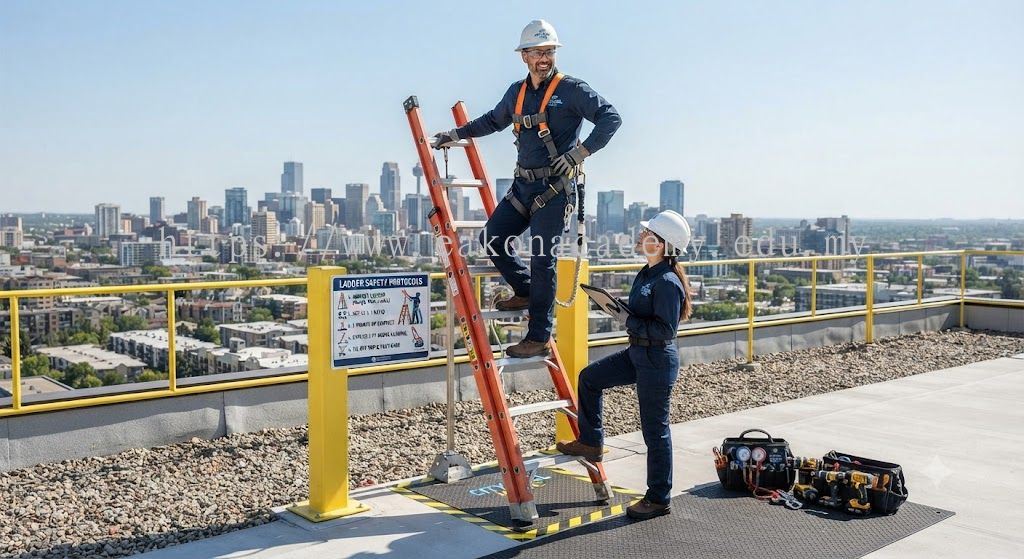
HVAC Ladder Safety Procedures for Technicians: Essential Guidelines for Safe Air Conditioning Work at Height
HVAC ladder safety procedures for technicians are essential safety guidelines designed to protect air conditioning installers, refrigeration engineers, HVAC contractors, and maintenance professionals who use ladders during installation, servicing, inspection, and repair activities. In the HVAC industry, technicians frequently use ladders to access indoor and outdoor air conditioning units, ceiling spaces, electrical components, refrigerant piping, ventilation systems, and elevated equipment locations. Although ladders are common tools in HVAC work, incorrect ladder selection, improper positioning, poor maintenance, and unsafe climbing practices can create serious workplace hazards including falls, injuries, equipment damage, and work interruptions. Following proper HVAC ladder safety procedures for technicians helps reduce accidents, improve work efficiency, and create a safer working environment. At eakonacadem.edu.my, we provide professional HVAC training programs that combine technical air conditioning skills with practical workplace safety knowledge, helping technicians develop the confidence and competency required to perform HVAC tasks safely.
HVAC technicians often work in various environments such as residential buildings, commercial facilities, industrial plants, factories, warehouses, hospitals, and high-rise properties where ladders are required for access. Tasks such as split air conditioner installation, outdoor unit servicing, indoor unit maintenance, electrical troubleshooting, refrigerant piping work, and ceiling-mounted equipment inspection may require technicians to work from ladders. Understanding proper ladder safety procedures is therefore an important skill for every professional HVAC technician.
The first step in HVAC ladder safety procedures is selecting the correct ladder for the specific task. Technicians should choose ladders based on the required working height, work duration, equipment weight, and working environment. Different tasks may require step ladders, extension ladders, or specialised access equipment. Using an unsuitable ladder can increase the risk of instability and falls. Professional technicians should understand ladder limitations and recognise when alternative access equipment such as scaffolding or Mobile Elevated Work Platforms (MEWPs) is a safer option.
Before using any ladder, technicians should perform a thorough ladder inspection. The ladder should be checked for damaged steps, loose components, cracks, corrosion, worn feet, broken locking mechanisms, or other defects that may affect stability. Damaged ladders should never be used and must be removed from service immediately. Regular inspection ensures that ladders remain safe and reliable during HVAC installation and maintenance activities.
Proper ladder positioning is another important part of HVAC ladder safety procedures. Technicians should place ladders on stable, level, and non-slip surfaces before climbing. The ladder should be positioned correctly to prevent slipping, leaning, or sudden movement during work. Extension ladders should be secured properly, and technicians should maintain safe positioning when accessing elevated areas. Correct ladder placement provides better stability and reduces the possibility of falls.
Maintaining three points of contact is a fundamental ladder safety practice for HVAC technicians. Workers should keep two hands and one foot, or two feet and one hand, in contact with the ladder whenever possible while climbing. Technicians should avoid carrying heavy tools or materials while climbing because this can affect balance and increase the risk of falling. Using tool bags, belts, or lifting systems allows technicians to keep their hands available for safe climbing.
Safe tool handling is also an important consideration when using ladders for HVAC work. Air conditioning technicians commonly use tools such as drills, refrigerant gauges, electrical testers, pipe cutters, screwdrivers, and hand tools. Carrying loose tools while climbing can create unsafe conditions. Proper tool storage systems, including tool belts and secured bags, help technicians maintain balance and prevent dropped objects that may injure people below.
Technicians should also understand the importance of maintaining proper body position while working from ladders. Overreaching, leaning sideways, standing on incorrect ladder steps, or applying excessive force during drilling or installation work can cause instability. HVAC technicians should reposition the ladder when necessary instead of stretching beyond safe limits. Maintaining good posture and controlled movement improves safety and work quality.
Personal protective equipment (PPE) is another important component of HVAC ladder safety procedures. Depending on the working environment, technicians may require safety helmets, anti-slip footwear, gloves, safety glasses, and other protective equipment. Proper footwear with good grip helps prevent slips, while helmets provide protection from falling objects and accidental impacts during HVAC installation and maintenance work.
Electrical safety must always be considered when HVAC technicians use ladders. Many air conditioning tasks involve working near electrical panels, wiring systems, isolators, and power connections. Technicians should use suitable ladders designed for electrical work environments and follow proper electrical safety procedures. Electrical isolation and safe testing methods help prevent electric shock incidents that could result in serious injuries or falls.
Environmental conditions should also be evaluated before using ladders for HVAC work. Rain, strong winds, slippery surfaces, poor lighting, and crowded work areas can increase ladder-related risks. Technicians should assess the workplace conditions before starting work and make necessary adjustments to maintain a safe environment. Proper planning helps prevent accidents caused by external factors.
Training is essential for ensuring HVAC technicians understand correct ladder usage and workplace safety requirements. Professional ladder safety training helps technicians learn ladder selection, inspection methods, positioning techniques, climbing procedures, PPE requirements, hazard identification, and emergency response awareness. Skilled technicians are better prepared to complete HVAC installation and maintenance work safely and efficiently.
At eakonacadem.edu.my, we are committed to developing highly skilled HVAC professionals through practical, industry-focused training programs that integrate advanced air conditioning expertise with comprehensive workplace safety practices. Our courses cover HVAC ladder safety procedures for technicians, working at height safety, fall prevention methods, ladder inspection techniques, safety harness training, rooftop HVAC safety, Mobile Elevated Work Platform (MEWP) operation, workplace risk assessment, electrical safety, emergency rescue procedures, and professional HVAC installation techniques. Students gain valuable hands-on experience that prepares them for residential, commercial, and industrial HVAC projects throughout Malaysia. By applying proper HVAC ladder safety procedures for technicians, professionals can reduce workplace accidents, improve installation and maintenance quality, comply with safety requirements, increase employer confidence, enhance customer satisfaction, and build successful long-term careers in the air conditioning and refrigeration industry while maintaining the highest standards of safety and professionalism.
Tingnan ang karagdagang mga detalye tungkol sa EAKON ACADEMY SDN BHD
