
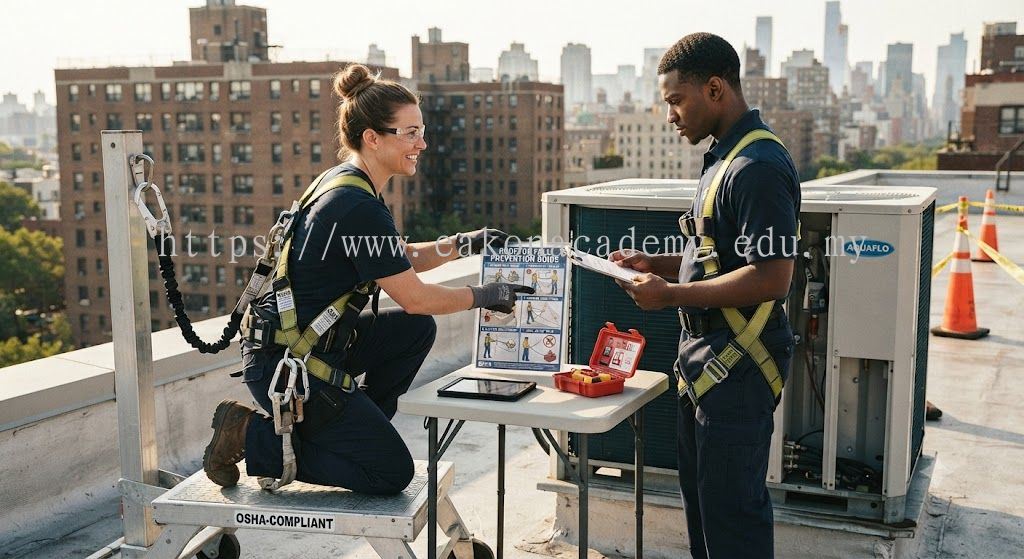
Fall Prevention Guide for HVAC Technicians: Essential Safety Practices for Working at Height
HVAC technicians perform a wide range of installation, servicing, and maintenance activities that may require working at elevated locations such as rooftops, ceiling areas, external walls, mechanical rooms, high-rise buildings, and industrial facilities. These working environments create potential hazards, especially the risk of falls that can result in serious injuries, equipment damage, and workplace disruptions. Therefore, understanding a proper fall prevention guide for HVAC technicians is essential to ensure technicians can complete air conditioning work safely, efficiently, and professionally. At Eakon Academy (eakonacadem.edu.my), our HVAC training programmes focus on developing skilled technicians who understand both technical air conditioning knowledge and effective safety procedures for working in modern HVAC environments.
Fall prevention is a critical part of HVAC workplace safety because many air conditioning systems are installed in locations that require elevated access. Technicians servicing rooftop air conditioning units, outdoor condensers, commercial HVAC systems, VRF and VRV equipment, and industrial cooling systems may face risks associated with working at height. Without proper safety awareness and preventive measures, technicians may be exposed to hazards such as unstable surfaces, incorrect ladder usage, unprotected edges, falling tools, and unsafe working conditions.
The first step in effective fall prevention for HVAC technicians is conducting a proper working at height risk assessment before starting any task. Technicians should evaluate the work environment and identify possible hazards, including roof edges, slippery surfaces, access limitations, electrical systems, weather conditions, and surrounding activities. A detailed risk assessment allows technicians to understand potential dangers and implement appropriate control measures before performing maintenance or installation work.
Proper planning is one of the most important elements in preventing falls during HVAC activities. Before starting work, technicians should determine the correct access method, required safety equipment, and suitable working procedures. Selecting the right equipment and preparing the work area helps reduce unnecessary movement, improves efficiency, and minimises the possibility of accidents during elevated tasks.
The use of suitable fall protection equipment is an essential part of any HVAC technician fall prevention programme. Technicians working at height should understand the correct application of safety harnesses, shock-absorbing lanyards, self-retracting lifelines (SRLs), connectors, and approved anchor points. These systems are designed to reduce fall risks and provide protection if an unexpected incident occurs. Proper training ensures technicians know how to inspect, wear, and maintain their fall protection equipment correctly.
Safety harness inspection is a key procedure in preventing fall-related accidents. Before each use, HVAC technicians should inspect harness straps, stitching, buckles, D-rings, connectors, and attachment points. Any signs of damage, excessive wear, corrosion, or defects should be reported and the equipment should not be used. Regular inspection ensures that fall protection systems remain reliable and effective during maintenance activities.
Safe ladder practices are also an important part of fall prevention for HVAC technicians. Many residential and commercial air conditioning maintenance tasks require ladder access to indoor units, outdoor units, and elevated components. Technicians should select the correct ladder type, inspect it before use, position it on stable surfaces, maintain three points of contact, and avoid overreaching. Proper ladder techniques significantly reduce the risk of slips and falls.
Personal protective equipment (PPE) provides additional protection during HVAC installation and maintenance work. Technicians should wear appropriate PPE such as safety helmets with chin straps, safety footwear, protective gloves, safety glasses, and suitable work clothing. Safety helmets help protect against falling objects, while anti-slip footwear improves stability when working on rooftops or elevated surfaces.
Tool management is another important factor in fall prevention. Loose tools and materials can become dangerous falling objects when technicians work at height. HVAC technicians should use tool bags, tool belts, and tool lanyards to secure equipment properly. Good organisation prevents dropped objects, protects workers below, and improves overall maintenance efficiency.
Environmental conditions should always be considered when applying fall prevention procedures. Weather conditions such as rain, strong winds, extreme heat, and poor lighting can increase accident risks. Technicians should assess workplace conditions before starting work and stop activities if the environment becomes unsafe. Proper preparation helps maintain a controlled and safer working environment.
Electrical safety and refrigerant safety are also important considerations when preventing accidents during HVAC work. Technicians should follow proper electrical isolation procedures, use suitable testing equipment, and apply safe refrigerant handling methods. Combining technical knowledge with safety awareness allows technicians to perform maintenance tasks more effectively and responsibly.
Emergency rescue planning is an essential part of a complete fall prevention programme. If a technician experiences a fall while connected to a safety harness system, immediate rescue procedures are required to reduce the risk of suspension trauma. Employers should provide emergency plans, communication methods, rescue equipment, and first aid arrangements to ensure effective response during incidents.
Continuous safety training helps HVAC technicians develop better awareness and safer working habits. Professional training should include hazard identification, risk assessment, fall protection systems, ladder safety, PPE requirements, electrical safety, refrigerant handling, and emergency response procedures. Well-trained technicians are more confident and capable of managing workplace risks.
At Eakon Academy (eakonacadem.edu.my), we are committed to providing professional HVAC training that prepares technicians for real-world industry requirements. Our programmes cover air conditioning installation, servicing, maintenance, troubleshooting, working at height safety, fall protection equipment, PPE requirements, electrical protection, refrigerant management, and industry best practices. Through practical hands-on training, students gain the knowledge and skills required to perform HVAC work safely and professionally. By following this Fall Prevention Guide for HVAC Technicians, professionals can reduce workplace hazards, improve safety performance, protect themselves and others, comply with industry safety expectations, and build successful careers in the HVAC industry.
Tingnan ang karagdagang mga detalye tungkol sa EAKON ACADEMY SDN BHD
