
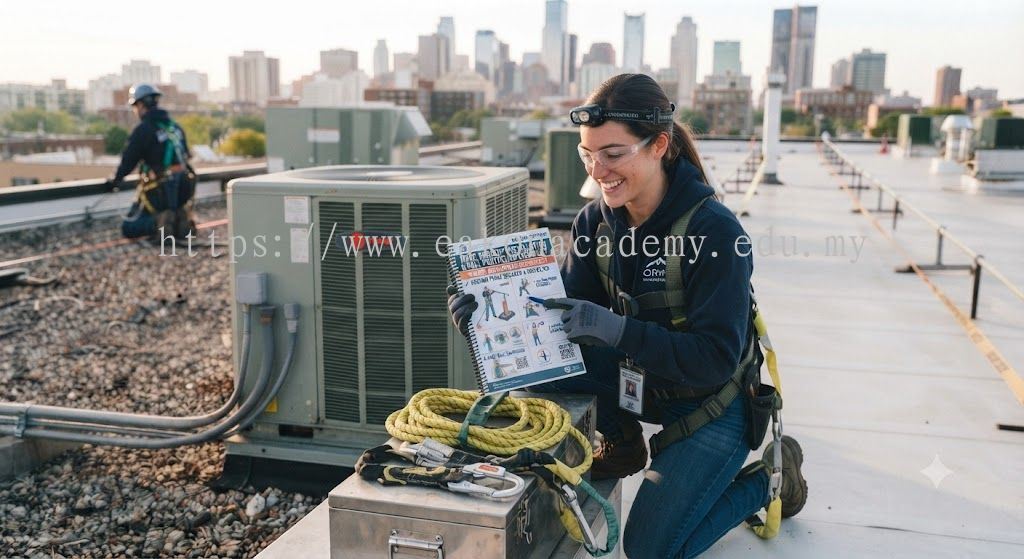
HVAC Installation Safety Fall Protection Checklist: Complete Safety Guide for HVAC Technicians Working at Height
HVAC installation activities often involve working in elevated environments such as rooftops, commercial buildings, industrial facilities, high-rise properties, and external structures. Technicians responsible for installing air conditioning systems may need to access outdoor units, mount equipment, install refrigerant piping, complete electrical connections, and perform testing procedures at height. These activities require proper safety planning to prevent falls and workplace accidents. A comprehensive HVAC installation safety fall protection checklist helps technicians identify hazards, prepare suitable safety equipment, and follow safe working procedures during air conditioning installation projects. At Eakon Academy (eakonacadem.edu.my), our HVAC training programmes focus on developing professional technicians who understand both technical installation skills and essential workplace safety practices.
Fall protection is a crucial part of HVAC installation safety because many air conditioning systems are installed in locations where technicians cannot work safely from ground level. Rooftop HVAC units, commercial split systems, VRF and VRV systems, and industrial cooling equipment often require elevated access. Without proper fall protection procedures, technicians may face serious risks including falls, unstable working surfaces, dropped tools, electrical hazards, and unsafe access conditions. A detailed checklist ensures that all important safety requirements are considered before installation work begins.
The first item in an HVAC installation safety fall protection checklist is completing a proper working at height risk assessment. Before starting installation activities, technicians should inspect the workplace and identify potential hazards such as roof edges, slippery surfaces, fragile structures, access limitations, electrical equipment, weather conditions, and surrounding work activities. A complete risk assessment allows technicians and supervisors to determine suitable control measures and select the correct fall protection methods.
Safety equipment inspection is one of the most important steps in the fall protection checklist. HVAC technicians should inspect all personal protective equipment before beginning installation work. This includes checking full-body safety harnesses, shock-absorbing lanyards, self-retracting lifelines (SRLs), connectors, and anchor systems. Equipment should be checked for damaged straps, broken stitching, corrosion, worn components, or any signs of failure. Defective equipment should never be used because it may not provide effective protection during a fall incident.
The full-body safety harness is an essential component of HVAC installation fall protection. Technicians should ensure the harness is correctly fitted and adjusted before working at height. The shoulder straps, chest strap, leg loops, buckles, and attachment points must be positioned correctly to provide secure protection while allowing comfortable movement. Proper harness usage helps reduce injury risks and improves technician confidence during elevated installation tasks.
Anchor point verification is another important checklist requirement. Technicians must confirm that anchor points are suitable, secure, and approved for fall protection applications. Fall protection equipment should only be connected to reliable anchorage systems capable of supporting fall forces. Structures such as refrigerant pipes, ductwork, electrical conduits, or temporary supports should not be used as attachment points unless specifically designed for safety purposes.
Access equipment inspection should also be included in the HVAC installation safety checklist. Depending on the installation environment, technicians may use ladders, scaffolding, elevated work platforms, boom lifts, or scissor lifts. All access equipment should be inspected before use to ensure stability and proper operation. Selecting the correct access method helps reduce unnecessary risks and improves installation efficiency.
Personal protective equipment (PPE) is an important requirement for safe HVAC installation work. Technicians should wear safety helmets with chin straps, safety footwear, protective gloves, safety glasses, and suitable work clothing. These protective items help reduce injuries from falling objects, sharp components, electrical hazards, and unstable working surfaces.
Tool and material control must also be considered during installation activities at height. HVAC installation involves the use of various tools, mounting brackets, electrical components, refrigerant pipes, and equipment parts. These items should be properly secured to prevent dropped objects that could injure workers below or damage installed systems. Tool bags, tool lanyards, and organised storage methods improve workplace safety.
Electrical safety checks are another important part of the HVAC installation fall protection checklist. Technicians should confirm proper electrical isolation procedures before connecting wiring or testing equipment. Safe handling of electrical components such as compressors, motors, capacitors, and control systems helps prevent electrical shocks and accidents while working at height.
Environmental conditions should be reviewed before beginning HVAC installation work. Rain, strong winds, extreme temperatures, and poor lighting can increase fall risks. Technicians should evaluate site conditions and postpone work if the environment becomes unsafe. Proper planning helps maintain safer installation activities.
Emergency rescue preparation is an essential part of fall protection planning. If a technician falls while connected to a harness system, immediate rescue procedures are required to prevent suspension trauma. Employers should establish emergency response plans, provide rescue equipment, and ensure workers understand the correct actions during emergency situations.
Regular safety training is necessary to ensure HVAC technicians understand fall protection requirements and safe installation procedures. Training should cover hazard identification, risk assessment, PPE usage, harness inspection, anchor point selection, ladder safety, electrical protection, and emergency response. Skilled technicians are better prepared to manage workplace hazards and complete installation tasks safely.
At Eakon Academy (eakonacadem.edu.my), we are committed to providing professional HVAC training that prepares technicians for real-world industry challenges. Our specialised programmes cover air conditioning installation, servicing, maintenance, troubleshooting, working at height safety, fall protection systems, PPE requirements, electrical safety, refrigerant handling, and industry best practices. Through practical hands-on training, students gain the knowledge and confidence required for safe HVAC operations. By following a complete HVAC Installation Safety Fall Protection Checklist, technicians can reduce workplace hazards, improve installation performance, protect themselves and others, comply with safety expectations, and build a successful career in the HVAC industry.
Tingnan ang karagdagang mga detalye tungkol sa EAKON ACADEMY SDN BHD
