
Safe Tool Use During Air Conditioning Installation: Essential Guidelines for Professional HVAC Technicians
Safe tool use during air conditioning installation is a fundamental safety practice that helps HVAC technicians perform installation tasks accurately, efficiently, and safely. Air conditioning installation requires the use of various specialized tools, including hand tools, power tools, electrical testing equipment, refrigeration instruments, and pipe installation equipment. Improper use of these tools can result in workplace injuries, equipment damage, installation errors, and reduced system performance. By following proper safe tool use during air conditioning installation procedures, technicians can improve workplace safety, maintain professional installation standards, and ensure reliable air conditioning system operation. At Eakon Academy (eakonacadem.edu.my), we provide industry-focused HVAC training programs that emphasize correct tool handling, installation safety, hazard control, and practical skills required for modern air conditioning professionals.
Air conditioning installation involves multiple stages that require careful tool selection and proper handling techniques. From mounting indoor units and outdoor condensers to installing copper piping, electrical connections, drainage systems, and refrigerant circuits, every step requires the correct tools and procedures. HVAC technicians must understand the function of each tool and use it according to manufacturer guidelines. Proper tool knowledge improves installation accuracy, reduces equipment damage, and prevents unnecessary safety risks during work activities.
Before starting any air conditioning installation project, technicians should conduct proper preparation and workplace assessment. A risk assessment helps identify potential hazards related to the installation area, tools, electrical systems, equipment handling, and surrounding conditions. Technicians should inspect the workspace, prepare required tools, check personal protective equipment (PPE), and ensure all equipment is in safe operating condition. Proper preparation creates a safer working environment and allows technicians to complete installation tasks more efficiently.
Selecting the correct tools is one of the most important aspects of safe tool use during air conditioning installation. HVAC professionals commonly use tools such as screwdrivers, adjustable wrenches, pliers, torque wrenches, pipe cutters, tube benders, flaring tools, cordless drills, impact drivers, vacuum pumps, refrigerant gauges, multimeters, and clamp meters. Each tool has a specific purpose and must be selected based on the installation requirements. Using incorrect tools may cause damaged components, poor workmanship, inaccurate measurements, and increased safety hazards.
Tool inspection and maintenance are essential parts of professional HVAC installation safety. Before using any equipment, technicians should inspect tools for damage, wear, and operational problems. Hand tools should be checked for broken handles, loose parts, corrosion, and damaged working surfaces. Power tools should be inspected for cable damage, battery conditions, faulty switches, and protective features. Refrigeration service tools should be maintained and calibrated regularly to ensure accurate performance. Regular tool inspection helps prevent accidents and improves the reliability of installation work.
Electrical safety is another important element of safe tool use during air conditioning installation. HVAC systems include electrical components such as compressors, fan motors, control boards, wiring connections, and power supplies. Technicians must use properly rated electrical tools and testing instruments while following safe electrical procedures. Insulated tools, correct testing methods, and electrical isolation practices help reduce the risk of electric shock and protect both technicians and air conditioning equipment.
Proper handling of power tools is also essential during installation activities. Tools such as drills and impact drivers require correct operating techniques to prevent injuries and damage. Technicians should ensure drill bits, accessories, and attachments are installed correctly before use. Maintaining proper body positioning and controlling the tool during operation improves safety and installation accuracy. Regular training helps technicians develop confidence and safe operating habits when using powered equipment.
Safe storage and organization of tools contribute to a more efficient installation process. HVAC technicians should use professional toolboxes, service bags, and storage systems to keep equipment organized and protected. Tools should be returned to their proper location after use to prevent workplace clutter and reduce the risk of accidents. A well-organized workspace allows technicians to work faster while maintaining better safety control.
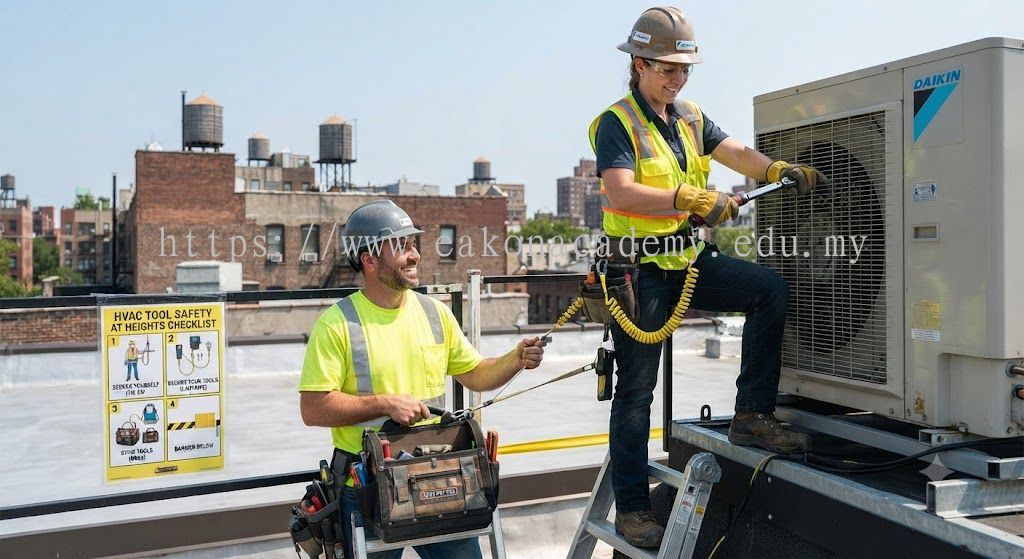
Working at height is another important consideration when using tools during air conditioning installation. Many HVAC projects involve rooftop units, wall-mounted outdoor units, ceiling systems, and elevated installation areas. Technicians should use proper access equipment and secure tools to prevent dropped object incidents. Tool tethering systems, safety lanyards, and secure carrying methods help maintain control when working in elevated locations.
Personal protective equipment (PPE) provides additional protection during air conditioning installation activities. Technicians should wear suitable PPE including safety glasses, gloves, safety footwear, protective clothing, and helmets when required. PPE protects against common hazards such as sharp materials, flying particles, electrical exposure, and accidental tool contact. Proper PPE usage supports safer and more professional installation practices.
Continuous HVAC safety training is essential for improving technician skills and reducing workplace risks. Training programs should include tool identification, safe operating procedures, equipment inspection, electrical safety, workplace hazard assessment, emergency procedures, and professional installation techniques. Skilled technicians who understand proper tool use can complete projects more effectively while maintaining high-quality standards.
At Eakon Academy (eakonacadem.edu.my), we are committed to developing professional HVAC technicians through practical and industry-focused training programs. Our courses cover air conditioning installation safety, tool handling procedures, electrical protection, refrigerant practices, working at height safety, and professional service techniques. By mastering safe tool use during air conditioning installation, technicians can reduce workplace hazards, improve installation quality, protect valuable equipment, and deliver reliable HVAC services. Proper tool safety knowledge is a key foundation for building a safer, more efficient, and professional air conditioning industry.
Tingnan ang karagdagang mga detalye tungkol sa EAKON ACADEMY SDN BHD
