
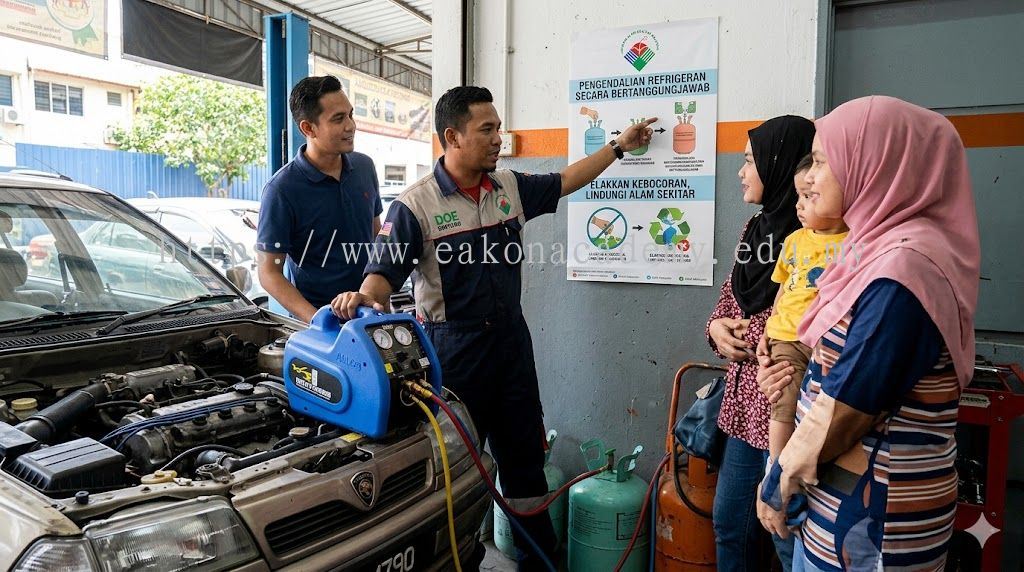
DOE MALAYSIA REFRIGERANT ENVIRONMENTAL CONTAINMENT RULES – HVACR COMPLIANCE, EMISSION PREVENTION AND SUSTAINABLE REFRIGERANT MANAGEMENT
DOE Malaysia refrigerant environmental containment rules play a vital role in protecting the environment by regulating the handling, storage, recovery, recycling, and disposal of refrigerants used in HVACR (Heating, Ventilation, Air Conditioning, and Refrigeration) systems. These rules are established to minimize the release of refrigerant gases into the atmosphere and support Malaysia’s commitment to environmental sustainability. Refrigerants such as hydrofluorocarbons (HFCs), hydrochlorofluorocarbons (HCFCs), and other fluorinated gases are commonly used in cooling systems, but many of these substances have high global warming potential (GWP). As a result, strict refrigerant environmental containment rules are necessary to prevent accidental emissions, reduce environmental impact, and ensure compliance with national and international environmental regulations.
The primary objective of DOE Malaysia refrigerant environmental containment rules is to ensure that refrigerants remain securely contained throughout the entire lifecycle of an HVACR system. This includes system design, installation, commissioning, operation, maintenance, servicing, repair, refrigerant recovery, recycling, reclamation, and final disposal. By maintaining proper containment, businesses and technicians can significantly reduce refrigerant leakage, improve energy efficiency, and support climate change mitigation efforts. Effective refrigerant containment also helps organizations avoid unnecessary refrigerant replacement costs and enhances the overall performance and reliability of HVACR equipment.
Under DOE Malaysia refrigerant environmental containment rules, technicians and service providers are required to implement preventive measures that minimize the risk of refrigerant leakage. This includes using high-quality components, following proper installation procedures, conducting regular maintenance inspections, and performing routine leak detection activities. Critical HVACR components such as compressors, condensers, evaporators, valves, piping systems, and fittings must be regularly monitored to ensure that refrigerants remain fully contained within the system. Early identification and repair of leaks are essential to maintaining compliance with environmental regulations and preventing the release of harmful gases into the atmosphere.
Leak detection and monitoring form a significant part of refrigerant environmental containment practices. Technicians utilize a range of approved methods including electronic leak detectors, nitrogen pressure testing, ultraviolet (UV) dye testing, and soap bubble testing to identify refrigerant leaks. These procedures help ensure that any leak is detected and repaired promptly before significant refrigerant loss occurs. Continuous monitoring programs are particularly important for large commercial and industrial refrigeration systems where even small leaks can result in substantial environmental and financial consequences over time.
Refrigerant recovery and recycling are also key requirements under DOE Malaysia refrigerant environmental containment rules. Before servicing, repairing, or decommissioning HVACR systems, refrigerants must be recovered using approved recovery equipment and stored in certified recovery cylinders. Recovered refrigerants may then be recycled, reclaimed, or disposed of according to environmental guidelines. Proper recovery procedures help prevent direct atmospheric emissions and support responsible refrigerant management practices throughout the industry.
Malaysia’s refrigerant environmental containment framework is closely aligned with international environmental agreements such as the Montreal Protocol and the Kigali Amendment. These global initiatives encourage countries to reduce dependence on high-GWP refrigerants and adopt environmentally friendly alternatives. As Malaysia continues its transition toward low-GWP refrigerants such as R32, R290 (propane), ammonia, and carbon dioxide (CO ), the importance of effective containment measures becomes increasingly significant in maintaining both environmental and operational safety.
Professional training and competency development are essential for successful implementation of DOE Malaysia refrigerant environmental containment rules. HVACR technicians must possess the knowledge and practical skills necessary to handle refrigerants safely, perform leak detection, conduct recovery procedures, and maintain system integrity. Institutions such as Eakon Academy (eakonacadem.edu.my) offer specialized HVACR training programs that help industry professionals understand environmental regulations, refrigerant management best practices, and DOE compliance requirements. These training programs contribute to the development of a highly skilled workforce capable of supporting Malaysia’s environmental goals.
Proper documentation and record keeping are equally important under refrigerant environmental containment regulations. Organizations should maintain detailed records of refrigerant inventories, leak inspections, recovery activities, maintenance procedures, and disposal practices. Accurate documentation supports regulatory audits, demonstrates compliance, and helps companies establish effective environmental management systems.
In conclusion, DOE Malaysia refrigerant environmental containment rules are essential for reducing greenhouse gas emissions, improving HVACR system performance, and supporting long-term environmental sustainability. By implementing effective containment measures, conducting regular leak inspections, following approved recovery procedures, maintaining comprehensive records, and investing in professional HVACR training through institutions such as Eakon Academy (eakonacadem.edu.my), businesses and technicians can contribute to a cleaner environment while ensuring full compliance with Malaysia’s evolving environmental regulations and global sustainability commitments.
Lebih maklumat tentang EAKON ACADEMY SDN BHD Malaysia
