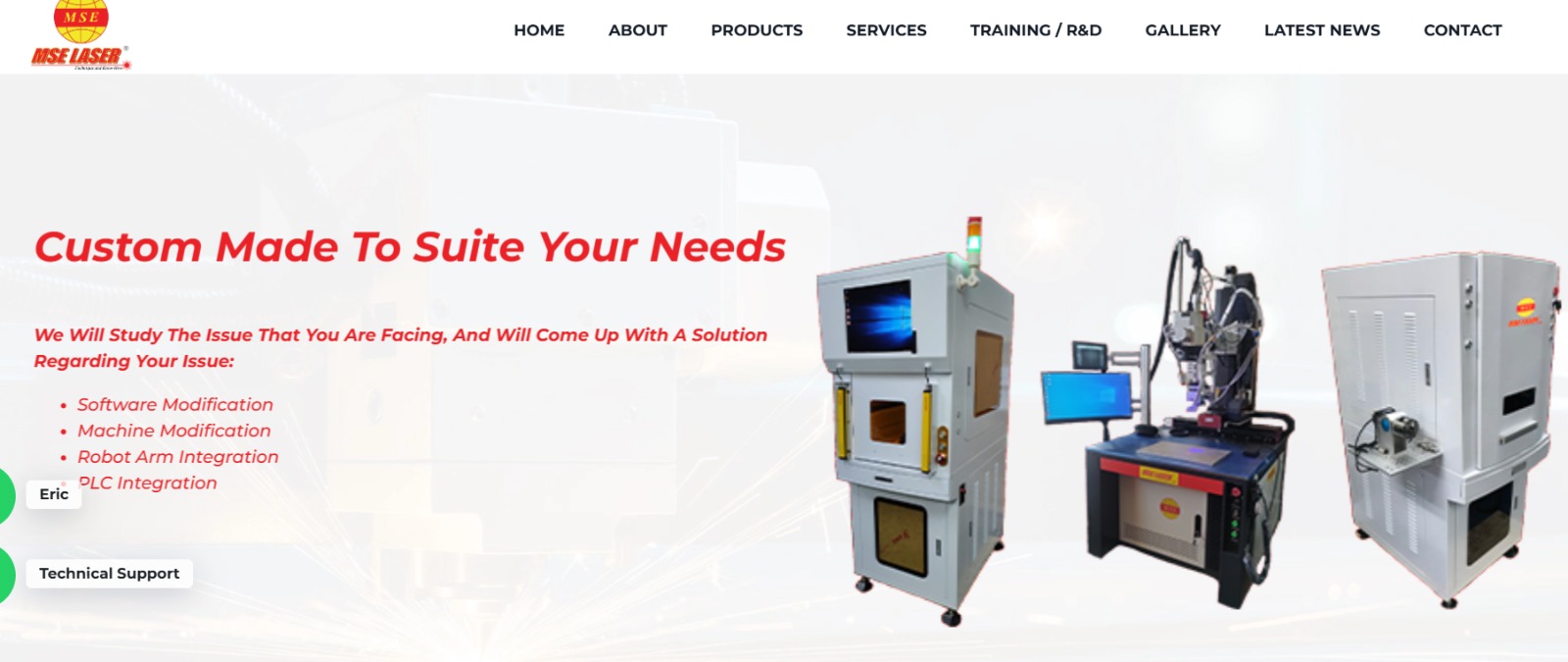
Industrial Laser Welding Explained
Industrial laser welding is transforming modern manufacturing and precision repair work.
By using a highly concentrated laser beam, manufacturers can join metal components with exceptional accuracy, faster processing speed, and minimal heat distortion.
The process is widely used in sectors where weld quality directly affects product performance, reliability, and lifespan.
That includes automotive, aerospace, electronics, mould and die, medical equipment, heavy engineering, and precision tooling industries.
Compared to traditional welding methods, laser welding offers:
- Higher precision
- Faster production speed
- Smaller heat affected zones (HAZ)
- Lower material distortion
- Cleaner weld finishing
- Reduced post-processing work
For high-value components, those advantages matter.
How Laser Welding Works
Laser welding works by directing concentrated light energy onto a very small welding area.
The focused energy melts the material precisely while limiting unnecessary heat exposure to surrounding surfaces.
The process typically follows several stages:
1. Laser Beam Generation
A laser source produces concentrated energy with extremely high power density.
Common systems include:
- Fiber laser
- Nd:YAG laser
- Pulsed laser systems
2. Beam Focusing
Optical lenses focus the beam into a small and controlled spot size.
This allows:
- Deep penetration capability
- Narrow weld seams
- Controlled heat input
- Better dimensional accuracy
3. Material Melting and Weld Pool Formation
The intense laser energy melts the base material and forms a molten weld pool.
Depending on the application, filler wire may also be added for reinforcement or repair work.
Laser welding is commonly used for:
- Thin sheet welding
- Deep penetration joining
- Precision repair work
- Hard-facing and cladding
4. Rapid Cooling and Solidification
The weld cools rapidly after laser exposure.
Fast solidification helps produce strong joints with lower deformation and improved structural consistency.
Laser Welding Process Diagram
Laser Source ↓Beam Focusing ↓Material Melting ↓Weld Pool Formation ↓Solidification ↓InspectionFor a more detailed technical explanation, MSE International also explains How Laser Welding Works in practical manufacturing environments.
Laser Welding vs Traditional Welding
One reason laser welding continues gaining popularity is its operational efficiency.
The differences become clearer when compared directly with conventional welding methods.
| Laser Welding | Traditional Welding |
|---|---|
| Lower heat distortion | Higher heat spread |
| Narrow weld seam | Wider weld area |
| Faster precision work | More post-processing |
| Better dimensional control | Greater warping risk |
| Cleaner finishing | More grinding required |
| Suitable for delicate components | Better for large structural fabrication |
Both methods still have important roles in manufacturing.
However, laser systems are often preferred for precision-driven applications where consistency and reduced heat input are critical.
Major Advantages of Laser Welding
High Precision
Laser welding is ideal for complex geometries and detailed welding tasks.
It supports highly accurate joining for sensitive or miniature components.
Minimal Heat Distortion
Smaller heat affected zones reduce warping and help protect surrounding material.
This is especially important for tooling, mould repair, and thin materials.
Faster Production Speed
Laser systems support automation and high-volume production with repeatable welding performance.
Strong Weld Quality
The process produces consistent, high-strength welds with excellent penetration control.
Reduced Post-Processing
Cleaner weld appearance reduces grinding, polishing, and finishing work.
Material Versatility
Laser welding can process various metals, including:
- Stainless steel
- Aluminium
- Titanium
- Tool steel
- Carbide
- Nickel alloys
Common Applications
Laser welding is widely used across manufacturing and engineering sectors.
Typical applications include:
- Mould and die repair
- Automotive components
- Aerospace parts
- Turbine repair
- Electronics manufacturing
- Medical devices
- Precision engineering
- Metal fabrication
Its ability to rebuild damaged areas with controlled heat makes it particularly valuable for repair applications involving expensive components.
For broader support services, MSE International also provides dedicated Welding Service solutions for manufacturing and repair requirements.
Field Observation
In mould repair applications, poor focal distance control often causes inconsistent penetration even when laser power settings appear correct.
Small variations in beam positioning can significantly affect weld depth, heat concentration, and overall repair quality.
Experienced operators typically monitor focal consistency closely to maintain stable welding performance and reduce surface defects.
This is one reason technical training and process optimization remain critical in precision laser applications.
Why Manufacturers Choose MSE International
MSE International Sdn Bhd specializes in laser welding, laser cladding, thermal spray technology, and precision repair solutions in Malaysia.
Its services support manufacturers seeking improved weld consistency, longer equipment lifespan, and better production reliability.
Specialized Technical Expertise
MSE International has experience supporting:
- Mould and die repair
- Precision engineering
- Hard-facing applications
- Equipment refurbishment
Its technical understanding helps reduce common welding defects such as:
- Cracking
- Porosity
- Distortion
- Incomplete penetration
Advanced Laser Systems
MSE provides advanced laser welding systems with accurate and stable energy control.
This supports:
- Better weld consistency
- Controlled heat input
- Improved penetration accuracy
- Reduced heat affected zones
Manufacturers looking for equipment solutions can explore High Quality Laser Welding Machine in Malaysia | MSE INTERNATIONAL SDN BHD.
Customized Engineering Support
Different production systems require different welding approaches.
MSE supports customers with:
- Custom fixtures and jigs
- Tailored welding setups
- Automation support
- Process optimization
These improvements help increase weld repeatability and operational efficiency.
Training and Technical Assistance
Operator skill remains essential in laser welding performance.
MSE supports customers through:
- Hands-on operator guidance
- Troubleshooting support
- Parameter optimization
- Practical machine training
Its Machine Training Service Malaysia | Welding & Marking Training helps teams improve machine handling and welding consistency.
Maintenance and Long-Term Support
Reliable maintenance directly affects laser system stability and welding quality.
MSE provides:
- Preventive maintenance
- Machine servicing
- Laser calibration
- Technical repair support
Manufacturers can also access Laser Machine Maintenance & Repair Service Malaysia for long-term operational support.
Final Thoughts
Industrial laser welding helps manufacturers achieve precise, strong, and low-distortion welds across demanding production and repair applications.
Through advanced laser systems, engineering support, technical training, and repair expertise, MSE International helps industries improve welding consistency, component lifespan, and production reliability.

Register no. 1574116-U