

Not every kitchen needs an island. Learn when a kitchen island works, when it does not, and how customized kitchen design helps homeowners in Penang, Kedah, Selangor, KL and Klang Valley plan the right kitchen cabinet layout.
A kitchen island is one of the most requested features in modern kitchen design.
Many homeowners see beautiful kitchen islands on social media, in showrooms, or inside luxury homes, and immediately imagine having one in their own kitchen. It looks elegant. It feels premium. It creates a centrepiece in the home.
But here is the honest truth: not every kitchen needs an island.
A kitchen island should not be added just because it looks nice. In a well-planned customized kitchen design, every part of the kitchen must serve your lifestyle, cooking habits, family needs, movement flow, and daily routine.
At Carte Kitchen, we believe a kitchen is not created from a fixed package or standard template. It should be co-created based on how you live. This is especially important when planning a kitchen island, because the wrong island can make your kitchen feel smaller, harder to use, and less practical.
So, when do we actually need an island in the kitchen?
Let’s explore this from a practical Malaysian home perspective.
The first question is not “Do I like an island?”
The first question should be: Do I have enough space for one?
A kitchen island needs proper walking clearance around it. If the walkway is too narrow, the island will become an obstacle instead of a feature. You may struggle to open cabinet doors, pull out drawers, use appliances, or move around comfortably when someone else is cooking.
For Malaysian homes such as condominiums, terrace houses, semi-D homes, and bungalows, the available kitchen space can be very different. Some open-plan kitchens can fit an island beautifully. Some smaller kitchens may look better with a peninsula, dining counter, or extended countertop instead.
A good customized kitchen design should study the actual floor plan before deciding whether an island is suitable.
A kitchen island works best when it improves movement.
It should never block movement.
One of the best reasons to have a kitchen island is extra countertop space.
If you cook often, prepare ingredients daily, bake, make drinks, pack lunchboxes, or cook for a family, you may need a larger working surface. A kitchen island can become your main preparation zone.
This is especially useful when your wall-side countertop is already occupied by the sink, hob, kettle, coffee machine, rice cooker, air fryer, or other appliances.
In this case, the island gives you a clean open surface to work on.
You can chop vegetables, prepare ingredients, plate food, bake pastries, or arrange meals before serving. For families, it can also become a place where children help with simple food preparation while parents cook nearby.
This is where a kitchen island becomes more than a design feature.
It becomes part of your daily rhythm.
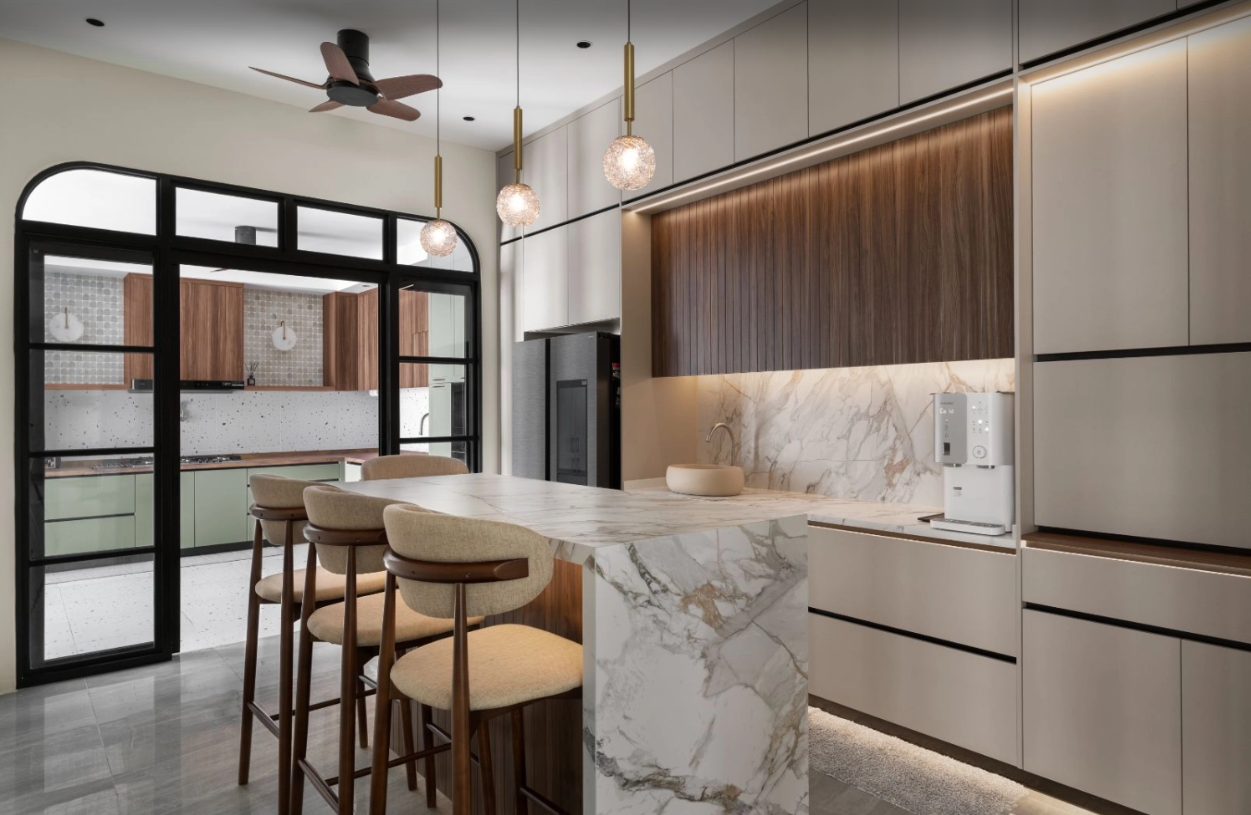
Many modern Malaysian homes now come with open-plan layouts. The kitchen, dining area, and living area are often connected.
In this kind of home, a kitchen island can help define the kitchen zone without building a wall.
It creates a soft separation between cooking, dining, and living. This makes the space feel more organized while still keeping the home open and connected.
For homeowners who love hosting friends, spending time with family, or having casual conversations while cooking, an island can make the kitchen feel more social.
Instead of facing the wall while preparing food, you can face your family, guests, or living area.
This is one of the reasons kitchen islands are popular in modern kitchen cabinet design. They support the way people live today, where the kitchen is not only a cooking space, but also a family space.
A good kitchen is not only about cabinets, countertops, and appliances.
It is also about the moments that happen there.
A kitchen island can become the place where your children do homework while you prepare dinner. It can become a breakfast counter before work. It can become a coffee spot in the morning. It can become the place where friends gather during housewarming parties.
For many new homeowners, the kitchen island represents a new stage of life.
It is not just a piece of furniture. It is where the home starts to feel alive.
But this only works when the island is designed with purpose.
Do you need seating?
How many people should it fit?
Will it be used daily or only occasionally?
Should it face the living area, dining area, or window view?
Do you need storage underneath?
Will it block your cooking flow?
These questions matter because the best kitchen cabinet design is not only beautiful. It must reflect your real lifestyle.
A kitchen island can also be designed as an extra storage zone.
This is useful when you have many kitchen items but limited wall cabinet space. The island can include drawers, pull-out baskets, open shelves, appliance storage, or even hidden compartments.
For example, you may use the island to store:
Small appliances
Cooking utensils
Baking tools
Dry ingredients
Children’s snacks
Serving plates
Cleaning items
Tableware
Kitchen accessories
In a customized kitchen design, the island storage should be planned based on what you actually own and how often you use it.
This is where custom kitchen planning becomes important.
A standard island may look nice, but a personalized island works better because every drawer, height, opening direction, and internal storage can be created around your habits.
That is the real value of custom-made kitchen cabinet planning.
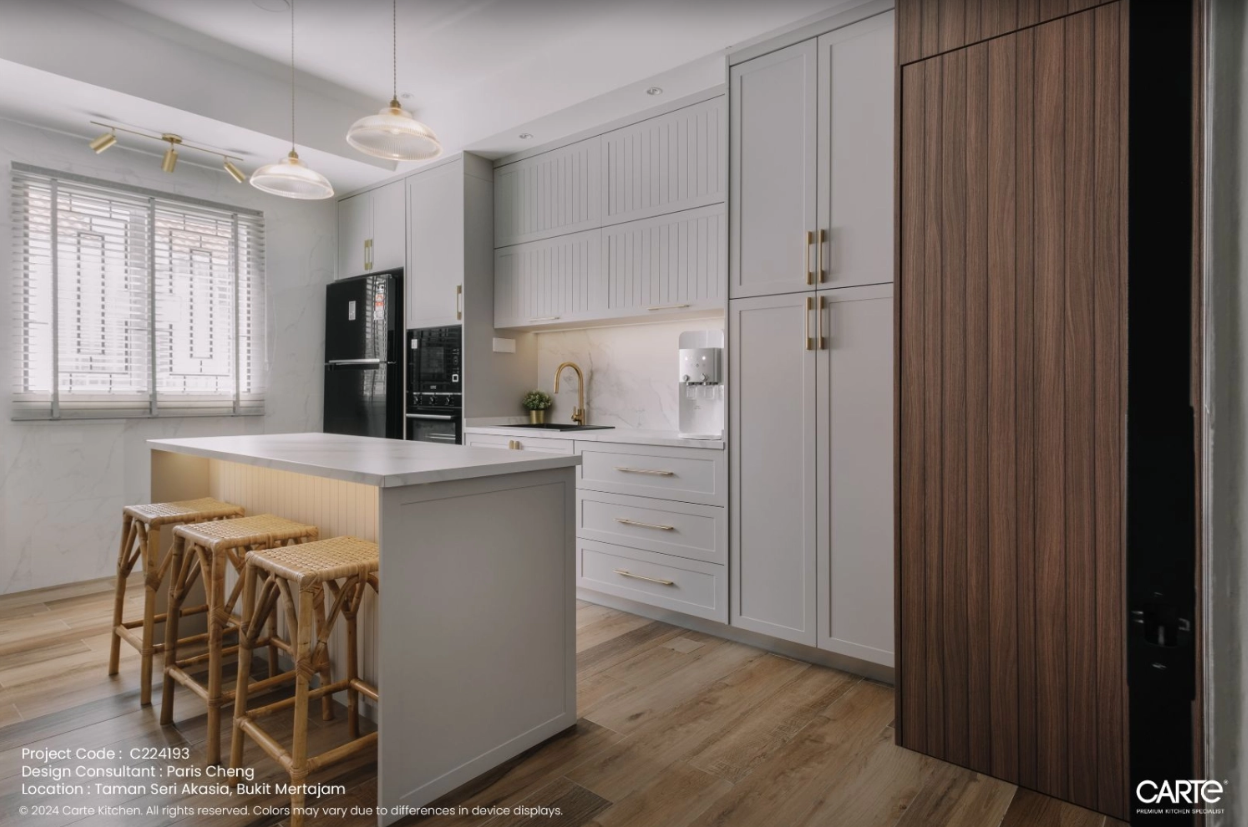
A beautiful kitchen can still fail if the workflow is wrong.
When planning a kitchen island, you need to study the relationship between the sink, hob, fridge, preparation area, and storage.
Some homeowners use the island mainly for preparation.
Some use it as a washing zone with a sink.
Some use it as a cooking zone with a hob.
Some use it as a serving counter.
Some use it only as a social counter.
There is no one correct answer.
The right answer depends on your cooking lifestyle.
If you cook heavily every day, your island must support serious workflow. If you cook lightly and mostly use the kitchen for drinks, breakfast, and hosting, your island may be designed more as a lifestyle counter.
This is why package-based kitchen planning can be misleading.
A kitchen island should not be copied from another showroom or another homeowner’s layout. Your appliances, cooking style, family size, and movement habits should define the layout.
That is what makes customized kitchen design more meaningful.
Sometimes, the best design decision is to not have an island.
If the kitchen is too small, forcing an island into the space can make the kitchen feel cramped. It may reduce walking space, block cabinet doors, create awkward corners, or make the kitchen harder to clean.
In this situation, a peninsula may be a better option.
A peninsula connects to one side of the wall or cabinet, so it can provide extra countertop space without needing clearance on all four sides. It can still function as a breakfast counter, preparation area, or serving space.
For some homes, an L-shaped or U-shaped kitchen cabinet layout may also be more practical.
The goal is not to add an island at all costs.
The goal is to create a kitchen that works beautifully for your home.
A kitchen island should have a reason to exist.
Before deciding to build one, ask yourself:
Will I use it for food preparation?
Will I use it for breakfast or casual dining?
Will my family gather around it?
Will it provide important storage?
Will it improve my cooking workflow?
Will it make the kitchen more spacious or more crowded?
If the island only looks good in a 3D drawing but does not improve your daily life, it may not be necessary.
Good kitchen design is not about adding more things.
It is about adding the right things.
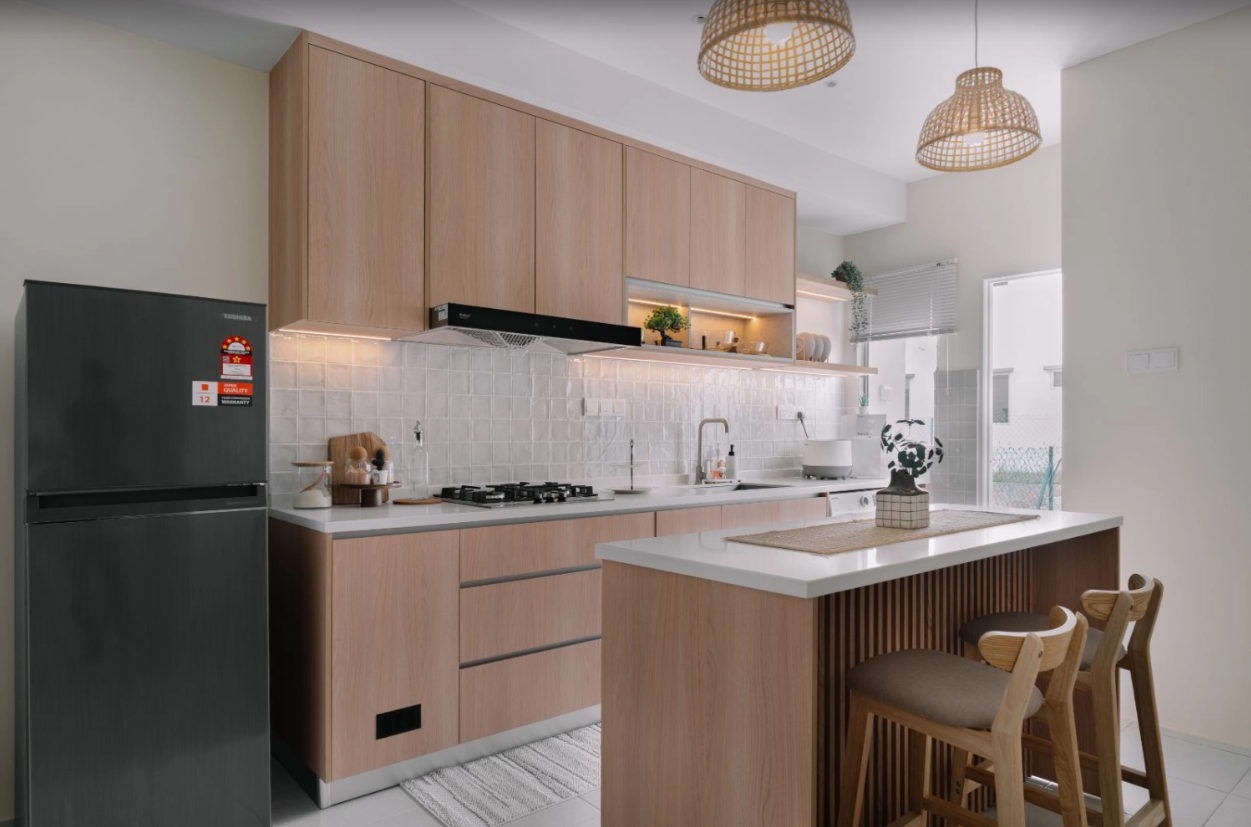
If your island includes a sink, hob, oven, dishwasher, wine chiller, or power sockets, then mechanical and electrical planning becomes very important.
For example, an island sink needs plumbing planning.
An island hob may need hood, ducting, electrical, or gas planning.
Power sockets need to be positioned safely and practically.
Lighting above the island also needs to be considered.
This is why a kitchen island should be planned early, not added at the last minute.
At Carte Kitchen, kitchen planning is not only about cabinet design. It also involves layout discussion, 3D planning, and M&E planning coordination after the design direction is confirmed. This helps homeowners prepare the right points before production and installation.
A beautiful island needs more than good carpentry.
It needs proper planning behind the scenes.
Many homeowners ask whether they should choose an island or a peninsula.
The answer depends on your space and lifestyle.
A kitchen island is better when you have a larger open space and want a central feature with access from all sides.
A peninsula is better when your kitchen has limited space but you still want extra countertop, seating, or storage.
For many Malaysian homes, especially condos and terrace houses, a peninsula can sometimes be more practical than a full island. It gives a similar lifestyle feeling without taking up as much walkway space.
This is why professional kitchen planning is important.
The best design is not always the most expensive or the most Instagrammable.
The best design is the one that fits your home.
You need a kitchen island when:
You have enough space around it.
You need more preparation area.
You want better storage.
You have an open-plan kitchen.
You want the kitchen to become a family gathering space.
You need a serving or breakfast counter.
You want to improve your cooking workflow.
You are ready to plan the necessary M&E points.
You want your kitchen to feel more connected to your lifestyle.
You may not need a kitchen island when:
Your kitchen is too small.
The walkway becomes too narrow.
The island blocks cabinet doors or appliances.
You only want it because it looks nice.
A peninsula or extended countertop can solve the problem better.
There is no clear function for the island.
In short, a kitchen island is not a must-have for every home.
But when it is planned correctly, it can become the heart of the kitchen.
At Carte Kitchen, we believe every kitchen should be designed around the homeowner’s journey.
Some families need a large island because they cook, gather, host, and spend time together in the kitchen. Some homes do not need an island at all because a clean, practical cabinet layout works better.
That is why we do not believe in one-size-fits-all kitchen packages.
Every kitchen cabinet layout should be co-created through conversation, planning, lifestyle understanding, and professional design guidance.
Whether you are looking for customized kitchen design, a practical kitchen cabinet layout, or the best kitchen cabinet in Penang, Kedah, Selangor, KL, or Klang Valley, the real question should not be “Can we fit an island?”
The better question is:
Will this island make your kitchen better for the way you live?
If the answer is yes, then it is worth planning properly.
If the answer is no, then the best design may be something simpler, cleaner, and more suitable for your home.
Because a good kitchen is not about following trends.
It is about creating a space that works for your life.

A kitchen island can be beautiful, practical, and meaningful.
It can give you more workspace, more storage, more connection, and a stronger sense of home. But it must be designed with intention.
Before deciding, study your space, your cooking habits, your family lifestyle, your appliances, your storage needs, and your movement flow.
That is the difference between simply having an island and having an island that truly belongs in your home.
At Carte Kitchen, we help homeowners across Penang, Kedah, Selangor, KL, and Klang Valley create kitchen cabinet designs that are not copied from templates, but co-created around real lives.
Because your kitchen should not be designed just to look good in photos.
It should be designed to support the way you live every day
Visit our showroom and let’s design a kitchen around your real lifestyle, workflow, and daily routine.
Kitchen Cabinet Penang
=> Visit our showroom in Bukit Mertajam or Bayan Lepas
Kitchen Cabinet Kedah
=> Visit our showroom in Sungai Petani
Kitchen Cabinet Selangor
Kitchen Cabinet Klang Valley
=> Visit our showroom in SS2 or Setia Alam

 Malaysia