

And how the Aka-Brief Concept from Akasel helps laboratories achieve reliable results.
In metallurgical analysis, sample preparation is one of the most critical steps in achieving accurate and repeatable inspection results. Regardless of how advanced the microscope, hardness tester, or image analysis system may be, inconsistent sample preparation can easily lead to incorrect interpretation, unreliable measurements, and poor repeatability.
Among all preparation stages, grinding and polishing are the most common areas where customers struggle to achieve consistency.
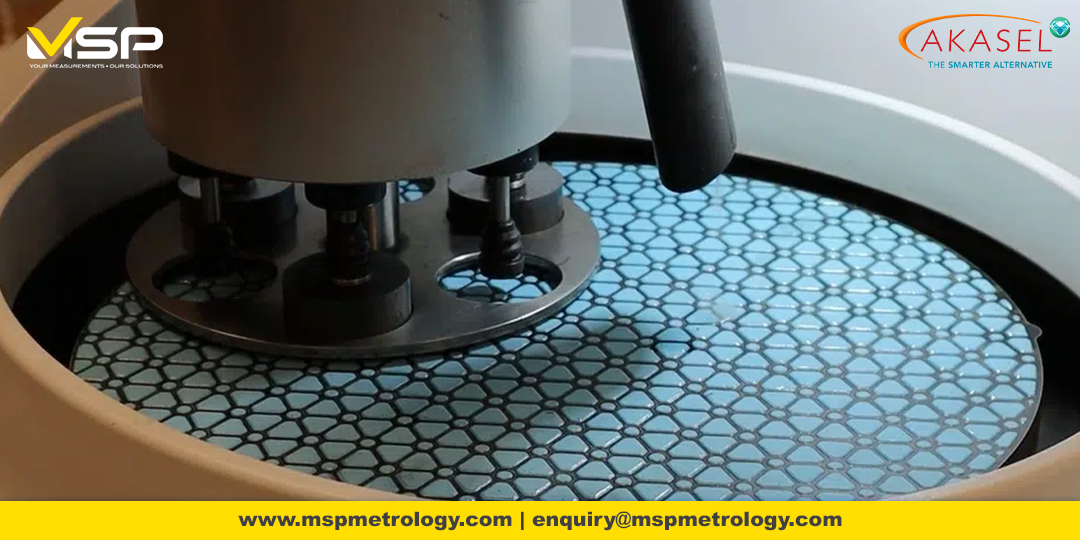
Metallographic preparation involves multiple process variables, including:
When these parameters are adjusted based on operator experience rather than a standardized method, the final result often varies from one operator to another.
Even within the same laboratory, two technicians may produce completely different surface finishes from the same sample material.
One of the biggest misconceptions in metallography is assuming that a single preparation method can work for all materials.
Different materials respond differently during grinding and polishing:
Without a material-specific preparation method, customers often encounter remaining scratches, pull-outs, deformation, comet tails, embedded abrasives, and uneven polishing surfaces.
This leads to inconsistent microscopic interpretation and unreliable quality evaluation.
In many laboratories, sample preparation knowledge is passed down through operator experience rather than documented standards.
Typical situations include:
While these approaches may occasionally produce acceptable results, they are difficult to repeat consistently.
Without a structured preparation guideline, laboratories become highly dependent on individual operator skill.
Grinding papers, polishing cloths, diamond suspensions, lubricants, and final polishing solutions must work together as a complete system.
Many inconsistencies occur because customers mix different brands or use unsuitable combinations, resulting in:
A preparation system is only as strong as the compatibility between its consumables.
Production laboratories are often under pressure to reduce preparation time while maintaining quality.
Operators may shorten grinding steps or skip intermediate polishing stages to improve throughput. Unfortunately, this often creates hidden surface damage that only becomes visible under high magnification.
The result is rework, repeated preparation, delayed inspection, and reduced confidence in analysis results.
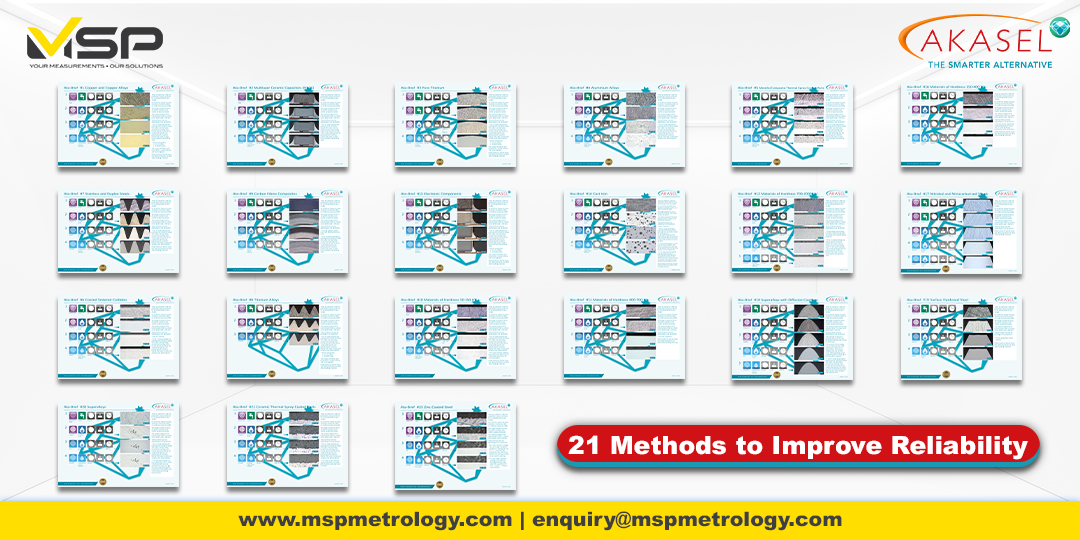
Akasel’s Aka-Brief Concept was developed as a structured and simplified metallographic preparation methodology to overcome common preparation inconsistencies.
The Aka-Brief Concept is designed to help users achieve:
The Aka-Brief Concept is a scientifically optimized preparation method developed by Akasel that standardizes the grinding and polishing workflow based on material type and application requirements.
Instead of relying on trial-and-error preparation, Aka-Brief provides:
This allows laboratories to achieve reliable and repeatable preparation results regardless of operator experience.
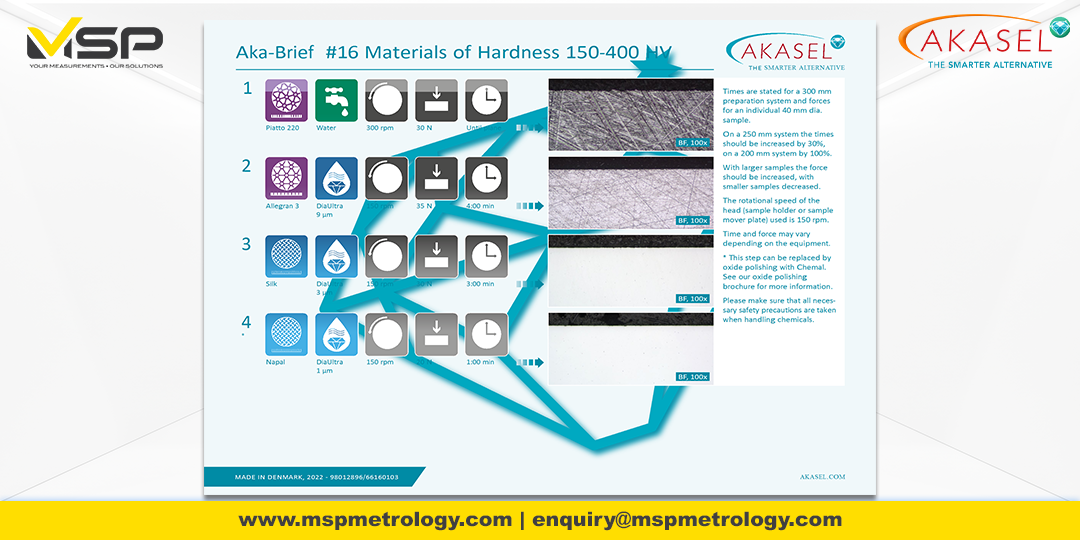
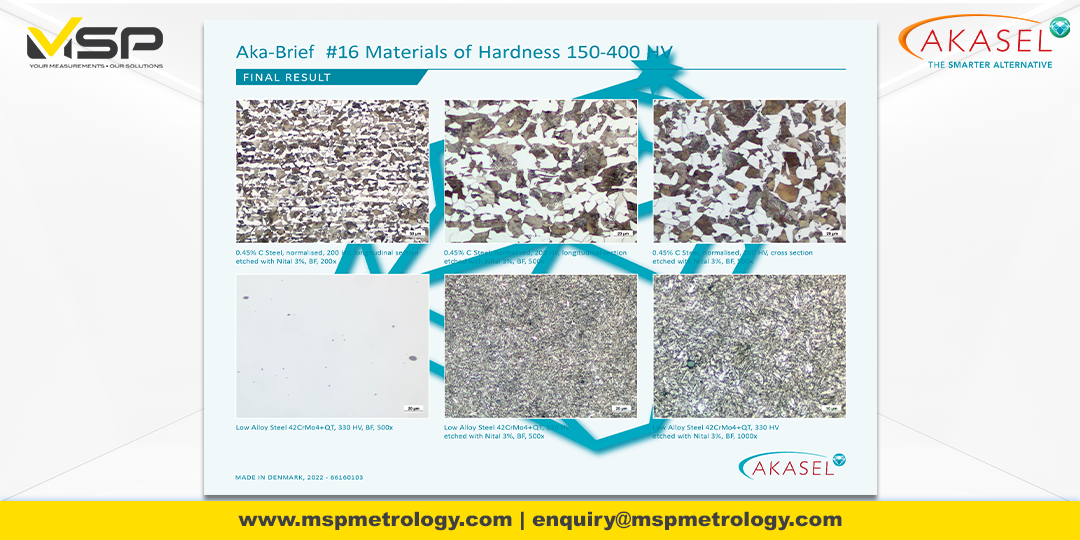
Aka-Brief minimizes unnecessary preparation steps while maintaining excellent surface quality.
This is especially beneficial for laboratories handling high sample volumes.
By using a predefined preparation method, laboratories can standardize results across different operators, shifts, and laboratory locations.
This greatly improves confidence in metallurgical evaluation and reporting consistency.
Aka-Brief is built around a complete preparation system where grinding surfaces, diamond suspensions, polishing cloths, and lubricants are carefully matched for compatibility and performance.
This reduces preparation defects while extending consumable life.
The optimized process helps minimize common metallographic issues such as surface deformation, edge rounding, relief formation, embedded abrasives, and residual scratches.
This enables clearer microstructural observation and more accurate analysis.
One major challenge in metallography is operator skill dependency. With Aka-Brief, preparation procedures become easier to learn, training time is reduced, and operators can follow a standardized workflow.
This is highly valuable for companies experiencing manpower changes or rapid laboratory expansion.
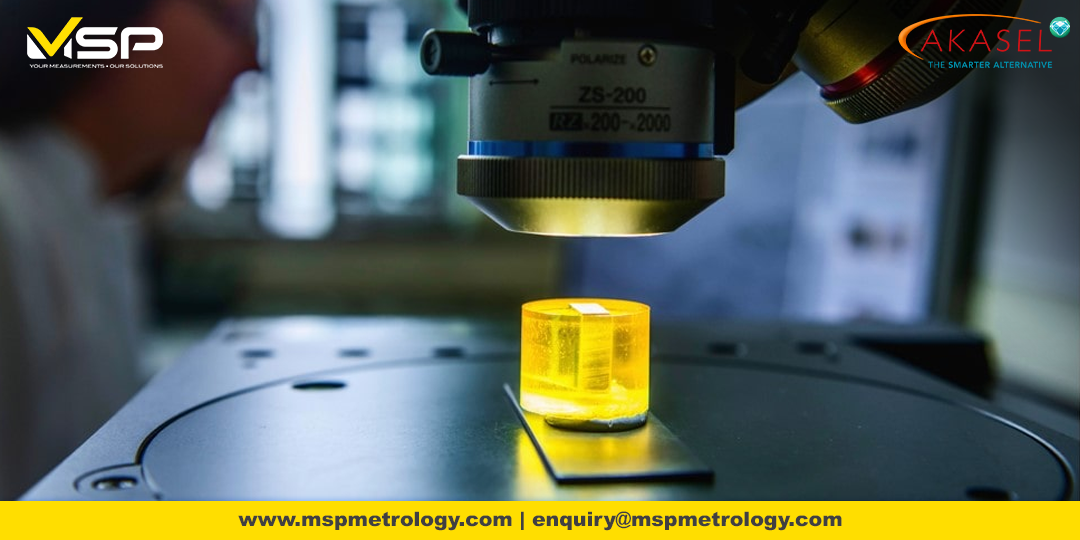
As industries move toward higher quality requirements, traceability, failure analysis accuracy, process consistency, and automation, sample preparation can no longer rely purely on operator experience.
A standardized preparation methodology such as the Aka-Brief Concept helps laboratories move toward better quality control, higher efficiency, reduced rework, and more reliable metallurgical interpretation.
Inconsistent grinding and polishing results are often caused by excessive process variation, unsuitable consumable selection, lack of standardization, and operator dependency.
The Aka-Brief Concept from Akasel addresses these challenges by providing a simplified, scientifically optimized, and repeatable metallographic preparation workflow.
By implementing a standardized preparation concept, laboratories can significantly improve surface quality consistency, productivity, operator efficiency, consumable optimization, and reliability of metallurgical analysis.
In today’s precision manufacturing environment, consistent sample preparation is no longer optional. It is a fundamental requirement for accurate material evaluation and quality assurance.
When every sample matters, consistency is key. Discover how Akasel can help your laboratory achieve faster, more reliable, and repeatable results.
📩 Speak with Our SpecialistsExplore Akasel grinding, polishing, cutting, mounting, and metallographic consumables to find the right solution for your laboratory needs.
🛒 Browse Akasel Products
 Malaysia