


Buying your first home is one of life's biggest achievements. After years of hard work and saving, finally receiving the keys to your own property is an exciting milestone.
However, after the excitement settles, almost every first-time homeowner asks the same question.
"What should I do first?"
Should I start looking for an Interior Designer?
Should I compare renovation quotations first?
Should I buy furniture before renovation?
Or should I wait until I receive my house keys?
Since OLO Design 36O started serving homeowners directly, we have realised that this is one of the biggest challenges faced by first-time homeowners in Malaysia.
Many people only renovate once or twice in their lifetime. Unlike buying a phone or a car, there isn't a guidebook that teaches you what to do after purchasing a property. As a result, many homeowners spend months browsing Pinterest, Instagram, TikTok, or Facebook looking for beautiful interior designs, but very few actually know how to prepare for a successful renovation.
Over the years, we have also noticed that first-time homeowners are the group most likely to experience unnecessary renovation stress, unexpected costs, poor planning, or even renovation scams. Not because they made bad decisions, but because no one explained the renovation process from the very beginning.
This guide is written based on our experience working with homeowners throughout Kuala Lumpur, Selangor, and the Klang Valley. Whether you're renovating a condominium, apartment, landed property, or your forever dream home, we hope this article helps you prepare with greater confidence before your renovation journey begins.
If this is your very first home, we highly recommend saving this article. It may save you a significant amount of time, money, and unnecessary headaches in the future.
.png)
One of the biggest mistakes we see is homeowners collecting hundreds of beautiful renovation photos before understanding their own lifestyle.
A beautiful home should never be designed around social media trends.
It should be designed around the people who will actually be living inside it.
Before speaking to an Interior Designer or Renovation Contractor, spend some time understanding how you and your family actually live.
Ask yourself questions such as:
Do you cook every day or mostly eat outside?
How often do you invite friends and relatives over?
Do you enjoy hosting gatherings?
Do you work from home?
Do you enjoy online shopping and require additional storage?
Do you buy groceries weekly or in bulk?
Do you prefer a low-maintenance home that is easy to clean?
These questions may seem simple, but they directly influence your kitchen layout, storage planning, wardrobe design, custom carpentry requirements, furniture placement, electrical planning, and even your renovation budget.
At OLO Design 36O, we often tell our clients that the best Interior Design is not necessarily the most beautiful one.
It is the one that makes everyday living easier.
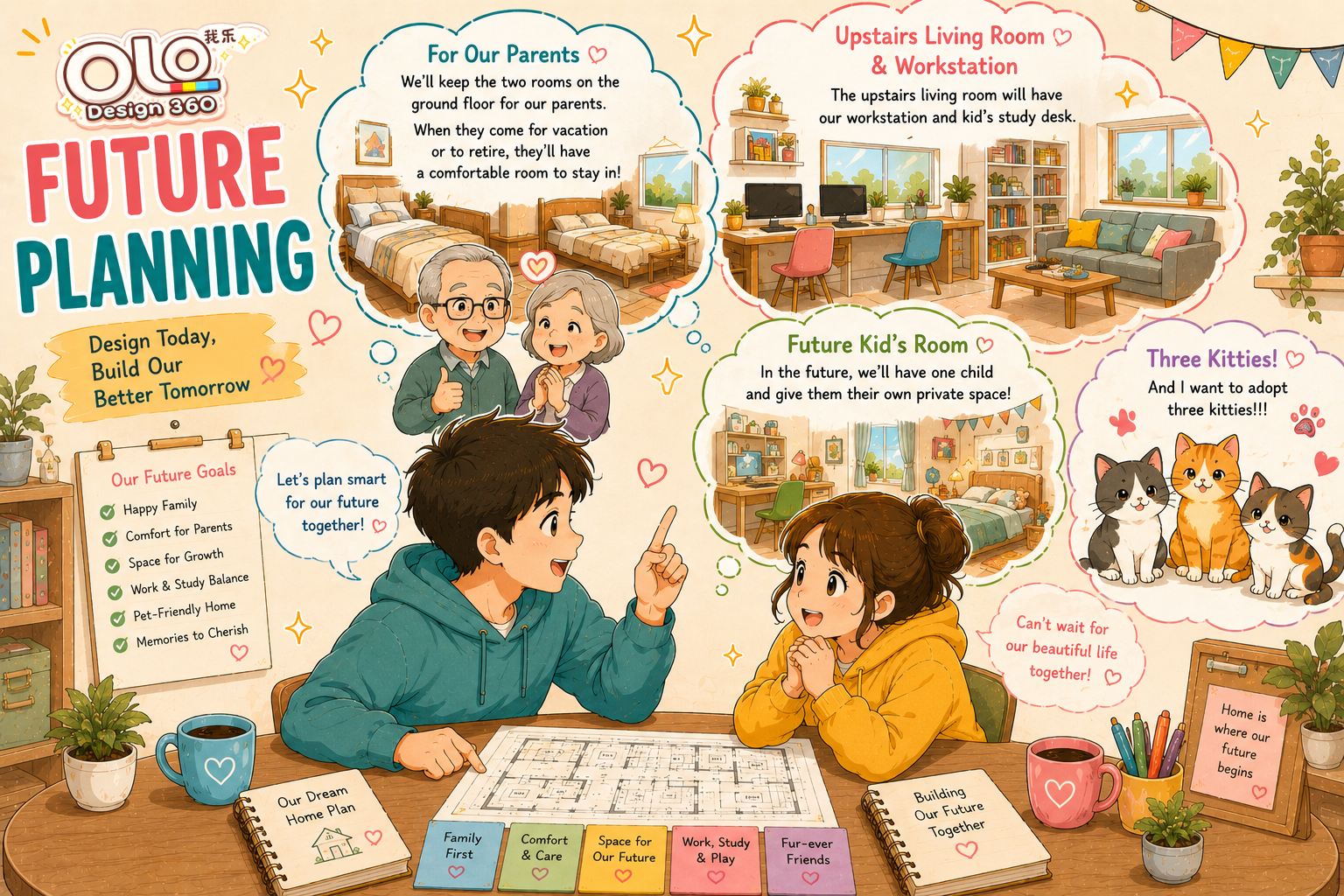
Many homeowners renovate based on their current lifestyle.
Professional Interior Designers plan for the next ten years.
Ask yourself a few simple questions:-
Will your parents eventually stay with you?
Are you planning to have children?
Will you be adopting pets?
Will you need a home office in the future?
Will one of your bedrooms eventually become a nursery?
Will you require additional wardrobes or storage in the coming years?
A renovation is a long-term investment.
Making small adjustments during the design stage is always much easier and more affordable than renovating again a few years later.
When your Interior Designer understands your future plans, they can recommend more practical layouts, better storage solutions, and suitable materials that continue to meet your family's changing needs.

Modern homes are becoming smarter every year.
Today, many homeowners install Smart Home systems, smart lighting, smart switches, digital door locks, robot vacuum cleaners, built-in coffee machines, ovens, air fryers, water dispensers, networking equipment, CCTV systems, and home automation devices.
Unfortunately, many people only start thinking about these items after renovation has already begun.
By then, relocating electrical points or additional wiring often means extra work, additional costs, and unnecessary delays.
Before engaging an Interior Designer or Renovation Contractor, create a simple list of every electrical appliance and smart device you intend to use.
Think about where they will be located.
Think about how you will use them daily.
This allows your designer to prepare a much more practical electrical layout, reducing future modifications while making your home significantly more convenient to live in.
.png)
One of the most common questions we hear is:
"How much should I spend on my renovation?"
Our answer is always the same.
Before asking someone else how much you should spend, first decide what you are personally comfortable investing.
Every family's financial situation is different.
There is no universal renovation budget that suits everyone.
(The following figures are intended only as a general renovation budget reference for homeowners within the Klang Valley area, including Kuala Lumpur and Selangor. Actual renovation costs will vary depending on property size, design complexity, material selections, workmanship standards, and project scope.)
As a general guideline, homeowners planning a simple home renovation may consider reserving approximately 30% of the property's purchase price for renovation works. This typically includes electrical rewiring, plaster ceiling, wall painting, plumbing works, custom kitchen cabinets, built-in wardrobes, TV consoles, shoe cabinets, and other custom carpentry.
In addition, we usually recommend allocating another 10% for loose furniture and home essentials such as curtains, lighting, air-conditioners, dining tables, sofas, mattresses, home appliances, and decorative accessories.
If you are planning a premium Interior Design with Smart Home automation, luxury materials, customised built-in furniture, designer lighting, feature walls, and high-end finishes, you may wish to prepare 40% or more, depending on your expectations.
At OLO Design 36O, we have never believed that the most expensive renovation is automatically the best renovation.
Likewise, we don't believe the cheapest renovation is always the smartest decision.
Our philosophy has always been simple.
Spend where safety, durability, and quality matter.
Save where it makes practical sense.
A successful renovation is not about spending more.
It is about spending wisely.

 Malaysia