
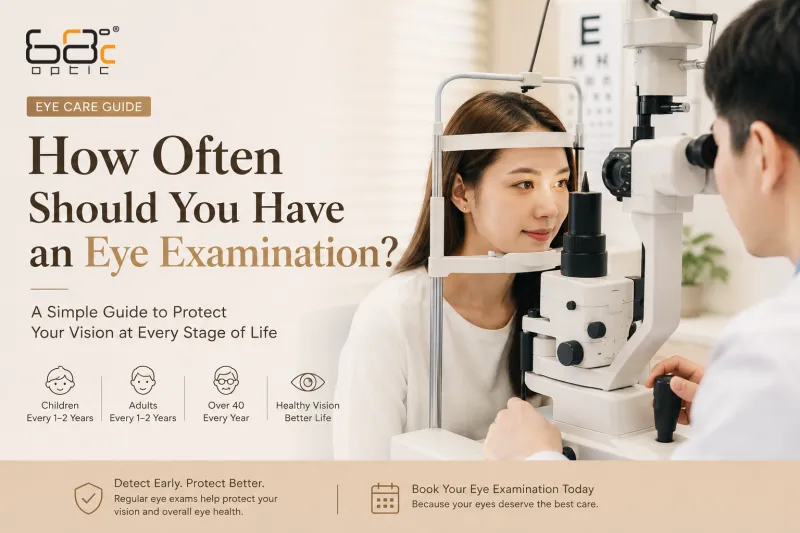
Many people only visit an optical store when they notice blurry vision or when their glasses break. However, regular eye examinations are important not only for maintaining clear vision but also for detecting potential eye health issues before they become serious.
So, how often should you have an eye examination?
An eye examination does more than determine whether you need glasses.
Comprehensive eye exams can help detect:
Changes in vision
Eye strain and fatigue
Myopia (short-sightedness)
Hyperopia (long-sightedness)
Astigmatism
Cataracts
Glaucoma
Other eye health concerns
Early detection often leads to better treatment outcomes and helps prevent long-term vision problems.
Children's eyes continue developing throughout their school years.
Experts generally recommend:
First eye examination before starting school
Every 1–2 years if no vision problems are present
Annually if they wear glasses or have myopia progression
Parents should pay attention to signs such as:
Squinting frequently
Sitting too close to screens
Complaining of headaches
Difficulty reading the whiteboard
Frequent eye rubbing
Regular eye checks can help ensure children perform well both academically and socially.
For healthy adults aged 18 to 40, an eye examination every 1–2 years is generally recommended.
However, more frequent examinations may be necessary if you:
Wear glasses
Wear contact lenses
Work long hours on digital screens
Experience headaches or eye strain
Have a family history of eye disease
Even if your vision appears normal, subtle changes can occur over time.
Adults over 40 should pay closer attention to their eye health.
As we age, the risk of developing eye conditions increases.
Annual eye examinations are often recommended to monitor:
Presbyopia (age-related near vision changes)
Cataracts
Glaucoma
Retinal conditions
Regular monitoring helps ensure any issues are identified early.
You should consider scheduling an eye examination if you experience:
Blurred vision
Frequent headaches
Eye fatigue
Difficulty driving at night
Double vision
Difficulty focusing on screens
Holding reading materials closer than usual
These symptoms may indicate changes in your prescription or underlying eye health concerns.
Modern lifestyles often involve long hours in front of computers, smartphones, and tablets.
Extended screen use may contribute to:
Eye strain
Dry eyes
Headaches
Temporary blurred vision
Regular eye examinations can help identify whether your visual discomfort is related to screen use and whether lens solutions may help.
A professional eye examination may include:
Vision assessment
Prescription evaluation
Eye coordination testing
Eye health screening
Consultation with an optometrist
The process is quick, comfortable, and provides valuable insights into your visual health.
Your eyesight plays an important role in work, education, driving, and daily life.
Scheduling regular eye examinations is one of the simplest ways to maintain healthy vision and detect potential problems early.
Whether you currently wear glasses or simply want peace of mind, routine eye checks are a smart investment in your long-term eye health.
Visit 68°C Optic to learn more about professional eye examinations and vision care solutions.
Contact our team today to schedule your next eye examination.

 Malaysia