

Evidence-based chiropractic care in PJ means your care should start with proper assessment, safety screening, clear explanation, and a recovery plan that matches your condition. At One Spine Chiropractic & Physiotherapy, our TTDI-based team serves nearby PJ patients who want a structured, non-invasive approach to spine, posture, pain, and movement recovery.
Many patients in Petaling Jaya no longer see chiropractic care as only “back cracking.” They want to know what is causing their pain, whether treatment is suitable, and how their progress will be monitored. This guide explains what evidence-based care means from a patient’s point of view.
Evidence-based chiropractic care means we do not treat every patient the same way. We use assessment findings, clinical reasoning, patient goals, and progress tracking to guide each care plan.
Before recommending treatment, our team may assess:
This helps us understand whether your discomfort may come from joint restriction, muscle imbalance, nerve irritation, posture strain, or repeated movement stress.
For patients who want to understand this process better, we also explain why our chiropractors check more than the painful area before recommending care.
At One Spine Chiropractic & Physiotherapy, care is provided by certified chiropractors and physiotherapists who assess each patient before recommending treatment. Our team uses safety screening, hands-on care, movement support, rehabilitation planning, and patient education to make care more suitable for each person.
Over the years, our centre has supported 20,000+ patients with spine, posture, pain, and rehabilitation-related concerns. We also maintain a 4.9-star Google rating, reflecting the trust and satisfaction of patients who have visited our centre for chiropractic and physiotherapy care.
Patients who want to learn more about our clinical team can visit our certified chiropractors and physiotherapists in KL and PJ page.
Evidence-based care is easier for patients to understand because it explains the “why” behind each step. Instead of focusing only on short-term relief, it looks at movement, function, recovery, and prevention.
| One-Size-Fits-All Care | Evidence-Based Chiropractic Care |
|---|---|
| Same treatment for most patients | Assessment before treatment |
| Focuses mainly on pain relief | Tracks function, movement, and recovery |
| Less patient education | Explains condition and care plan |
| May rely only on adjustment | May combine chiropractic, physiotherapy, and rehab |
| Limited progress tracking | Adjusts plan based on patient response |
Evidence-based chiropractic care matters for PJ patients because many daily routines place repeated stress on the spine and joints. Long sitting, driving, laptop work, phone use, and remote work habits can affect posture, spinal loading, muscle balance, and mobility.
Although our centre is based in TTDI, we regularly serve patients from nearby Petaling Jaya who want structured spine and movement care close to their daily route.
Common concerns include neck pain, lower back pain, sciatica, slipped disc discomfort, shoulder tension, poor posture, sports injuries, joint stiffness, and recurring pain after sitting. Patients with desk-related posture issues may also benefit from learning how poor posture and rounded shoulders may affect the neck, shoulders, and upper back.
The patient journey usually starts with understanding your symptoms and daily challenges. We want to know what hurts, when it happens, what makes it worse, and how it affects sitting, walking, working, sleeping, exercising, or driving.
A typical evidence-based process may include:
Depending on your needs, care may include chiropractic adjustment, physiotherapy support, mobility training, rehab exercises, posture correction, dry needling, shockwave therapy, or home exercise guidance.
Patients who want to understand the role of each approach can read our guide on chiropractic adjustment vs rehabilitation.
Safety screening helps us decide whether chiropractic adjustment, physiotherapy, rehabilitation, or referral is more suitable. Not every patient should be adjusted immediately.
This is especially important if symptoms involve numbness, tingling, weakness, trauma history, severe pain, worsening symptoms, or signs that may need medical review.
Patients who want to understand this process can read why safety screening matters before chiropractic adjustment.
Rehabilitation is included because pain relief alone may not solve the reason pain keeps returning. If weakness, poor control, stiffness, or repeated strain remains, symptoms may come back.
Rehabilitation may help improve:
For patients recovering after injury, our team may recommend structured post-injury rehab and strengthening to rebuild safer movement and support long-term recovery.
Our team supports patients with different spine, posture, muscle, and joint concerns. These may include neck and shoulder tension, lower back pain, sciatica, slipped disc discomfort, scoliosis-related concerns, sports injuries, pregnancy-related discomfort, joint stiffness, and post-injury recovery.
For recurring lower back pain, we may assess whether the original cause was only temporarily relieved rather than properly corrected. Patients can learn more about why lower back pain keeps coming back.
For sciatica or nerve-related symptoms, our team looks for signs such as radiating pain, numbness, tingling, weakness, or pain that worsens with certain positions. Patients can also read more about sciatica and nerve impingement.
Progress is not measured by pain score alone. We also look at how well you move, how long you can sit or stand, whether flare-ups reduce, and whether daily activities become easier.
Better recovery may include:
This helps patients understand whether their body is becoming more functional, not just temporarily less painful.
This article is focused on evidence-based care, not broad “best clinic” claims. However, patients comparing chiropractic options in Petaling Jaya may find it helpful to review our Best Chiropractor in PJ page for a clearer overview of our spine care, posture assessment, mobility support, and recovery planning.
Our goal is to help patients understand what structured care should include: assessment, safety screening, explanation, personalized planning, rehabilitation, and progress tracking.
Posture and movement may improve gradually when care is guided by proper assessment, consistent rehabilitation, and better daily movement habits. At One Spine Chiropractic & Physiotherapy, the following before-and-after images show actual patient progress shared with written consent.
These examples may help patients understand how posture, spinal alignment, mobility, and rehabilitation progress can be monitored over time. However, every patient responds differently, so our team focuses on realistic progress, proper assessment, and personalized rehabilitation rather than one-size-fits-all promises.
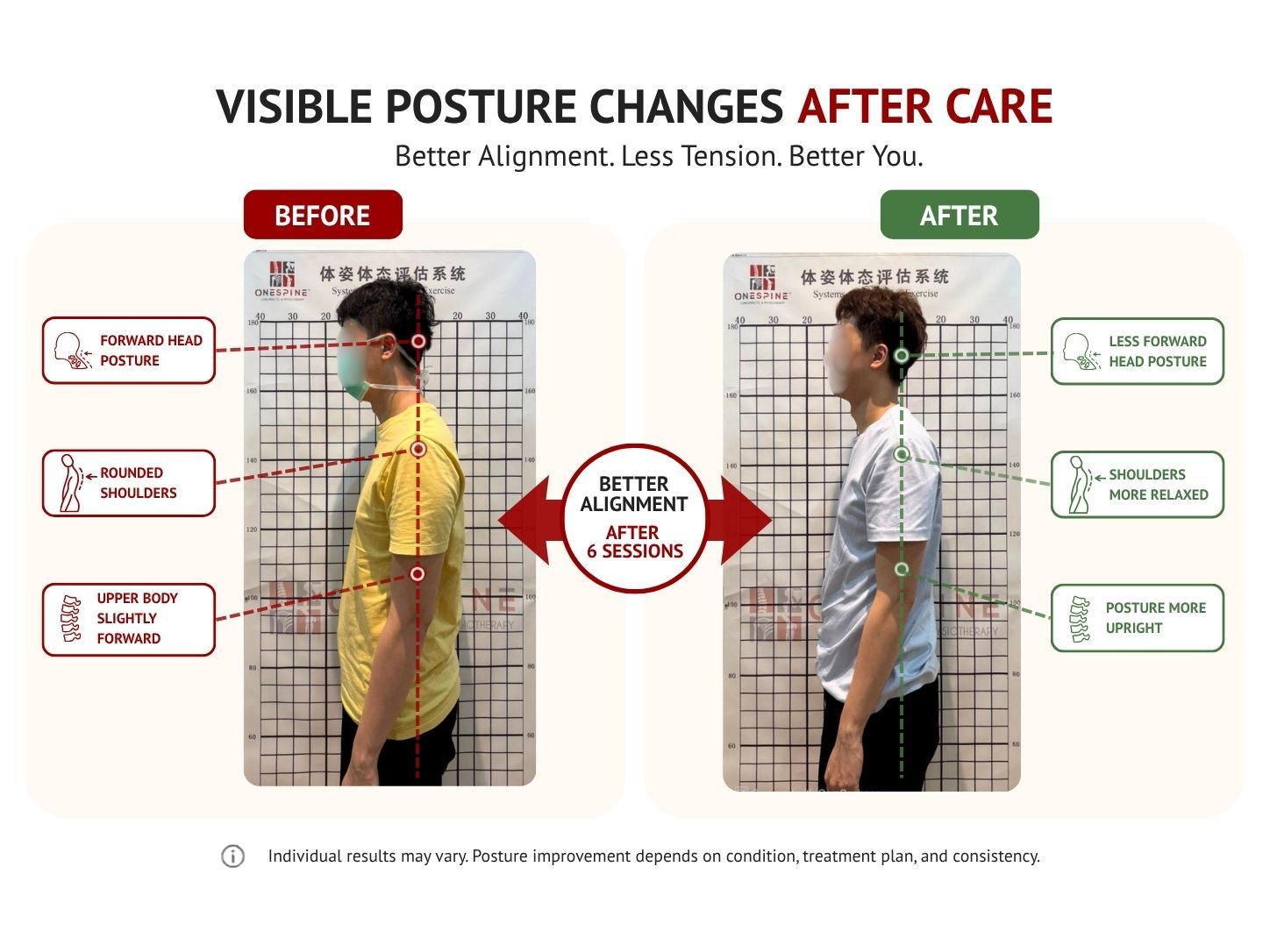
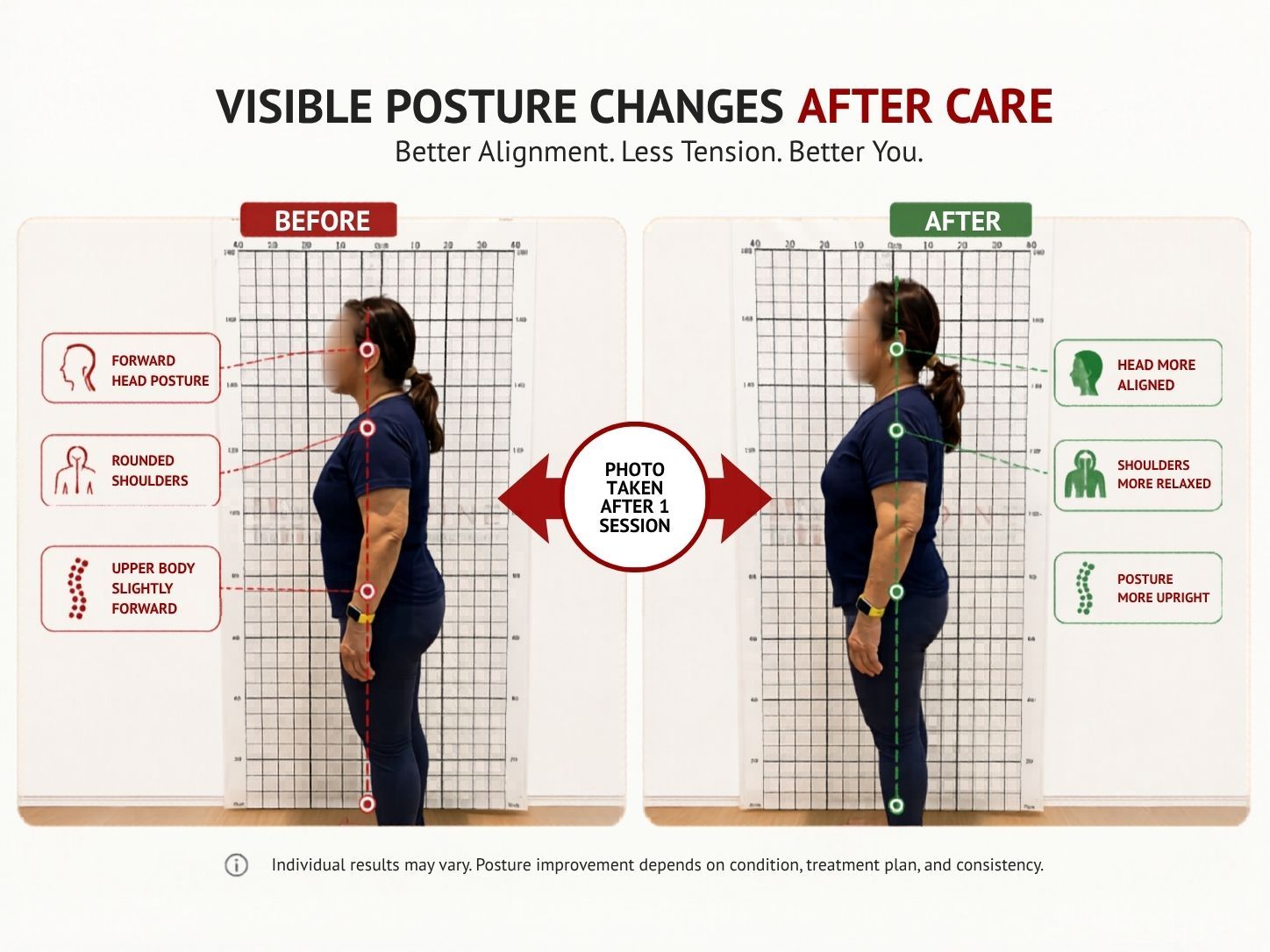
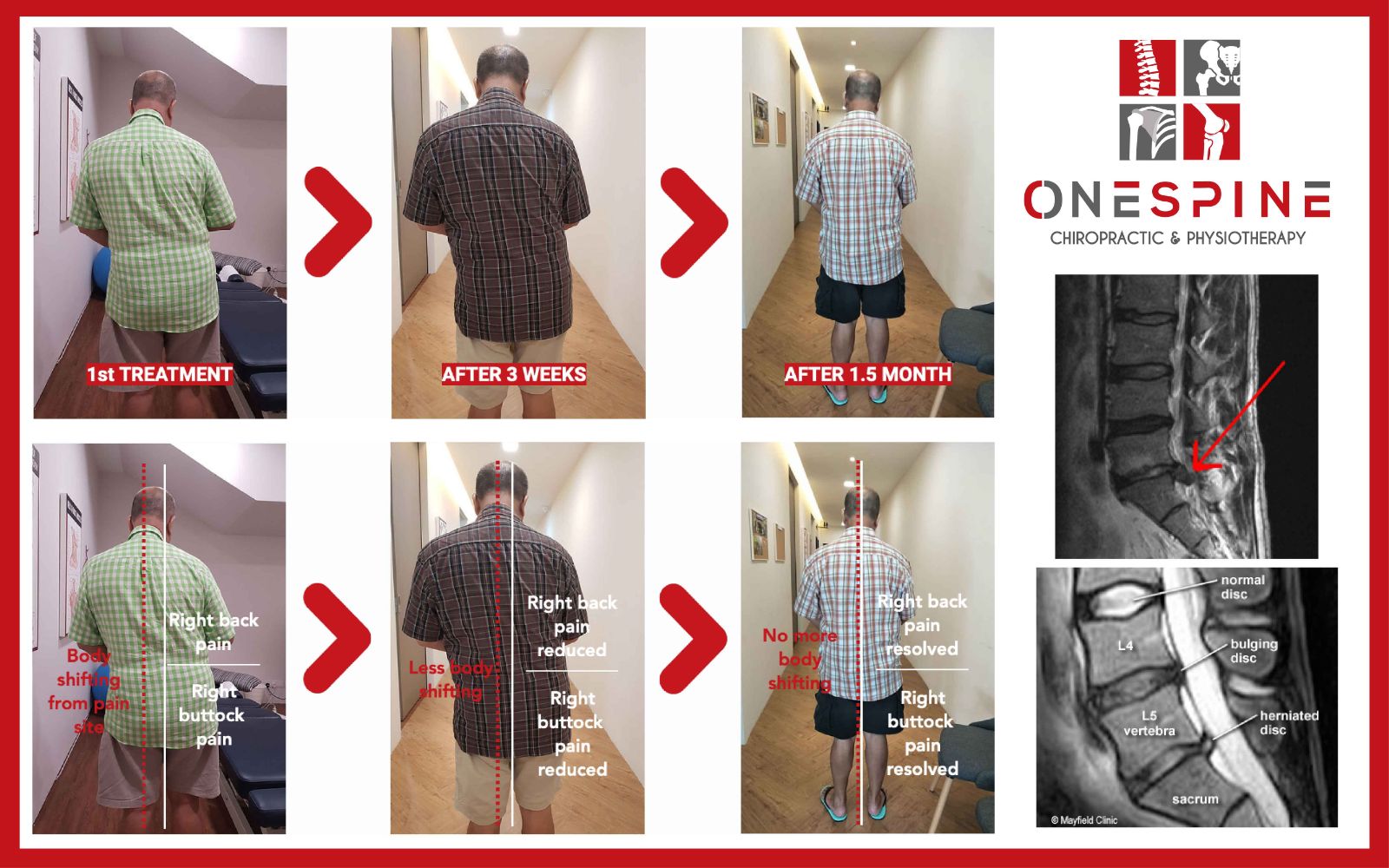
These images are shared with patient consent for educational reference. Individual results vary depending on assessment findings, condition severity, treatment suitability, rehabilitation consistency, lifestyle habits, and other health factors.
If you are in PJ, TTDI, or nearby areas and want a clearer evidence-based assessment before starting care, our team can help you understand your condition and suitable next steps.
Contact One Spine Chiropractic & PhysiotherapyEvidence-based chiropractic care in PJ means care should begin with assessment, safety screening, clear explanation, personalized planning, and measurable progress. At One Spine Chiropractic & Physiotherapy, our certified chiropractors and physiotherapists support patients from PJ and nearby areas with a structured, non-invasive approach that may combine chiropractic care, physiotherapy, rehabilitation, posture education, and patient guidance.
With 20,000+ patients treated, a 4.9-star Google rating, and a multidisciplinary team focused on spine, posture, pain, and movement recovery, our centre aims to provide care that is practical, transparent, and patient-centered.

 Malaysia