

In Malaysia, planning a kitchen is rarely just about choosing a beautiful cabinet design.
For many homeowners, the real question starts much earlier:
Should I have a wet kitchen, a dry kitchen, or both?
This is one of the most important decisions in kitchen layout planning in Malaysia, because it affects not only how your kitchen looks, but also how it functions every day. The answer depends on your cooking habits, family lifestyle, available space, and how you want your home to feel.
Some households cook heavily every day and need a more durable, practical space for washing, chopping, frying, and cleaning. Others prefer a cleaner, more presentable kitchen that feels integrated with the dining or living area. And for many Malaysian homes, especially landed properties, the ideal solution is not choosing one over the other, but designing both to serve different purposes.
At Carte Kitchen, we often see that the best kitchen is not the one that follows trends blindly. It is the one that is planned around real daily life. That is why understanding the difference between a wet kitchen and a dry kitchen is such an important first step before deciding on cabinet design, materials, storage, and layout.
.png)
[Dry Kitchen] Bukit Banyan Sierra, Sungai Petani
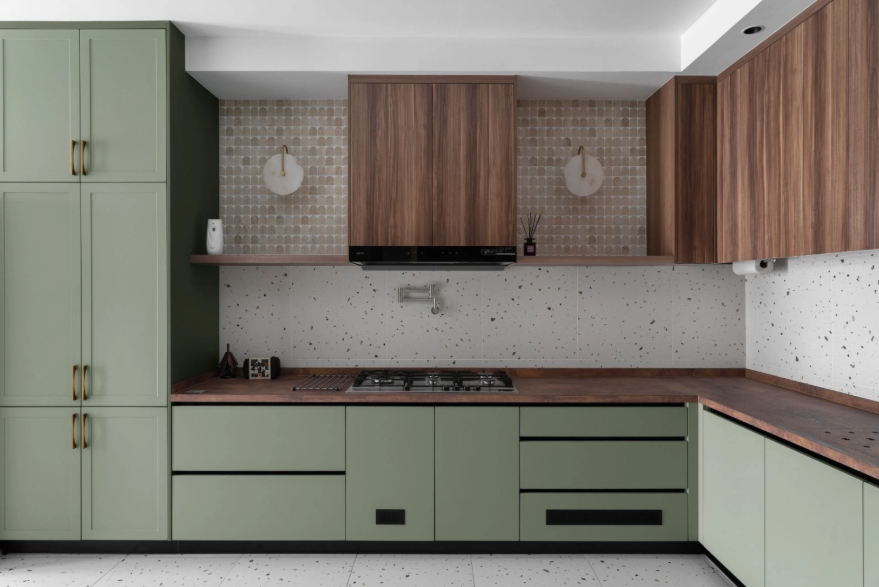
[Wet Kitchen] Bukit Banyan Sierra, Sungai Petani
Kitchen usage in Malaysia is unique.
Many homeowners cook with methods that generate more heat, steam, smoke, oil, and washing activity than what some Western-style open kitchen concepts are designed for. Stir-frying, deep-frying, boiling soups, preparing sambal, washing seafood, handling strong aromas, and managing daily family meals can put much more stress on a kitchen environment.
That is why many Malaysian homes naturally lean toward separating the kitchen into different zones.
This separation is not just about style. It is about function.
A kitchen that handles heavy daily cooking may need:
At the same time, many homeowners also want a space that looks neat, feels welcoming, and blends beautifully with the rest of the home. That is where a dry kitchen often comes in.
In simple terms, wet and dry kitchens exist because Malaysian homeowners often need both:
The smartest kitchen designs understand this balance.
A wet kitchen is the part of the kitchen designed for heavier, messier, and more intensive daily cooking activities.
This is usually where homeowners do things like:
Because of this, a wet kitchen is generally more exposed to:
A wet kitchen is often located in a more enclosed or secondary area of the home, especially in landed properties. In some homes, it is positioned behind the main kitchen area or closer to the yard or utility zone.
A good wet kitchen should feel efficient, tough, and comfortable to use, not just visually acceptable.
A dry kitchen is the cleaner, more presentable part of the kitchen, usually designed for lighter food preparation, serving, storage, casual interaction, and visual appeal.
This is often where homeowners:
In many Malaysian homes, the dry kitchen becomes the more visible part of the home. It is often designed with stronger aesthetic consideration, because it contributes directly to the overall interior feel.
A dry kitchen is not just for looks. It plays an important role in organization, hosting, and creating a cleaner day-to-day experience.
A wet kitchen is especially useful for homeowners who:
If your household prepares full meals often, especially Asian-style cooking, a wet kitchen helps manage the heat, splashes, and cleaning more effectively.
Some families wash a lot of vegetables, seafood, meats, pots, and pans. A dedicated wet zone helps keep that activity contained.
For homeowners who still want a neat and presentable front kitchen, a wet kitchen creates a strong functional back-end.
Terrace, semi-D, and bungalow homes often have more flexibility to separate kitchen zones.
A wet kitchen usually supports more realistic everyday use for serious home cooks.
A dry kitchen is especially useful for homeowners who:
Dry kitchens often feel more seamless with dining and living spaces, especially in modern open-plan homes.
If you do not fry heavily or prepare complex meals daily, a dry kitchen may be sufficient for your lifestyle.
A dry kitchen can function beautifully as a social space for hosting, serving, and casual interaction.
For homeowners who care deeply about design continuity, the dry kitchen often becomes one of the main interior focal points.
Where space is limited, a dry-kitchen-led approach may be more realistic, sometimes with just a small wet-use strategy built into the same zone.
.jpg)
[Dry Kitchen] Queens Residence, Q2, Bayan Lepas
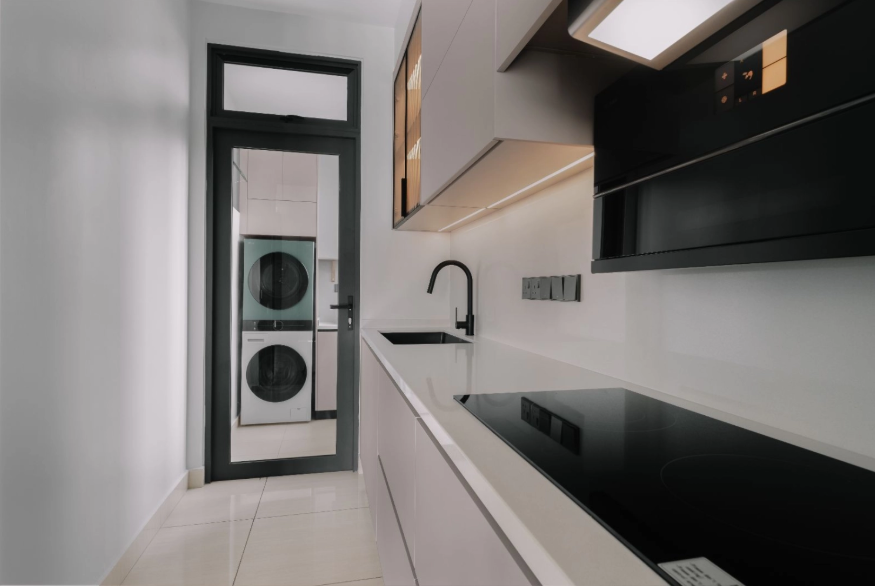
[Wet Kitchen] Queens Residence, Q2, Bayan Lepas
Not every home needs both.
But many Malaysian homeowners benefit from at least thinking in terms of wet and dry zones, even if the kitchen is not fully separated by walls.
You may want both if:
You may not need both if:
The important thing is not copying what other homes do. It is understanding what your own household truly needs.
Whether you are planning one kitchen or two zones, layout matters.
A beautiful kitchen can still feel frustrating if movement is awkward, storage is poorly placed, or heavy-use areas are not planned properly.
Here are some important layout considerations.
Think about how you move between:
Good layout reduces unnecessary steps and awkward crossing.
If you have both wet and dry kitchen, the wet kitchen should carry the hard-working functions while the dry kitchen remains calmer and more presentable.
Not every home can support a large island, tall pantry wall, and full separation. The layout should respect the actual proportions of the home.
Wet kitchens especially need proper extraction, circulation, and practical access to washing or yard areas.
Oven tower, fridge, microwave, water filter, coffee station, dishwasher, and hob positions should be planned before finalizing cabinetry.
The items you use every day should be the easiest to reach. Less-used items can go into deeper or higher storage.
A good kitchen layout should not just fit the floor plan. It should fit your habits.
One of the biggest mistakes in kitchen planning is assuming the same material strategy should apply to every part of the kitchen.
At Carte Kitchen, we believe there is no one “best” material for the entire kitchen. The better approach is to match the right material to the right zone. This is where our hybrid solution logic becomes especially relevant.
Because wet kitchens face more water, steam, and heavy usage, material decisions should prioritize practicality and durability.
Important considerations include:
For example, under-sink areas may benefit from more moisture-tolerant solutions compared to dry storage sections.
Because dry kitchens are usually cleaner and more visible, there is often more flexibility to focus on:
This is why a hybrid kitchen solution often makes more sense than forcing one material logic across the entire space.
Different zones have different needs. A well-planned kitchen respects that.
.jpg)
[Dry Kitchen] Taman Seri Akasia, Bukit Mertajam

[Wet Kitchen] Taman Seri Akasia, Bukit Mertajam
Good kitchen design is not only about cabinets. It is also about how the cabinets work.
The hardware you choose affects how comfortable, smooth, and practical the kitchen feels every day.
Thoughtful hardware planning can improve:
A kitchen may look premium in photos, but the daily experience depends heavily on usability.
Storage should be planned based on how each zone is used, not just how much cabinet space can be fitted.
Wet kitchens usually need practical storage for:
This storage should be easy to reach and easy to clean around.
Dry kitchens often benefit from more organized and lifestyle-led storage, such as:
When storage is planned by actual behavior, the kitchen feels more natural and less cluttered.

[Dry Kitchen] SP Saujana

[Wet Kitchen] SP Saujana
When planning a wet kitchen and dry kitchen, many homeowners make avoidable mistakes.
An open dry kitchen may look beautiful online, but it may not suit a household that cooks heavily every day.
Some homeowners invest heavily in the visible kitchen but under-plan the area where real daily cooking happens.
If both spaces end up trying to do everything, the result can feel inefficient and confusing.
Different areas face different levels of moisture, heat, and wear. The same solution may not suit every zone.
A kitchen with beautiful finishes can still become messy quickly if storage does not match daily use.
Some people assume they need both wet and dry kitchen because others do. Others assume one integrated kitchen is enough without thinking about their real cooking pattern.
A kitchen should first work well. Beauty should support function, not replace it.
Combining both is often the best solution when:
A combined strategy gives you the best of both worlds:
But even if your home does not have a full two-kitchen layout, you can still apply this thinking through zoning.
For example:
That is often where smart kitchen planning becomes more effective than simply copying a trend.
There is no universal answer to whether wet kitchen or dry kitchen is better.
The better choice depends on:
For many Malaysian homeowners, the answer is not one or the other.
It is designing the right balance between both.
A well-planned kitchen should feel intentional. It should reflect your routine, your home, and your long-term comfort. That is why at Carte Kitchen, we approach kitchen design through co-creation and hybrid solutions — because different homes, different lifestyles, and different zones often need different answers.
If you are planning your kitchen renovation, do not start by asking only what is trendy.
Start by asking:
How do I really use my kitchen, and what layout would support that best?
Because the best kitchen design is not the one that copies someone else’s home.
It is the one that fits yours.

 Philippines